
Porcelain · Glaze · Decoration · Jingdezhen
Porcelain, Glazes and Decoration: How the Material Changes the Product
What a plate is made of, and how its pattern is applied, decides whether it chips, whether it can go in a microwave and how long a logo lasts. These guides explain the materials and methods with the test figures from our own lab.
3 core guides1 article4 product ranges
Start from where your order is
Find the line that matches where your order is now.
| Where you are | What to settle | Read |
|---|---|---|
| You are choosing between porcelain, stoneware and bone china | Water absorption, strength, weight, use | Porcelain vs ceramic |
| You need a pattern or logo that lasts | Underglaze, in-glaze, decal, gold or laser | Underglaze vs overglaze |
| Customers ask about the microwave | Metal decoration, test cycles, labelling | Is porcelain microwave safe? |
| You want to sell "Jingdezhen porcelain" | What the name means and four checks | Jingdezhen porcelain today |
| You need a faithful copy of a historic piece | Scanning, shrinkage, colour matching, mounting | Ceramic prototyping |
Start with the core guides
Each core guide sets out the whole decision and links to the shorter articles that settle one detail each.
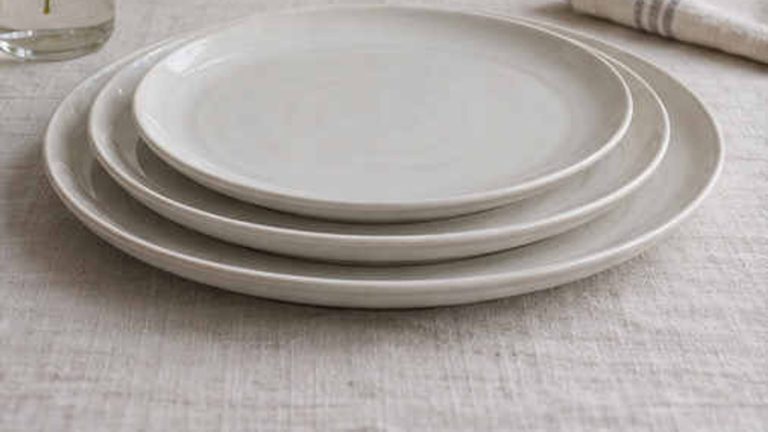 Core guide · 14 min readPorcelain vs Ceramic: What the Difference Means for Your DinnerwarePorcelain is a ceramic. What separates it from stoneware, earthenware and bone china is water absorption: our test numbers, five checks you can run yourself, and which body to choose.Read the guide
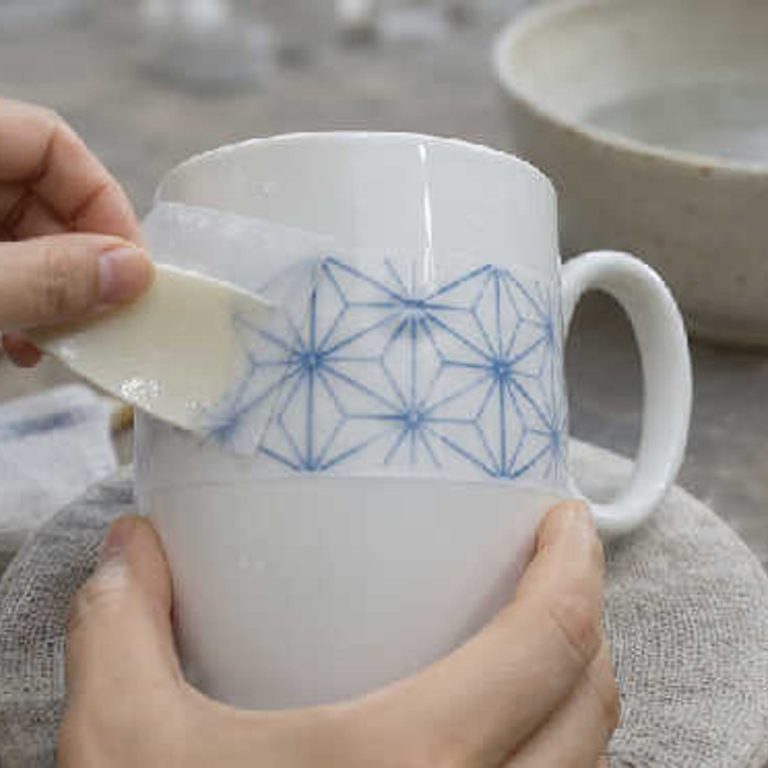 Core guide · 14 min readUnderglaze vs Overglaze: How to Put a Logo or Pattern on PorcelainUnderglaze, in-glaze, overglaze decals, gold and laser marking compared: how each is made, how long it lasts and which is safe where food touches.Read the guide
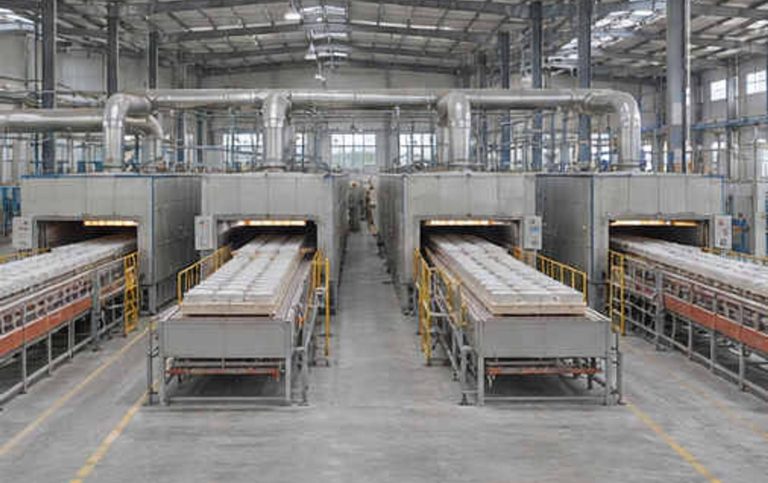 Core guide · 14 min readJingdezhen Porcelain Today: How China’s Porcelain Capital Makes ItWhat Jingdezhen porcelain means, what changed when production moved into tunnel kilns, what did not, and four checks that show a piece was really made in Jingdezhen.Read the guide
All Porcelain, Materials & Decoration articles
Newest first. New articles in this topic are added here as they are published.
Material first, decoration second
Porcelain is a ceramic, so "porcelain vs ceramic" is really a question about how dense the body is. Water absorption is the number that separates them: our porcelain absorbs 0.5% or less, high-white porcelain 0.3% or less, while stoneware and earthenware absorb more. A denser body chips less and stains less. Porcelain vs ceramic gives the full comparison, including bone china, and five checks you can run on a sample yourself.
Decoration is a separate decision. Underglaze and in-glaze colours sit under or inside the glaze and survive the dishwasher; overglaze decals and gold sit on top, wear with washing and rule out the microwave where there is metal. Food-contact surfaces at our factory are decorated underglaze or in-glaze only. Underglaze vs overglaze compares the five methods we use.
A material with a long history and a measurable present
Jingdezhen porcelain carries a long history, and buyers often meet it first as a story. The material itself is plainer and more useful than the story: kaolin, feldspar and quartz, ball-milled for 18 hours, formed, glazed and fired at 1,260 to 1,320 °C until the body barely absorbs water. That one property, water absorption of 0.5% or less, is what separates porcelain from the stoneware and earthenware sold alongside it, and it is why porcelain stains less and chips less in daily use.
Decoration has its own logic. Colour painted under the glaze, or sunk into it, is protected by the glaze for the life of the piece. Decals and gold fired on top of the glaze at 780 to 850 °C give brighter colour and finer lines, but they sit where knives, dishwashers and microwaves can reach them. Neither is better in general. A hotel plate and a collector's vase need opposite answers, and the guides here explain how to choose for each.
The figures in this topic come from our own lab: water absorption on a vacuum rig, thermal shock from 180 °C into 20 °C water, colour on an X-Rite Ci7800, lead and cadmium release on an ICP-MS. Our internal limit for lead and cadmium is half of the legal limit, so that normal batch variation never comes close to the line a customs lab will test against.
The numbers behind our porcelain
These are the limits our lab tests against. The guides in this topic explain what each one means for use.
| Property | Our standard |
|---|---|
| Water absorption | ≤0.5% (high-white porcelain ≤0.3%) |
| Whiteness | ≥78 |
| Bending strength | Strengthened porcelain ≥120 MPa |
| Glaze hardness | ≥6 Mohs |
| Thermal shock | 180 °C to 20 °C water quench, no cracks (ASTM C554) |
| Lead and cadmium release | Internal limit at 50% of the legal limit |
| Colour | ΔE ≤1.5 within a batch, ≤2.0 between batches (X-Rite Ci7800, D65/10°) |
| Rim diameter | ±1.5 mm; ovality ≤1.5% |
| Piece weight | ±3% |
| Dishwasher | EN 12875-1 / EN 12875-5, 1,000 cycles |
| Microwave | 700 W, 5 minutes, 20 cycles |
| Carton drop | 1.2 m, six faces, three edges, one corner (ISTA 1A / 3A) |
From clay to finished piece
Seven steps, each with its own tolerance. Firing at 1,260 to 1,320 °C is what turns the body into porcelain; decoration fired at 780 to 850 °C is what makes an overglaze decal less durable.
| Step | What we control |
|---|---|
| 1 Clay | Kaolin, feldspar and quartz ball-milled for 18 hours, vacuum-pugged twice, moisture 18–20% |
| 2 Forming | Roller forming, slip casting or isostatic pressing; wall thickness ±0.4 mm |
| 3 Trimming and bisque | Bisque fired at 800–900 °C to burn out water and organic matter |
| 4 Glazing | Dip, spray or pour; glaze 0.25–0.35 mm thick, robot repeatability ±0.02 mm |
| 5 Decoration | Underglaze, in-glaze, decal, gold line, laser marking; food-contact surfaces use underglaze or in-glaze only |
| 6 Firing | 1,260–1,320 °C, ±8 °C across the kiln, 9 thermocouples logged |
| 7 Sorting and packing | Machine vision plus a 100% manual check, AQL 2.5 audit, every carton coded |
Read next: Jingdezhen porcelain today · Is porcelain microwave safe? · Factory
Where these orders usually go wrong
Calling every ceramic "porcelain"
Porcelain has a measurable meaning. Ask for water absorption; 0.5% or less is our line.
Putting overglaze decoration where food sits
Food-contact surfaces should be underglaze or in-glaze. Overglaze belongs on the outside or on display pieces.
Labelling gold-rim ware as microwave safe
It is not, at any thickness of gold.
Judging durability by how glossy a glaze looks
Glaze hardness (6 Mohs or harder) and thickness decide wear, not shine.
What to send with your enquiry
With these details we can answer in one reply instead of three. A first reply comes within 24 hours on working days.
Send these details- Intended use: daily, hotel, display or gift
- Dishwasher and microwave needs
- Decoration: colour, pattern, logo, gold
- Whether decoration touches food or lips
- A reference piece or photo for the look you want
Products these guides apply to
Related pages
New in other topics
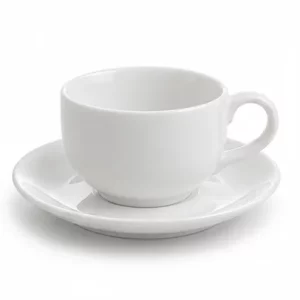 Dinnerware, Mugs & Cups · 23 Nov 2026Branded Coffee Cups for a Café: Logo, Minimums and Reorders
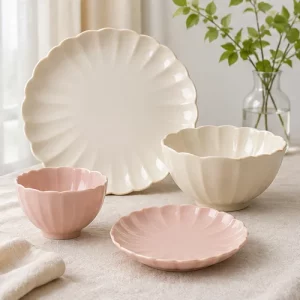 Dinnerware, Mugs & Cups · 20 Nov 2026Building a Custom Dinnerware Set From Your Own Piece List
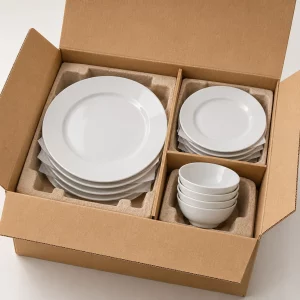 Shipping & Import · 17 Nov 2026Broken Ceramics on Arrival: How to Make a Claim That Gets Paid
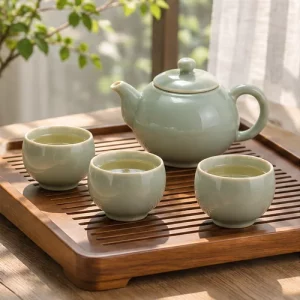 Tea Ware · 15 Nov 2026Gaiwan vs Teapot: Which to Stock, Brew With and Gift
Porcelain, Materials & Decoration: questions buyers ask
Is porcelain better than stoneware?
For daily and commercial use, porcelain is the denser body: ours absorbs 0.5% of its weight in water or less, so it stains less and resists chipping better. Stoneware is heavier and more porous. Choose by use, not by name.
Can porcelain with gold go in the microwave?
No. Gold and any metal decoration spark in a microwave. Plain and underglaze porcelain usually can; we test at 700 W for 5 minutes over 20 cycles.
Which decoration lasts longest on dinnerware?
Underglaze and in-glaze, because the glaze covers the colour. Overglaze decals and gold lines are fired at a lower temperature and wear with dishwashing.
Is all Jingdezhen porcelain handmade?
No. Jingdezhen is two cities: thousands of small studios that throw and paint by hand, and factories like ours that make tableware on molds in natural-gas tunnel kilns so the 10,000th piece matches the first. Our six shuttle kilns fire vases, figurines and short runs.
Other topics
Have a specific order in mind?
Send the shape, quantity and market. We reply within 24 hours on working days and send a written quotation within 48.