Photograph the cartons before you open them, photograph the broken pieces as you unpack, write down the carton numbers, and send all of it to the supplier within the claim window. Ours is 30 days from arrival. Do that and most claims are settled on the evidence. Skip it, and a claim becomes an argument about whether the damage happened at the factory, at sea or in your warehouse.
Even with good packing, some ceramics break. Our transit breakage in 2025 was 0.21%, which is about 10 pieces in a 5,000-mug order, and our customer complaint rate was 0.07%. Here is how to handle the pieces that do break, how to decide who should pay, and what a supplier’s answer should look like.
Before the goods arrive: set up the claim you hope not to make
A claim is decided mostly by what was agreed before the order and what was recorded on the day of unloading. The weeks in between matter less than buyers think.
Put three terms in the contract
Every ceramics purchase contract should state:
| Term | What to write | Ours |
|---|---|---|
| Claim window | How long after arrival a quality or breakage claim can be raised | 30 days from arrival |
| First response | How fast the supplier must answer with an analysis | First 8D report within 48 hours |
| Liability cap | The most the supplier will pay on a claim | Up to the full order value |
A supplier that will not put these in writing is telling you how a claim will go.
Agree who insures the cargo
Under CIF, the seller arranges insurance to your port; ours covers the cargo at 110% of invoice value. Under FOB or EXW, the insurance is yours. Either way, know the name of the insurer and the survey procedure before the ship sails, because an insurer will usually want a surveyor to see damaged cargo before it is moved or thrown away.
Ask for the carton code system
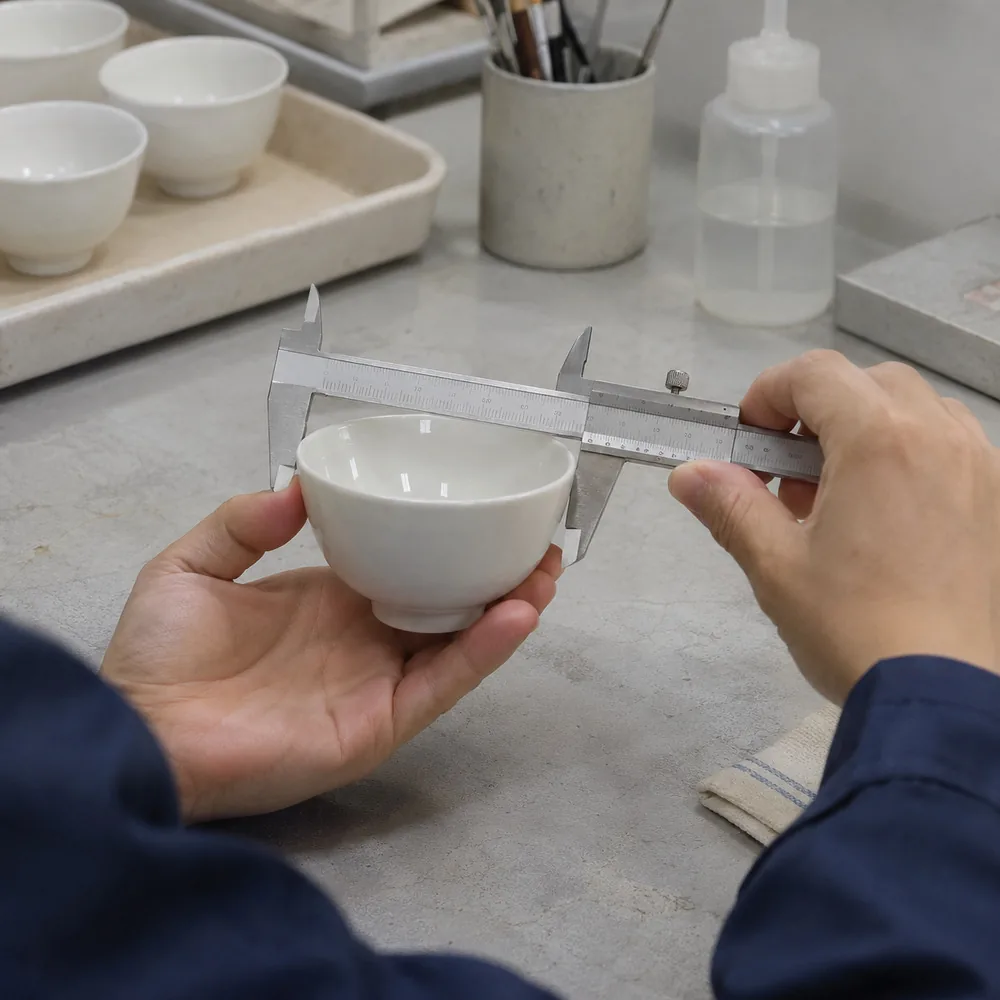
Ask how cartons are coded and what the code traces back to. Every carton we pack carries a code that leads to its packing line, kiln run and team. Without that, a supplier can only guess where a fault came from, and a guess is easy to dispute.
On the day of unloading: record before you move anything
Most breakage disputes are won or lost in the first hour after the container doors open.
At the container
- Photograph the container number, the seal and the closed doors.
- Check that the seal number matches the bill of lading. A broken or different seal is a matter for the carrier and the insurer.
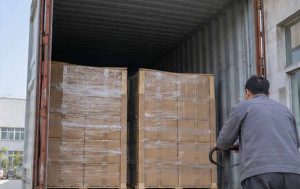
- Photograph the load as it stands when the doors open, before anything is unloaded.
At the cartons
- Photograph every damaged carton before it is opened, with the carton code visible.
- Note the damage on the delivery receipt before you sign it. A clean receipt makes a carrier claim much harder.
- Keep damaged cartons, inserts and pallets until the claim is settled.
At the pieces
- Photograph broken pieces inside the carton, then laid out next to the insert or divider.
- Count by SKU: ordered, received, broken, defective but whole.
- For gift boxes and sets, count unsellable sets, not broken pieces, because one broken mug can make a whole box unsellable.
Decide who the claim goes to
Who pays depends on why the pieces broke, and the cartons usually show it.
| What you see | Likely cause | Claim against |
|---|---|---|
| Cartons intact, pieces broken inside, often in the same position | Packing design, or a fault from production | Supplier |
| Pieces cracked or chipped, but cartons and inserts undamaged | Production defect, such as a firing crack | Supplier |
| Crushed, wet or punctured cartons; damage concentrated on one pallet | Handling in transit | Insurer or carrier, with the supplier’s packing evidence |
| Short count with intact cartons | Packing error | Supplier |
| Seal broken or not matching the documents | Theft or interference | Carrier and insurer |
When it is the supplier’s problem
A pattern inside intact cartons is the clearest sign. If the same piece in the same position breaks carton after carton, the insert or the carton specification is wrong. If the breaks are random but show old, clean fractures or glaze over the crack, the piece left the factory cracked.
When it is a transit problem
Damage that follows the outside of the load, such as one crushed pallet, wet cartons at the door end, or forklift punctures, happened in handling. The supplier is not liable for that, but a good one will still help: the carton specification, drop-test results and loading photographs are what the insurer will ask for.
When it is both
Sometimes a weak carton and rough handling combine. Send the claim to the supplier and notify the insurer at the same time. The 8D report and the survey can then be read together.
What a supplier should send back
A claim should get a structured answer within days, not an apology and a discount.
The 8D report
We send a first 8D report within 48 hours of receiving the claim. It sets out the problem, the immediate containment, the root cause, the corrective action and what changes so it does not recur. The carton codes are what make the root cause findable: if the broken pieces all come from one kiln run, the cause is in production; if they come from one pallet, it is in handling or loading.
What a weak answer looks like
- “Breakage is normal in transit,” with no reference to your cartons or codes.
- A percentage replacement offered before anyone has looked at the photographs.
- No change to the packing or the process for the next order.
Settlement
Our liability runs up to the full order value. How the settlement is paid is the next decision.
Replacement, credit or refund?
| Option | Suits | Watch out for |
|---|---|---|
| Replacement in the next shipment | Running ranges with regular reorders | Replacements must match the original colour and batch |
| Credit against the next order | Small quantities, long relationships | Get the credit in writing, with the order number |
| Refund | One-off orders, or a large share at fault | Slower, and does not put stock back on your shelf |
| Re-sort or rework at destination | Mixed good and defective pieces | Agree who pays for the labour before it starts |
Matching replacements to the original
Replacement goods made months later have to sit on the shelf next to the first delivery. We hold colour to ΔE 2.0 between batches and keep molds, decal plates and glaze recipes on file, so a replacement uses the same tools as the original. Our guide to glaze colour matching explains why that limit matters.
What to put in the claim itself
A claim that the supplier can act on in one reading gets answered faster than one that needs three rounds of questions. Send it as one message with attachments, not as a series of photos on a chat app.
The claim, line by line
| Item | What to include |
|---|---|
| Order reference | Purchase order number, invoice number, bill of lading number |
| Arrival | Date the container was unloaded, and where |
| Container | Container number, seal number, photo of the doors and the load |
| Damage summary | Count by SKU: ordered, received, broken, defective but whole |
| Carton codes | The code of every carton with damage, matched to the photographs |
| Photographs | Cartons before opening, pieces in the carton, pieces laid out |
| Your proposal | Replacement, credit, refund or re-sort, and by when |
Sets, gift boxes and mixed cartons
For sets and gift boxes, give two counts: the broken pieces, and the sets that can no longer be sold. A 16-piece set with one broken bowl is a whole set off the shelf unless the supplier sends that bowl separately, so say which you want. For mixed cartons, list the damage by SKU, not by carton, so the replacement order is correct.
Defects found after the first 30 days
Breakage shows at unloading. Some production defects show later: crazing in the glaze, a decal that fades after a few washes, a gold line that wears through. Tell the supplier as soon as you see them, with the batch or carton code from the packaging, even if the claim window has passed. A supplier that traces pieces to the kiln run can still check the batch, and it is in its interest to find the cause before the next order.
When the goods are held, not broken
Not every claim starts with a broken plate. Ceramics that touch food are checked at many borders, and a shipment held for missing paperwork costs storage, inspection fees and selling days even though every piece is whole.
What a hold costs
A gift buyer for a car brand in the Middle East learned this on a 3,000-set trial order placed with a cheaper factory. The sets arrived with nearly 17% breakage, and without food-contact test reports, so the local distributor’s goods were held at customs, with demurrage and inspection fees on top. The buyer had saved USD 3,300 on the unit price; the detention, inspection, replacement goods, rework and a stop-gap supplier cost about USD 12,800, before the penalty for late delivery.
What each market looks for
| Market | What is usually checked for ceramics that touch food |
|---|---|
| United States | Lead and cadmium release; ceramicware can be held at import for testing. Reports to FDA guidance (ASTM C738), and Prop 65 for California |
| European Union | A Declaration of Conformity under Regulation (EC) No 1935/2004, backed by lead and cadmium testing (for Germany, LFGB) |
| Canada | Lead and cadmium release under SOR/2016-175 |
| Japan | The Food Sanitation Act, Notice No. 370 |
Our guide to food-contact testing by country explains each one.
Who pays for a hold
If the supplier was contracted to provide reports covering the SKUs and did not, the cost of the hold is part of the claim against the supplier. If the reports existed but did not travel with the goods, the cost usually sits with whoever was responsible for the documents under the Incoterm. We send documents within 3 working days of sailing and, on request, send the test reports ahead of the goods so your importer can pre-clear.
Why claims get rejected
Most rejected claims fail on evidence, not on the facts.
No photographs before the goods were moved
Once cartons have been restacked or opened without photographs, nobody can show where the damage happened. A supplier can reasonably say it may have happened in your warehouse.
A clean delivery receipt
Signing the delivery receipt without noting damage tells the carrier the goods arrived in good order. It is the most common reason a transit claim fails.
Broken pieces thrown away
Keep the broken pieces and damaged cartons until the claim is settled. A surveyor or the supplier may ask to see them, or ask for a sample to be sent back for analysis.
Outside the window
A claim sent after the agreed window is at the supplier’s goodwill. Ours is 30 days from arrival; diarise it on the day the container lands.
Prevent the next claim
Most transit breakage traces back to the carton, not the ship.
Approve the carton with the product
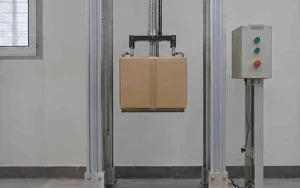
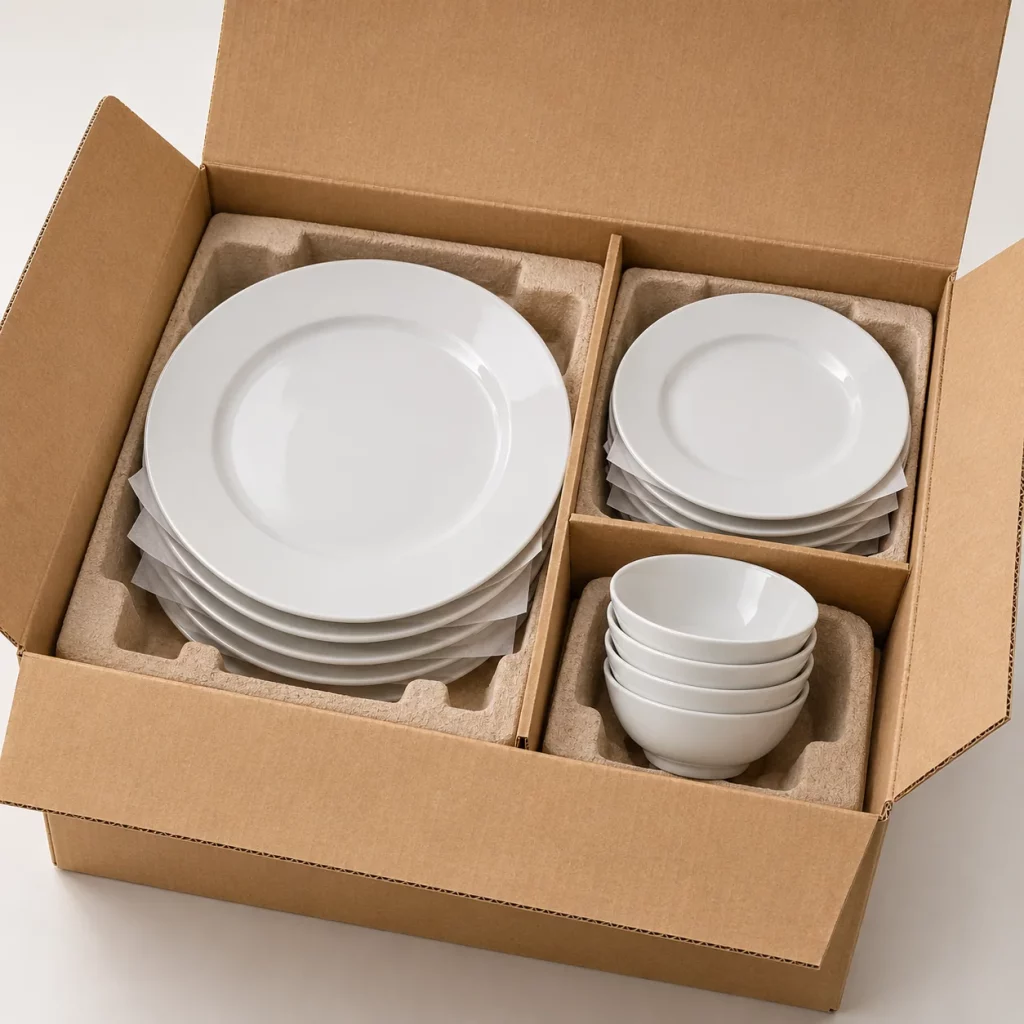
Approve the carton specification and the drop test before you approve the product. Ours are five-ply corrugated with molded pulp or EVA inserts, corrugated dividers in sets, and every new carton is drop-tested from 1.2 m to ISTA 1A and 3A. Our guide to shipping ceramics from China covers the packing, loading and paperwork mistakes that cause most claims.
Inspect before loading
Production defects are cheaper to catch before the container is sealed. A pre-shipment inspection against an agreed defect list stops cracked or chipped pieces from sailing at all.
Count breakage in the cost
A cheaper quote with weaker packing is not cheaper once breakage is counted. Our guide to the true cost of importing dinnerware shows how to divide by sellable pieces instead of ordered pieces.
If a shipment from us has arrived damaged
Our full claims terms are on the after-sales page. Send the photographs, the carton codes and the count by SKU through our contact page, and the 48-hour clock for the first 8D report starts when we receive them.