A ceramic shipment is not finished when it leaves the factory. It is finished when the last carton is opened in your warehouse and the pieces inside are whole, cleared and on time. Everything between those two points, from the carton to the customs code, is decided before the goods are packed.
In 2025 we shipped 620 containers from Jingdezhen to 43 countries, and transit breakage across all of them was 0.21%. These are the seven mistakes we see buyers make most often, and what to do instead.
Mistake 1: Approving the product without approving the carton
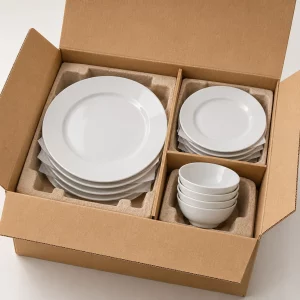
A plate that survives the dishwasher can still break in a container. What protects it is the packing: the inner box, the insert and the outer carton.
Ask your supplier for these, in writing:
| Packing item | What we use |
|---|---|
| Outer carton | 5-ply corrugated |
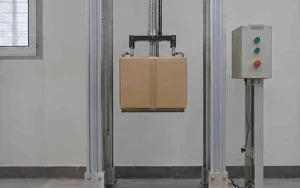
| Drop test | ISTA 1A and 3A; every new carton design dropped from 1.2 m |
| Inserts | Pulp or EVA inserts; corrugated dividers in sets |
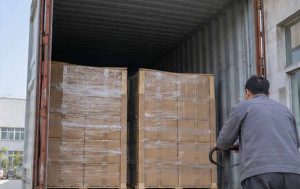
| Pallets | 1,100 × 1,100 mm, four-way entry, stretch-wrapped with corner boards |
| Marks | Only your brand; barcodes and origin marks to the destination’s rules |
If the product has a new shape or a new gift box, ask for a drop test on that box, not on a similar one.
What a carton specification should contain
A packaging approval is a document, not a nod at a photo. These are the lines we put in ours, and the ones we suggest you ask any supplier to fill in.
| Item | Our standard |
|---|---|
| Outer carton | 5-ply corrugated board |
| Inner protection | Molded pulp or EVA trays; corrugated dividers inside sets |
| Drop test | 1.2 m, six faces, three edges and one corner, to ISTA 1A and 3A |
| New carton types | Every new carton is drop-tested before the order ships |
| Pallets | 1,100 × 1,100 mm, four-way entry, stretch-wrapped with corner boards |
| Carton marks | Your brand only, with the barcode and origin mark the destination requires |
| Carton coding | Every carton is coded, so a broken carton can be traced back to a batch |
Why the drop test sequence matters
A carton that only survives a flat drop has not been tested. Cartons fall on corners and edges when they are stacked, unloaded and moved by hand at the warehouse. The six-faces, three-edges, one-corner sequence tests the ways a carton actually lands. It is also why a carton approved for one model is not automatically approved for another: a heavier plate in the same carton changes how it lands.
Gift boxes and colour boxes inside the carton
A printed colour box or a rigid gift box protects the product from scuffs, not from impact. The export carton still does that work. When a gift box is new, we test the full pack, box inside carton, and not the gift box alone. A box with a magnetic lid and an EVA insert looks strong, but its corners are the first thing to dent in transit.
Mistake 2: Comparing unit prices without comparing container loads


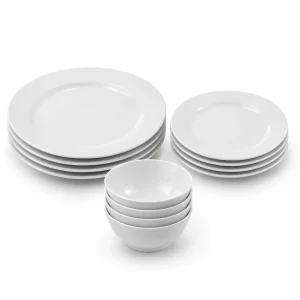
Two suppliers can quote the same price per piece and deliver very different freight costs per piece, because their cartons hold different numbers.
Ask every supplier for three numbers per SKU: pieces per carton, CBM per carton, and pieces per 40HQ. Ours assume 60 m³ usable and 92% fill. Some examples:
| Model | Per carton | CBM per carton | Per 40HQ |
|---|---|---|---|
| BM-350 mug, 350 ml | 48 | 0.0636 | 41,616 |
| PL-27 plate, 27 cm | 24 | 0.0878 | 15,072 |
| DS-16 dinner set | 4 sets | 0.1080 | 2,044 sets |
| GW-130 gaiwan | 36 | 0.0553 | 35,928 |
A supplier who cannot give these numbers is guessing at your freight. Our guides to mug sizes and dinnerware set sizes show how much the choice of size moves the container load.
Mistake 3: Forgetting the season
Our peak season runs from July to October, when Christmas and holiday orders are made, and it adds 7–10 days to every lead time. Freight space is often tighter in the same months.
Plan back from the date you need the goods on the shelf, not from the date you want to place the order. Our corporate gift guide has a worked example.
Planning back from the shelf date: an example
Here is a worked example for 3,000 mugs from an existing shape with a one-colour custom decal, going to a US East Coast port, during our peak season.
| Stage | Time | Note |
|---|---|---|
| Production, custom decal | 35–40 working days | Counted from deposit and signed artwork |
| Peak season, July to October | Add 7–10 days | Already busy kilns |
| Inspection booking | 3 working days’ notice | You or your inspector |
| Loading after inspection | Within 5 days | Container booked in advance |
| Sea freight to the US East Coast | 30–34 days | Port to port |
| Customs and delivery to your warehouse | Ask your forwarder | Varies by port and broker |
Added up, the order needs to be confirmed roughly three months before it must be on the shelf, and more if artwork changes after sign-off. The step buyers underestimate is the artwork: each round of changes after the decal plate is made moves everything after it.
Mistake 4: Guessing the transit time
Sea freight times vary a lot by destination. These are our typical transit times:
| Destination | Sea freight |
|---|---|
| US West Coast | 16–20 days |
| US East Coast | 30–34 days |
| Northern Europe | 28–33 days |
| Middle East | 20–24 days |
| Australia | 14–18 days |
| South America | 32–38 days |
| Europe by rail | 18–22 days, door to door |
| Air freight | 5–7 days |
Add time for loading, customs and the final delivery. About 78% of our containers leave from Ningbo, 15% from Shanghai and 7% from Yantian.
Rail to Europe, air for samples
Sea freight is not the only route. For European orders that are tight on time, rail from China takes 36 hours to reach the Xi’an consolidation hub and 18–22 days door to door, against 28–33 days by sea to Northern Europe. Rail costs more per container, so it makes sense for a seasonal order that would otherwise miss its window, not for every reorder.
Air freight, at 5–7 days, is for samples and urgent top-ups. Porcelain is heavy, so air freight on a production order rarely makes sense unless a launch date is at stake.
Stock that is already in North America
For programmes in North America we hold forward stock in Los Angeles and Toronto. A Canadian import wholesaler we have supplied since 2019 takes about 880,000 pieces a year this way, with reorders drawn from stock held in Toronto rather than waiting for the next sailing. If your range sells steadily, ask whether forward stock is an option before you plan for safety stock of your own.
Mistake 5: Choosing an Incoterm without knowing what it covers
The Incoterm decides who pays for and arranges each stage of the trip, and who carries the risk if something breaks. We work on EXW, FOB Ningbo, Shanghai or Yantian, CFR and CIF, and DDP to the US, Canada and the EU.
If you have your own freight forwarder, FOB usually gives you the most control. If you do not, DDP means we deliver to your door with duties paid. Our shipping and trade terms page explains each one.
Which Incoterm, and what it leaves with you
These are the terms we quote, and where each one hands the responsibility over to you.
| Term | We arrange | You arrange |
|---|---|---|
| EXW | Goods ready at the factory | Collection, export clearance, freight, insurance, import |
| FOB Ningbo, Shanghai or Yantian | Delivery on board and export clearance | Sea freight, insurance, import clearance, duty, delivery |
| CFR | As FOB, plus sea freight | Insurance, import clearance, duty, delivery |
| CIF | As CFR, plus insurance at 110% of invoice value | Import clearance, duty, delivery |
| DDP (US, Canada, EU) | Everything to your door, including duty | Unloading and receiving |
When DDP makes sense
DDP suits buyers who import rarely and do not have a customs broker. It also hides the duty and the freight inside one price, which makes it harder to compare with another supplier’s FOB quote. If you compare DDP with FOB, ask for the DDP quote broken down line by line.
Mistake 6: Using the wrong customs code
Ceramic tableware is classified by material, and the code affects the duty you pay. The main headings are:
| HS code | Covers |
|---|---|
| 6911.10 | Porcelain tableware and kitchenware |
| 6912.00 | Other ceramic tableware, including stoneware |
| 6913.10 | Porcelain ornaments, such as figurines |
| 6914.10 | Other porcelain articles |
A porcelain mug and a stoneware mug fall under different headings, which is one more reason to know which body you are buying. Our guide to porcelain vs ceramic explains the difference. Confirm the final code and duty rate with your customs broker for your country.
Origin documents that can lower your duty
The certificate of origin proves where the goods were made. For some destinations, a specific form of it lets the importer claim a lower duty rate under a trade agreement.
- Certificate of Origin (CO): the general certificate, accepted in most markets.
- FORM E: for destinations in the ASEAN–China free trade area.
- RCEP certificate: for destinations that are members of the Regional Comprehensive Economic Partnership.
We issue all three. Tell us the destination country with your inquiry, so the right form is planned for and the duty in your landed cost is the duty you will actually pay.
Mistake 7: Shipping without the paperwork
Ceramics that touch food are checked at many borders, and a missing report can hold a container at the port while storage charges build up. With every shipment, ask for:
- Commercial invoice and packing list
- Bill of lading
- Certificate of origin, including Form E or RCEP where it lowers your duty
- Food-contact test reports for your market, covering the exact SKUs
- Declaration of Conformity for the EU
We send documents within 3 working days of sailing. Ask for the reports to be sent ahead of the goods, so your importer can pre-clear. Our guide to sourcing ceramic dinnerware from China lists the reports each market needs.
The document set, item by item
| Document | Why it matters |
|---|---|
| Commercial invoice | The value customs uses for duty |
| Packing list | Cartons, weights and contents, checked at the warehouse |
| Bill of lading | Title to the goods; the copy triggers the balance payment |
| Certificate of origin | CO, FORM E or RCEP, depending on the destination |
| Food-contact test reports | For the SKUs and the market of that shipment |
| Declaration of conformity | Issued per batch for EU shipments |
We send the full set within 3 working days of sailing, and the test reports ahead of the goods when a buyer asks. Our guide to food-contact testing by market explains which report each market expects.
Destination by destination: what changes
The seven mistakes apply everywhere, but each market adds its own checks. These are the points that come up most often on our shipments, by region, with the customers we ship there.
| Region | Share of our 2025 exports | Sea time | What to plan for |
|---|---|---|---|
| North America | 43.1% | 16–20 days to the West Coast, 30–34 to the East | Lead and cadmium reports; forward stock in Los Angeles and Toronto |
| Europe | 29.1% | 28–33 days to Northern Europe; 18–22 by rail | Declaration of Conformity with every shipment; LFGB for Germany |
| Middle East | 10.7% | 20–24 days | Seasonal deadlines; dishwasher reports for hotel ware |
| Asia-Pacific | 9.9% | 14–18 days to Australia | Per-SKU testing for Japan |
| Latin America | 4.3% | 32–38 days to South America | Longest transit; plan stock accordingly |
United States
Ceramicware that touches food can be held at import for lead and cadmium testing, so the reports have to be ready before the container sails, not after it lands. Ours are to FDA guidance (ASTM C738), with Prop 65 testing for products sold in California. A US warehouse club we have supplied since 2021 takes 24-piece sets and mugs, about 1.8 million pieces a year, with an SGS report travelling in every container. For steady ranges, forward stock in Los Angeles shortens the time from reorder to shelf.
Canada
Canada has its own lead and cadmium rules for ceramics, SOR/2016-175, and our Canadian lines are tested to them separately. A Canadian import wholesaler has bought dinner sets and mugs from us since 2019, about 880,000 pieces a year, drawing reorders from stock we hold in Toronto.
European Union
Food-contact ceramics in the EU need a Declaration of Conformity under Regulation (EC) No 1935/2004, and we issue one with each shipment, backed by LFGB testing. Our largest European market is Germany, where a discount supermarket takes 16- and 20-piece sets from us in 12 deliveries a year. For orders that are late for a season, rail to Europe can save about ten days; rail versus sea is compared in the transit section above.
United Kingdom
UK buyers increasingly sell online and ship from fulfilment centres. A UK home e-commerce retailer takes vases, ornaments and trays from us, about 740,000 pieces a year, packed for parcel delivery to three fulfilment centres. Parcel networks handle cartons far more roughly than a pallet in a container, which changes the packing; see the section on e-commerce below.
Middle East
Seasonal dates matter more than anywhere else. A Saudi gift company has taken gift boxes and ornaments from us for three Ramadan seasons, each delivered on time, and a deadline like that does not move. A Dubai hotel supply distributor takes gold-rim and hotel porcelain, about 420,000 pieces a year, with EN 12875 dishwasher reports shipped with the goods.
Japan
Japanese buyers test every SKU. A Japanese lifestyle chain takes gaiwans, small dishes and kyusu teapots, about 960,000 pieces a year, each SKU tested to the Food Sanitation Act. Expect a strict incoming inspection on appearance as well as function.
Australia and Latin America
Australia is our shortest long-haul route at 14–18 days. South America is the longest at 32–38 days, and our Latin American customers mostly buy 16-piece sets and mugs through import wholesalers, so stock planning has to cover the longer gap between reorder and arrival.
When the container fills by weight, not volume
Most ceramics fill a container by volume long before they reach its weight limit. Some do not, and a quote built on volume alone will be wrong for them.
| Model | Pieces per 40HQ | Unit weight | Product weight per 40HQ |
|---|---|---|---|
| BM-350 mug | 41,616 | 320 g | About 13.3 t |
| TB-350 bottle | 41,490 | 480 g | About 19.9 t |
| TR-20 tray | 48,336 | 520 g | About 25.1 t |
Dense, flat pieces such as trays, and solid pieces such as bottles, carry far more weight per cubic metre than mugs. A full container of TR-20 trays carries about 25 tonnes of porcelain before cartons and pallets, which approaches the limit of the container and can exceed what some road legs allow. Ask for the weight per container as well as the piece count, and mix heavy and light items if the weight limit bites. Our container loading guide has the figures for every model.
Shipping to fulfilment centres and e-commerce
A container delivered to a warehouse on pallets is one kind of trip. A parcel sent from a fulfilment centre to a customer’s door is another, with more drops, more handling and no pallet.
What changes in the packing
E-commerce brands usually want three things: packing that survives a parcel network, packaging light enough to keep postage down, and breakage covered if it happens. That means the retail box has to protect the piece on its own, not rely on the export carton. Inserts that hold each piece away from the box walls matter more than thicker board.
Test the pack the way it will travel
For parcel shipments, test the retail box on its own as well as inside the export carton. A box that passes the 1.2 m carton drop as part of a full carton may still fail when it travels alone.
Labels and barcodes
Fulfilment centres scan everything. Agree the barcode format, label position and carton labelling with the fulfilment centre before production, because relabelling at the warehouse costs more than printing it right at the factory.
Loading day: what happens at the factory
A container leaves our factory through a fixed sequence, and knowing it helps you plan inspections and documents.
- Inspection. Your inspector or a third party books with 3 working days’ notice and samples the packed goods, by default to AQL 2.5 for major defects and 4.0 for minor. Our guide to pre-shipment inspection explains what that sample accepts.
- Loading. Goods load within 5 days of a passed inspection. Palletised loads go on 1,100 × 1,100 mm four-way pallets, stretch-wrapped with corner boards.
- Warehouse. Our automated warehouse has 6,800 pallet positions and 32 AGVs, linked to production, so the cartons for an order are picked as a set rather than gathered by hand.
- Tracing. Every carton is coded, so each one can be traced back to its packing line, kiln run and team.
- Documents. The full document set goes out within 3 working days of sailing, with the test reports sent ahead of the goods on request.
What happens when something does break
Even at 0.21%, some pieces will arrive broken. Agree the claim process before you order. Ours: claims within 30 days of arrival, an 8D report draft within 48 hours, and liability up to the full order value, backed by USD 2 million of product liability insurance. Our guide to breakage claims covers who to claim against and what to record.
What to do at the door
Most breakage disputes are lost or won in the first hour after the container doors open. Do four things before anything is moved:
- Photograph the container number, the seal and the doors before opening.
- Photograph the load as it stands, before unloading.
- Note the carton codes of any damaged cartons on the delivery receipt.
- Keep the damaged cartons and the broken pieces until the claim is settled.
The carton code ties each broken piece to a batch and a packing line, which is what turns a complaint into a traceable claim.
Who the claim goes to
A packing fault or a production fault is the supplier’s. An accident in transit, such as a dropped container, is usually for the insurer. Under CIF we insure at 110% of the invoice value. Our terms for quality claims are a claim within 30 days of arrival, a first 8D report draft within 48 hours, and compensation capped at the full order value.
Payment terms that match the shipment
Shipping and payment are tied together, because the balance is usually paid against a copy of the bill of lading. These are the terms we work on.
Our standard terms
A 30% deposit by bank transfer and 70% against a copy of the bill of lading. The deposit starts production; the bill of lading shows the goods are on board, and the original is released when the balance is paid.
Our shipping and trade terms page lists the ports, terms and documents in one place.
Samples and small shipments
Not everything goes by container. Samples, colour tiles and urgent top-ups travel by courier or air, and they follow different rules.
Stock samples
Two pieces of any stock model are free, sent within 3 days; you pay the courier. Use them to check size, weight, glaze and how the piece sits in your packaging before you commit to a carton specification.
Custom samples
A custom sample with your glaze, decal or shape takes 7–15 days after approval, and comes with test data. It is charged, then refunded when you order. Send it by courier, not with a container, so that approval does not wait on a sailing.
Urgent top-ups
Air freight, at 5–7 days, suits a few cartons that have to reach a shelf or an event quickly. Porcelain is heavy, so air freight on more than a few cartons is rarely worth it. If a range regularly needs air top-ups, the reorder point is set too low.
A shipping checklist for your next order
Copy this list into your purchase order or your supplier brief. Every line corresponds to one of the mistakes above.
- Carton specification approved in writing, with the drop test done on the actual pack.
- Pieces per carton, CBM per carton, pieces per 40HQ and weight per container, for every SKU.
- Shelf date written down, and the order date worked back from it, with the peak-season allowance if production falls between July and October.
- Transit time to your warehouse, not just to the port, with the mode chosen for that date.
- Incoterm agreed, with each cost line assigned to you or the supplier.
- HS code confirmed by your customs broker for each item, and the right certificate of origin planned.
- Food-contact reports covering the exact SKUs and decorations for the destination market, sent ahead of the goods.
- Claim window, response time and liability cap written into the contract.
- Inspection booked, and the document set due within 3 working days of sailing.
If a supplier cannot answer a line, that is the line to settle before the deposit is paid.
Before your first shipment
Send us the product list, quantities, destination port and your preferred Incoterm, and we will reply within 24 working hours with carton data, container loads and a delivery timeline. Send us your brief.