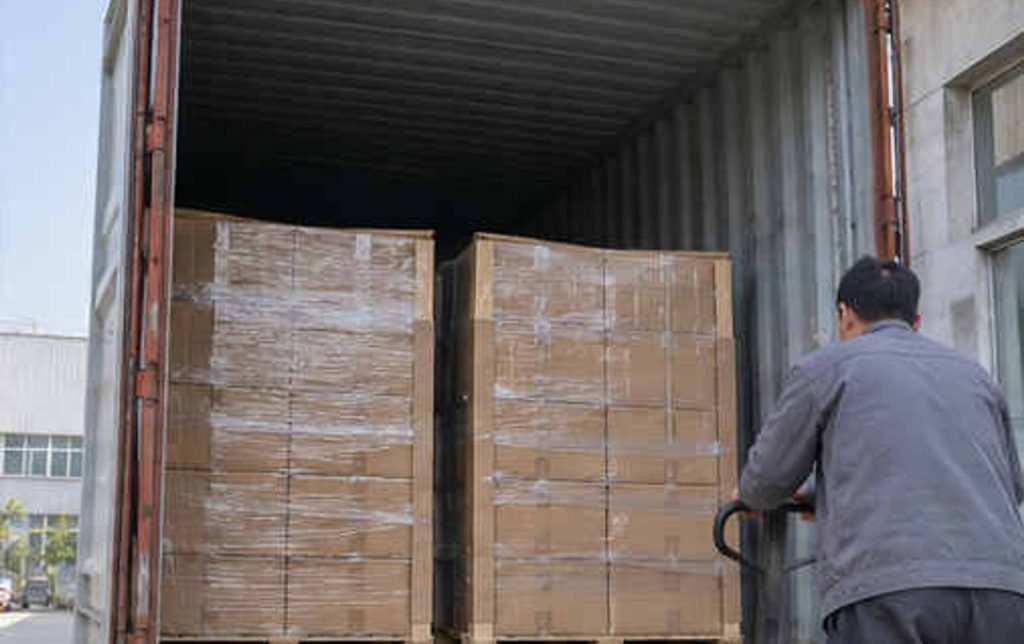
Most buyers are told that a container is filled by volume: divide the space by the carton and you have your load. For mugs, cups and vases that is true. For small trays and bottles it is not. A 40HQ full of our TR-20 trays carries about 25 tonnes of porcelain before a single carton or insert is counted, so the box gets close to its weight limit, or past it, long before it runs out of space.
This guide shows how we calculate the load for every model we make, where the volume rule breaks, and how to plan a container that mixes several products.
The calculation we use for every model
Every container figure on our site comes from one formula:
Pieces per 40HQ = whole cartons that fit × pieces per carton
We take 60 m³ of usable space in a 40HQ and fill 92% of it, which gives 55.2 m³. Divide that by the carton’s volume in CBM, round down to whole cartons, and multiply by the pieces each carton holds.
For the BM-350 mug: 55.2 ÷ 0.0636 = 867 whole cartons. 867 × 48 mugs = 41,616 mugs.
The 92% leaves room for the gaps a real load always has: carton tolerances, the space at the door and the corners that cartons do not fill. A supplier who quotes 100% fill is promising a container you will not receive.
Why we count whole cartons only
A carton cannot be split to fill a gap, so the count stops at the last whole carton that fits. That is why two models with almost the same carton volume can have quite different container figures: one fits a last row, the other does not. It is also why the figure changes when a carton changes. A gift box that adds 1 cm to the carton can cost a full row.
What changes the result in practice
The formula gives a planning figure. Three things move the real load a little either way:
- Carton orientation. Some cartons can only travel one way up, which limits how they fill the height of the container.
- Mixed models. Cartons of different sizes leave gaps between them, which is why mixed loads are planned carton by carton.
- Pallets. Pallets take space and add height, so a palletised load carries fewer pieces than a floor-loaded one.
We quote on the 40HQ because most of our customers ship in it. For a 20-foot container, ask us for the figure model by model.
Pieces per 40HQ, model by model
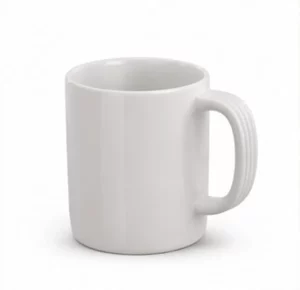
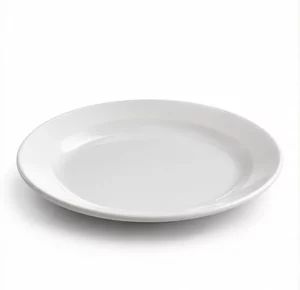
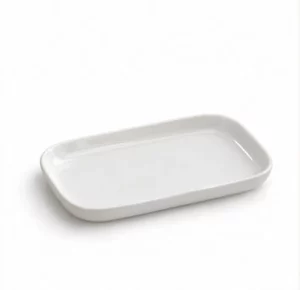
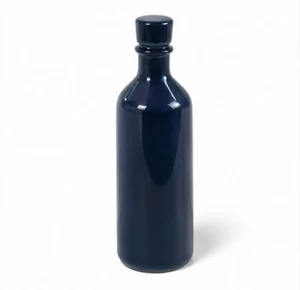
These are the figures for our standard models, from our own carton specifications.
| Model | Product | Pcs per carton | CBM per carton | Pcs per 40HQ |
|---|---|---|---|---|
| BM-250 | Mug, 250 ml | 60 | 0.0522 | 63,420 |
| BM-350 | Mug, 350 ml | 48 | 0.0636 | 41,616 |
| BM-500 | Mug, 500 ml | 36 | 0.0770 | 25,776 |
| CF-180 | Cup and saucer, 180 ml | 36 | 0.0506 | 39,240 |
| CF-300 | Cup and saucer, 300 ml | 24 | 0.0646 | 20,496 |
| GW-130 | Gaiwan, 130 ml | 36 | 0.0553 | 35,928 |
| PL-23 | Plate, 23 cm | 24 | 0.0645 | 20,520 |
| PL-27 | Plate, 27 cm | 24 | 0.0878 | 15,072 |
| BW-13 | Bowl, 13 cm | 36 | 0.0513 | 38,736 |
| DS-16 | 16-piece dinner set | 4 sets | 0.1080 | 2,044 sets |
| TR-20 | Tray, 20 × 13 cm | 24 | 0.0274 | 48,336 |
| TB-500 | Bottle, 500 ml | 24 | 0.0461 | 28,728 |
| VA-40 | Vase, 40 cm | 4 | 0.1267 | 1,740 |
The full figures for all 46 models are on each product page. Our guides to mug sizes, coffee cup sizes and dinnerware set sizes show how the choice of size moves these numbers.
The range of loads across our product families
| Family | Models | Pieces per 40HQ, smallest to largest model |
|---|---|---|
| Mugs | BM-250 to BM-500 | 63,420 down to 25,776 |
| Gaiwans and teapots | GW-100 to TP-800 | 44,244 down to 9,468 |
| Cups and saucers | CF-180 to CF-300 | 39,240 down to 20,496 sets |
| Plates | PL-18 to PL-30 | 47,736 down to 5,940 |
| Bowls | BW-11 to BW-18 | 56,448 down to 15,660 |
| Trays | TR-20 to TR-30 | 48,336 down to 17,028 |
| Dinner sets | DS-12 to DS-24 | 3,702 down to 1,251 sets |
| Vases | VA-20 to VA-40 | 13,248 down to 1,740 |
| Bottles | TB-350 to TB-750 | 41,490 down to 19,026 |
Within every family, the largest model ships at a fraction of the smallest model’s count. A 30 cm plate fills a container with 5,940 pieces, an 18 cm plate with 47,736: eight times as many.
What an average container looks like
In 2025 we shipped 13.9 million pieces in 620 containers, an average of about 22,400 pieces per container. That average hides the spread above: a container of small mugs carries nearly three times as many pieces, and a container of dinner sets a small fraction. It is a useful check on any supplier’s freight estimate. A quote that assumes far more pieces per container than the model can carry will be wrong at the port.
Freight per piece follows the container count
Whatever your forwarder charges for a container, your freight per piece is that charge divided by the pieces in it. That makes the container count a cost line in its own right.
The BM-250 mug fills a 40HQ with 63,420 pieces; the BM-500 with 25,776. Same factory, same glaze, same port. The 500 ml mug carries 2.46 times the sea freight per piece of the 250 ml mug, simply because fewer fit.
The same gap shows up across the range:
- A 40HQ carries 39,240 of our smallest cup-and-saucer sets (CF-180) but 20,496 of the largest (CF-300).
- A 23 cm plate fills a container with 20,520 pieces; a 27 cm plate with 15,072. Moving a set to a US-size dinner plate costs container space before it costs anything else.
- A dinner set with mugs takes much more space per place setting than one without, because a mug is a hollow, tall shape that packs poorly.
When you compare two quotes, compare the pieces per container as well as the unit price. A supplier whose cartons put fewer pieces in each container is charging you more freight, even at the same price per piece.
When weight fills the container first
Volume is only half the limit. A container also has a maximum cargo weight, and the road at the other end often has a lower one.
We worked out the net weight of porcelain in a full 40HQ of each model, from the unit weights in our specifications. More than half of our 46 models sit between 7 and 14 tonnes, well inside any limit. A few products are much denser:
| Model | Product | Pcs per 40HQ | Porcelain weight per 40HQ |
|---|---|---|---|
| TR-20 | Tray, 20 × 13 cm | 48,336 | about 25.1 t |
| TR-25 | Tray, 25 × 17 cm | 28,458 | about 20.5 t |
| TB-350 | Bottle, 350 ml | 41,490 | about 19.9 t |
| DS-12 | 12-piece dinner set | 3,702 sets | about 18.9 t |
| TB-500 | Bottle, 500 ml | 28,728 | about 17.8 t |
| BM-350 | Mug, 350 ml | 41,616 | about 13.3 t |
| VA-40 | Vase, 40 cm | 1,740 | about 3.7 t |
These are the weights of the porcelain alone. Cartons, inserts and pallets add to them.
Small flat trays and solid bottles are heavy for their size. A container full of them can pass the line’s weight limit, and it can pass the limit for trucking it inland, especially in the US, where road limits are often lower than the container’s own. Before you fill a box with trays or bottles, ask your forwarder for the inland weight cap at the destination. We then plan the load to that weight, not to the volume, or mix in lighter products to use the rest of the space.
Four models where weight matters
Net porcelain weight in a full 40HQ, calculated from the unit weight and the pieces per container:
| Model | Pieces per 40HQ | Unit weight | Net porcelain |
|---|---|---|---|
| TR-20 tray | 48,336 | 520 g | About 25.1 t |
| TB-350 bottle | 41,490 | 480 g | About 19.9 t |
| PL-18 plate | 47,736 | 340 g | About 16.2 t |
| GW-100 gaiwan | 44,244 | 320 g | About 14.2 t |
Add the cartons, the inserts and any pallets, and a full load of TR-20 trays reaches the weight limit of many containers before the space is used up. Ask your forwarder for the cargo limit on your route, which also depends on road limits at the destination, before you plan a full container of trays or bottles.
Mixing heavy and light
The usual answer to a weight-limited model is to mix it with a light, bulky one. Trays with mugs, or bottles with dinner sets, let a container fill by volume and stay within weight. Plan the mix with both columns, cubic metres and kilograms, side by side.
Planning a mixed container
Few buyers fill a 40HQ with one model. A mixed container is planned the same way, carton by carton: add up the CBM of every line until you reach 55.2 m³.
Here is a mixed load built from four of our models:
| Model | Cartons | CBM | Pieces | Weight |
|---|---|---|---|---|
| BM-350 mug | 200 | 12.72 m³ | 9,600 | 3.1 t |
| PL-27 plate | 150 | 13.17 m³ | 3,600 | 2.7 t |
| BW-13 bowl | 300 | 15.39 m³ | 10,800 | 3.0 t |
| CF-220 cup and saucer | 200 | 11.88 m³ | 7,200 | 1.9 t |
| Total | 850 | 53.16 m³ | 31,200 | 10.7 t |
That leaves about 2 m³, room for roughly 30 more mug cartons. Three rules make a mixed container work:
- Keep each model at its minimum. Existing models start at 500 pieces; a new glaze colour or decal at 1,000. Mixed stock can go from 48 pieces, but it is planned against what is on our shelves.
- Heavy cartons go low. Plates, trays and bottles belong at the bottom of the stack, with mugs and cups above them.
- One packing list, carton by carton. Ask for a packing list that lists every carton by model and quantity, with carton marks that match it, so your warehouse can check the load on arrival.
How a mixed load is stowed
The plan on paper is only half the job; the order of loading decides whether the goods arrive intact and unload quickly.
- Heavy cartons at the bottom. Plates, trays and bottles go low, mugs and boxed sets above them.
- One model together. Cartons of the same model are stowed together, so the warehouse can count and pallet them as they come out.
- Last in, first needed. If part of the load is needed first, such as goods for a promotion, it goes in last, by the doors.
- No gaps at the top. Empty space lets cartons shift; small cartons or dunnage fill the last layer.
A mixed container, worked through
Here is a mixed load for an import wholesaler, calculated the way we calculate every quote: whole cartons only, 60 m³ usable in a 40HQ at 92% fill, which leaves about 55.2 m³ for cartons.
| Model | Pieces | Cartons | Volume | Product weight |
|---|---|---|---|---|
| BM-350 mug | 10,000 | 209 | 13.3 m³ | 3.2 t |
| PL-27 plate | 5,000 | 209 | 18.4 m³ | 3.8 t |
| BW-13 bowl | 8,000 | 223 | 11.4 m³ | 2.2 t |
| TR-20 tray | 3,000 | 125 | 3.4 m³ | 1.6 t |
| Total | 26,000 | 766 | 46.5 m³ | 10.8 t |
Reading the result
The load uses 46.5 m³ of the 55.2 m³ available and about 10.8 tonnes of product, so volume, not weight, is the limit here, and there is about 8.7 m³ left. That space could take another 80 cartons of DS-16 dinner sets, 320 sets, or more of any SKU that is selling fastest. Leaving it empty means paying for air.
What changes if the mix changes
Swap the trays for more trays, and the picture flips. TR-20 trays pack 48,336 to a container by volume but weigh 520 g each, so a container of trays alone carries about 25 tonnes of porcelain before cartons and pallets. Mixing heavy, dense items with light, bulky ones, such as trays with mugs or plates with vases, uses both the volume and the weight allowance at once.
Every model, with weight per container
These are the loads for all 46 of our public models, with the product weight a full 40HQ of each would carry. Product weight excludes cartons, inserts and pallets, so the gross weight on the container is higher.
| Model | Product | Unit weight | Pcs per carton | Pcs per 40HQ | Product weight per 40HQ |
|---|---|---|---|---|---|
| BM-250 | Mug | 260 g | 60 | 63,420 | 16.5 t |
| BM-280 | Mug | 272 g | 60 | 58,500 | 15.9 t |
| BM-320 | Mug | 300 g | 48 | 44,592 | 13.4 t |
| BM-350 | Mug | 320 g | 48 | 41,616 | 13.3 t |
| BM-400 | Mug | 355 g | 48 | 37,872 | 13.4 t |
| BM-450 | Mug | 380 g | 36 | 29,088 | 11.1 t |
| BM-500 | Mug | 405 g | 36 | 25,776 | 10.4 t |
| GW-100 | Gaiwan | 320 g | 36 | 44,244 | 14.2 t |
| GW-130 | Gaiwan | 385 g | 36 | 35,928 | 13.8 t |
| GW-160 | Gaiwan | 430 g | 30 | 27,480 | 11.8 t |
| GW-200 | Gaiwan | 490 g | 24 | 22,944 | 11.2 t |
| TP-400 | Teapot | 420 g | 24 | 23,232 | 9.8 t |
| TP-600 | Teapot | 520 g | 18 | 15,390 | 8.0 t |
| TP-800 | Teapot | 640 g | 12 | 9,468 | 6.1 t |
| CF-180 | Cup and saucer | 225 g | 36 | 39,240 | 8.8 t |
| CF-220 | Cup and saucer | 260 g | 36 | 33,444 | 8.7 t |
| CF-260 | Cup and saucer | 300 g | 30 | 27,090 | 8.1 t |
| CF-300 | Cup and saucer | 340 g | 24 | 20,496 | 7.0 t |
| DS-12 | 12-piece dinner set | 5,100 g | 6 sets | 3,702 sets | 18.9 t |
| DS-16 | 16-piece dinner set | 6,850 g | 4 sets | 2,044 sets | 14.0 t |
| DS-20 | 20-piece dinner set | 8,600 g | 4 sets | 1,800 sets | 15.5 t |
| DS-24 | 24-piece dinner set | 9,200 g | 3 sets | 1,251 sets | 11.5 t |
| PL-18 | Plate | 340 g | 36 | 47,736 | 16.2 t |
| PL-21 | Plate | 460 g | 24 | 25,320 | 11.6 t |
| PL-23 | Plate | 550 g | 24 | 20,520 | 11.3 t |
| PL-27 | Plate | 760 g | 24 | 15,072 | 11.5 t |
| PL-30 | Plate | 920 g | 12 | 5,940 | 5.5 t |
| BW-11 | Bowl | 210 g | 48 | 56,448 | 11.9 t |
| BW-13 | Bowl | 280 g | 36 | 38,736 | 10.8 t |
| BW-15 | Bowl | 380 g | 24 | 22,680 | 8.6 t |
| BW-18 | Bowl | 520 g | 18 | 15,660 | 8.1 t |
| TR-20 | Tray | 520 g | 24 | 48,336 | 25.1 t |
| TR-25 | Tray | 720 g | 18 | 28,458 | 20.5 t |
| TR-30 | Tray | 980 g | 12 | 17,028 | 16.7 t |
| VA-20 | Vase | 780 g | 12 | 13,248 | 10.3 t |
| VA-26 | Vase | 1,080 g | 8 | 6,128 | 6.6 t |
| VA-32 | Vase | 1,450 g | 6 | 3,396 | 4.9 t |
| VA-40 | Vase | 2,100 g | 4 | 1,740 | 3.7 t |
| OR-01 | Ornament, horse | 480 g | 24 | 15,312 | 7.3 t |
| OR-02 | Ornament, ox | 520 g | 24 | 16,224 | 8.4 t |
| OR-03 | Ornament, sheep | 500 g | 24 | 14,520 | 7.3 t |
| OR-04 | Ornament, wing | 760 g | 12 | 9,228 | 7.0 t |
| OR-05 | Candle holder | 320 g | 36 | 35,928 | 11.5 t |
| TB-350 | Liquor bottle | 480 g | 30 | 41,490 | 19.9 t |
| TB-500 | Liquor bottle | 620 g | 24 | 28,728 | 17.8 t |
| TB-750 | Liquor bottle | 780 g | 18 | 19,026 | 14.8 t |
What the weight column shows
- Trays and bottles are the heavy ones. TR-20 trays reach about 25.1 t, TR-25 trays about 20.5 t and TB-350 bottles about 19.9 t. For these, ask for the weight per container before the piece count.
- Small, dense pieces carry more weight than their size suggests. An 18 cm plate container is about 16.2 t; a 30 cm plate container only about 5.5 t, because large plates pack with more air around them.
- Vases and large teapots are light per container. VA-40 vases come to about 3.7 t and TP-800 teapots about 6.1 t, so they are good partners for heavy items in a mixed load.
The figures on every product page match this table, so a quote can be checked model by model.
Pallets, cartons and what reaches your warehouse
Our outer cartons are 5-ply corrugated, drop-tested to ISTA 1A and 3A, and every new carton design is dropped from 1.2 m. Inside, pieces sit in pulp or EVA inserts, and sets have corrugated dividers. Across our 2025 shipments, transit breakage was 0.21%.
If your warehouse needs the goods on pallets, we use 1,100 × 1,100 mm four-way pallets, stretch-wrapped with corner boards. Pallets and the gaps between them take part of the space the figures above assume is filled with cartons, so ask us for a palletised count before you fix a landed cost per piece.
About 78% of our containers leave from Ningbo, 15% from Shanghai and 7% from Yantian. Our guide to shipping ceramics from China covers transit times, Incoterms and documents.
Pallets or floor loading?
Floor loading puts more pieces in the container, because cartons fill the space that pallet wood and the gaps between pallets would take. Pallets make unloading far faster and cut handling at the warehouse. The choice depends on your warehouse more than on the product: a warehouse with forklifts and little labour wants pallets; one with labour on hand and expensive freight may prefer floor loading. Tell us which, and the container figures will be calculated for it.
Carton marks that speed up receiving
Every carton we ship is coded, and the marks carry your brand, the model, the quantity and the barcode or origin mark the market requires. Agree the marks before production, with the layout your warehouse uses to receive goods. A carton your warehouse can scan in one pass saves more time than any loading plan.
Container planning by type of order
Different buyers use containers in different ways, and the planning starts from that.
Import wholesalers
A typical first order from a wholesaler is one to three containers, mixed across many models. The planning question is how to fit the most saleable mix into whole containers, often with a fast-selling mug or bowl used to fill the last space.
Retail programmes
A retail programme ships on a delivery plan, for example a German discount retailer receiving twelve lots a year. Each lot is planned as a set number of containers, with the same mix and the same loading plan every time, so the retailer’s warehouse knows what arrives.
Smaller orders
Orders below a container ship as shared loads. The figures on our product pages still help: cartons and cubic metres per SKU tell your forwarder exactly what to quote.
Send us your mix
Tell us the models, the quantities and the destination port, and we will send back the carton count, CBM, gross weight and pieces per container for your exact mix, with any weight limit flagged before you book. See our wholesale dinnerware and wholesale mugs ranges, or send us your list.