
Gaiwans · Teapots · Tea sets
Porcelain Tea Ware: Gaiwans, Teapots and Tea Sets
Tea ware is judged in the hand: how a gaiwan lid sits, how fast a teapot pours, whether the rim is thin enough to drink from. These guides set out what to check, with the capacities and weights of the pieces we make in Jingdezhen.
1 core guide1 article3 product ranges
Start from where your order is
Find the line that matches where your order is now.
| Where you are | What to settle | Read |
|---|---|---|
| You are choosing gaiwan sizes for a shop | Who will use it: learners or experienced brewers | The gaiwan |
| You stock teapots and want to add gaiwans | Capacity, weight and carton counts side by side | Gaiwan vs teapot |
| You want a boxed tea set for gifts | Box, insert and minimum | Corporate ceramic gifts |
| You want your own glaze on tea ware | Glaze development time and minimum | OEM / ODM |
Start with the core guide
Each core guide sets out the whole decision and links to the shorter articles that settle one detail each.
All Tea Ware articles
Newest first. New articles in this topic are added here as they are published.
What a good piece of tea ware does
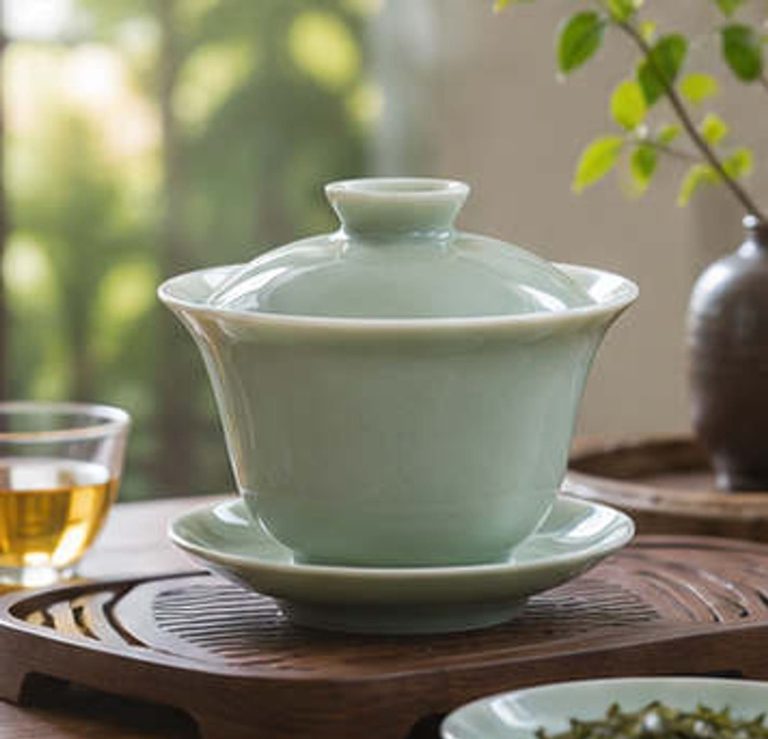
A gaiwan is three pieces: saucer, bowl and lid. You brew in the bowl, hold the lid back a few millimetres and pour through the gap, so the lid has to sit level and leave an even gap all round. Capacity decides who it is for. Our four sizes are 100, 130, 160 and 200 ml; full of water the 100 ml weighs about 420 g in the hand and the 200 ml about 690 g, most of it near-boiling. The gaiwan guide works through six myths we hear from tea buyers and the checks to make on samples.
Stocking both a gaiwan and a teapot is common, but they sell to different customers. Teapots of 400 to 800 ml suit Western-style brewing and gifting; gaiwans suit tea drinkers who brew many short infusions. Gaiwan vs teapot compares them on capacity, weight and carton count.
Tea ware from a city that has made it for centuries
Gaiwans, teapots and tea cups are the most personal pieces we make. They are held while hot, poured from many times in one sitting and judged by people who often know more about tea than the buyer selling to them. That is why the tea ware guides talk about weight in the hand, the gap the lid leaves when tilted, and how thin a rim can be before it chips.
Our tea ware goes to very different shops. A Japanese lifestyle chain buys gaiwans, small dishes and kyusu side-handle teapots from us, about 960,000 pieces a year, each SKU tested to Japan's Food Sanitation Act. In Europe tea ware sells through home chains alongside vases; in the Middle East and in company gifting, boxed tea sets are the usual form. The same gaiwan needs a different box, a different card and sometimes a different glaze for each.
Tea ware has its own production line: six high-pressure casting machines and shuttle kilns, the same shuttle kilns that fire our samples and short runs, so a tea brand can test a new glaze without waiting for a tunnel kiln slot. Our Qing'ai tea ware range won a silver award for daily-use ceramic design from the China Ceramic Industry Association in 2026.
Tea ware at our factory
Gaiwans and tea ware have their own line: 6 high-pressure casting machines and shuttle kilns. In 2025 it delivered 1.45 million pieces against a capacity of 1.8 million. Boxed tea sets with a magnetic lid and EVA insert start at 1,000 sets.
Read next: Porcelain gaiwans · Ceramic teapots · Ceramic tea sets
Where these orders usually go wrong
Choosing a large gaiwan for beginners
Full of water a 200 ml gaiwan weighs about 690 g, most of it near-boiling. Learners do better with 100 to 130 ml.
Ignoring the lid fit
A lid that rocks or leaves an uneven gap pours leaves into the cup. Check every sample lid on its own bowl.
Decoration on the rim or inside the lid
Lips and hot tea touch both. Ask how it was applied and which report covers it.
What to send with your enquiry
With these details we can answer in one reply instead of three. A first reply comes within 24 hours on working days.
Send these details- Capacities you want, in ml
- Gaiwan, teapot, cups or full set
- Glaze or decoration
- Retail box or gift box
- Quantity per size
Products these guides apply to
Related pages
New in other topics
 Dinnerware, Mugs & Cups · 23 Nov 2026Branded Coffee Cups for a Café: Logo, Minimums and Reorders
 Dinnerware, Mugs & Cups · 20 Nov 2026Building a Custom Dinnerware Set From Your Own Piece List
 Shipping & Import · 17 Nov 2026Broken Ceramics on Arrival: How to Make a Claim That Gets Paid
 Dinnerware, Mugs & Cups · 15 Nov 2026Dishwasher-Safe Dinnerware: What the Label Should Be Based On
Tea Ware: questions buyers ask
What size gaiwan should I choose?
100 to 130 ml for someone learning or brewing for one; it is far easier to control. 160 to 200 ml when you brew for several people and already pour with confidence.
Is a gaiwan better than a teapot?
Neither is better. A gaiwan shows the leaves and suits short, repeated infusions; a teapot holds heat and pours a larger volume. Many tea shops stock both for different customers.
Can you make tea ware in our own glaze?
Yes. A new colour or glaze starts at 1,000 pieces with 30 to 35 days lead time; an exclusive glaze takes about 20 days to develop first.
Other topics
Have a specific order in mind?
Send the shape, quantity and market. We reply within 24 hours on working days and send a written quotation within 48.