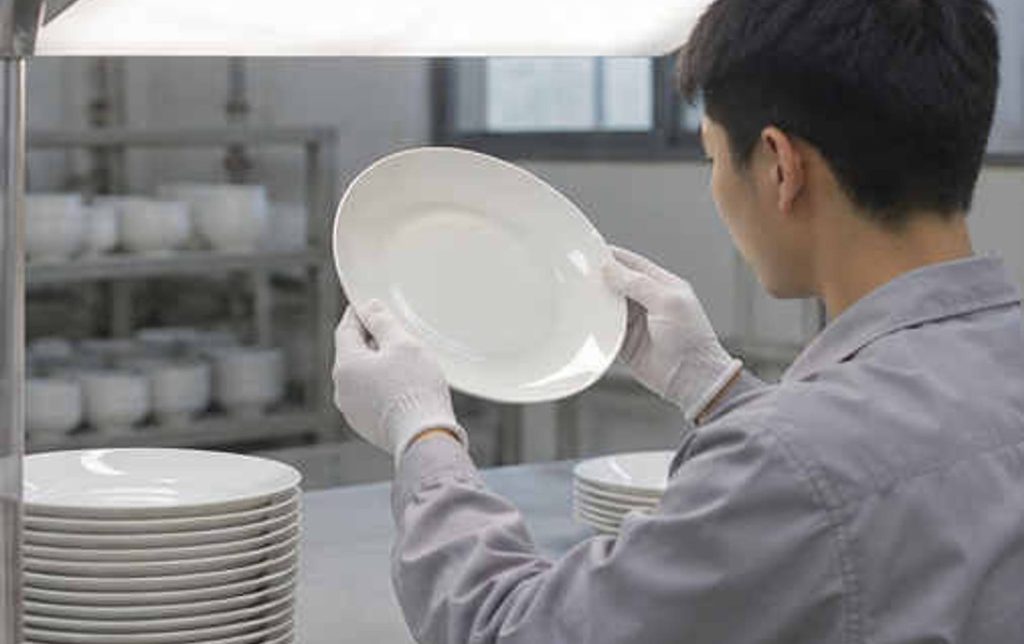
To source ceramic dinnerware from China, decide exactly what you are changing on the product, confirm the supplier is the factory, ask for test reports that name your SKUs and your market, approve samples against measurable limits, inspect before you pay the balance, and compare offers on landed cost. For an existing model with your logo, that is roughly seven to ten weeks from first email to a loaded container, depending on how fast samples are approved. A new shape adds three to four weeks for the mold.
We run a 136,000 m² ceramics plant in Jingdezhen and shipped 620 containers to 43 countries in 2025. The steps below are the ones our longest-standing buyers follow, written from the factory side of the table.
Where to look for a dinnerware factory
Most export dinnerware comes from a handful of ceramic regions, and each has a specialty. Jingdezhen in Jiangxi is known for porcelain, from hand-painted art pieces to high-volume tableware. Chaozhou in Guangdong makes a very large share of China’s everyday export ceramics. Dehua in Fujian is known for white porcelain and figurines, Tangshan in Hebei for bone china, and Zibo in Shandong and Liling in Hunan for daily-use and underglaze porcelain. Knowing the region helps you judge whether a supplier’s claimed specialty fits where it is.
The two practical places to meet factories are B2B platforms and trade shows. Platforms are fast for a long list; shows are better for a short one, because you can handle the product and meet the people who will run your order. We exhibit at the Canton Fair (Hall 12.2, booths A13–15) and at Ambiente Frankfurt (Hall 4.1). Whichever route you use, the checks below apply the same way.
Platforms: how to shortlist quickly
A platform search returns hundreds of suppliers for “porcelain dinnerware”. Three filters cut the list fastest. First, does the listing name a production address, and is it in a ceramic region that fits the product? Second, does it show its own factory, with kilns and forming lines, or only a showroom and product photos? Third, are prices quoted per model with carton and container figures, or only as a range? A supplier that passes all three is worth an email.
Trade shows: what to do on the stand
A show is the only place where you can hold twenty suppliers’ products in one day. Use the time for what a website cannot give you:
- Handle the pieces. Weight, glaze feel, rim, how a stack of plates sits.
- Ask who makes it. Ask which kiln it fires in and where the factory is. The answer, and how quickly it comes, tells you whether you are at a factory’s stand.
- Leave with a list, not a catalogue. Note the model numbers you want samples of and the changes you would make.
Besides the Canton Fair and Ambiente, we exhibit at Maison&Objet in Paris (Hall 5A, January 2026), the Inspired Home Show in Chicago for North American retail, INDEX in Dubai for Middle East hotel buyers, and every year at the Jingdezhen International Ceramic Fair.
Start with what you are changing, because that sets your MOQ
Minimum order quantity is not one number. It depends on how far your order moves away from what the factory already makes, because every change adds setup work that has to be spread over enough pieces. At our factory the range runs from 48 pieces to 5,000 pieces per SKU.
| What you order | MOQ | Lead time |
|---|---|---|
| Mixed stock from ready models | 48 pcs | 7–10 days |
| An existing model, our glaze | 500 pcs | 25–30 days |
| A colour or glaze change | 1,000 pcs | 30–35 days |
| Your decal, one colour | 1,000 pcs | 35–40 days |
| Your decal, multi-colour or gold | 1,500 pcs | 35–40 days |
| A new shape (new mold) | 3,000 pcs | 45–55 days |
| Full private label programme | 5,000 pcs per SKU | 50–65 days, first order |
| Hotel and restaurant projects | 200 pcs per shape | 30–40 days |
Lead times count from the deposit and signed artwork.
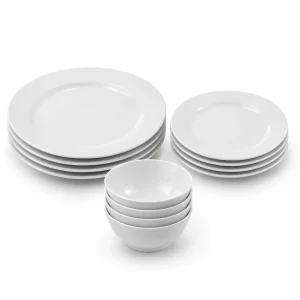
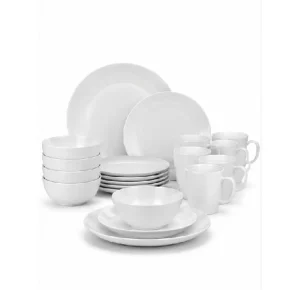
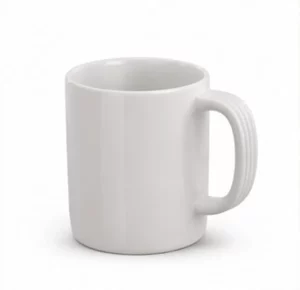
So write your first inquiry as a list of changes, not as “custom dinnerware.” “BM-350 mug, our Pantone 2955 C glaze, one-colour logo on the side, 2,000 pcs, for the US” gets you a real quote in two days. “Custom mugs, what’s your MOQ?” gets you a question back. Our guide to dinnerware MOQs walks through each tier, and the OEM page lists what each one includes.
Write the first inquiry as a list
A first inquiry that gets a real quote names five things:
- The model or shape, by the supplier’s model number if you have one, or by a photo and dimensions.
- What changes: colour, decoration, packaging, shape.
- The quantity per SKU, and whether there will be reorders.
- The market, because it decides the tests and the labels.
- The date the goods must be on your shelf.
With those, we can reply with a quote, the MOQ tier, the lead time and the pieces per container in one message. Without them, the first reply is a list of questions.
Response times worth expecting
A factory that wants your order should answer on a working schedule you can plan around. Ours: a first reply within 24 hours on working days, a formal quote within 48 hours, custom samples sent 7–15 days after confirmation, and an order confirmation within 2 working days of the deposit arriving. If a supplier is slow before the order, it will not be faster during it.
Check that you are talking to the factory
A factory can tell you which kiln your order fires in. With a trading company, every answer passes through one more business. You can check the difference before the first sample.
Ask three things in your first email:
- The exporter’s customs registration and business license. Trading companies have customs codes too, so the code alone proves nothing. Check that the company on the export record is the one whose license lists manufacturing at the address you are shown. Ours exports under its own registration, 3302960091 at Jingdezhen Customs.
- Audit report numbers, not audit logos. Retail buyers ask for amfori BSCI, Walmart FCCA, IKEA IWAY or Sedex SMETA. Each audit has a report or registration number and a named auditor. Ours are listed with numbers and expiry dates on our certifications page.
- A video call from the floor. Ask to see forming, the glaze line and the kiln in one call. If the supplier needs a day to “arrange” it, ask why.
Then visit if the order justifies it. Our 90-minute route covers the showroom, forming, kilns, lab and warehouse, booked seven working days ahead.
Our supplier audit checklist goes line by line through what retail auditors look at and how to read the report.
The documents that settle it
Three documents prove a factory is what it says: the business licence with its unified social credit code and scope, the customs registration in the same company name, and a production address that matches. Ours are the credit code 91360206MA3AD2868G, Jingdezhen Customs registration 3302960091 and No. 1 Changcheng Chuangyu Road in the Jingdezhen High-tech Zone. A video call that walks from the kilns to the warehouse without cutting answers most of the rest before you book a flight.
When a trading company is the right choice
A trading company can make sense for a small mixed order across several product types, such as ceramics with glass and textiles, where no single factory makes everything. What matters is that it says it is a trading company, names the factory, and lets you audit the factory directly. Hidden supply chains are where quality problems hide.
Ask for test reports by SKU and market, not certificates
An ISO 9001 certificate shows that a factory runs a quality system. It says nothing about whether a particular mug will pass a lead and cadmium leach test in California. For food-contact ceramics, the proof is a lab report that names the standard, the lab, the report number, the date and the SKUs it covers.
Each market tests to its own rules, so the report has to match where you sell:
| Market | Standard | Our report | Covers |
|---|---|---|---|
| United States | FDA CPG 7117.06/07, ASTM C738 | Test report on file | 14 series, 62 SKUs |
| California | Prop 65, lead and cadmium | Test report on file | 38 US-line SKUs |
| Canada | SOR/2016-175 | Test report on file | 38 Canada-line SKUs |
| EU and Germany | LFGB §30/§31, (EC) No 1935/2004 | Test report on file | All food-contact shapes |
| Japan | Food Sanitation Act, Notice 370 | Test report on file | 22 Japan-line SKUs |
Check that your SKU is on the coverage list. A report for a white plate does not cover the same plate with a red decal, because coloured decorations are a common source of lead and cadmium. That is also why we keep decals and gold off food-contact surfaces: anything that touches food is underglaze or in-glaze.
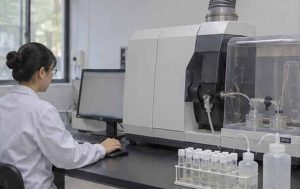
You will notice we never call our products “lead-free.” No test can prove zero, and the word means different things in different markets. We write what we can show: the standard we tested to, and our internal limit, which is half the legal limit, checked on our own ICP-MS before the outside lab sees the batch. If a supplier offers you “lead-free” or “FDA approved” in place of a report, treat that as a missing report. The FDA does not approve dinnerware; it sets action levels for leachable lead that imports are tested against.
Our guide to food-contact testing by country covers each standard and how to read the numbers on a report.
Approve samples against numbers you can put in the contract
A sample approved as “looks good” gives you nothing to stand on when the bulk order looks slightly different. Approve it against limits instead, and copy those limits into the purchase order.
These are the limits we work to and the ones we suggest buyers write down:
| Check | Limit |
|---|---|
| Colour within one batch | ΔE ≤ 1.5 (X-Rite Ci7800, D65/10°) |
| Colour between batches | ΔE ≤ 2.0 |
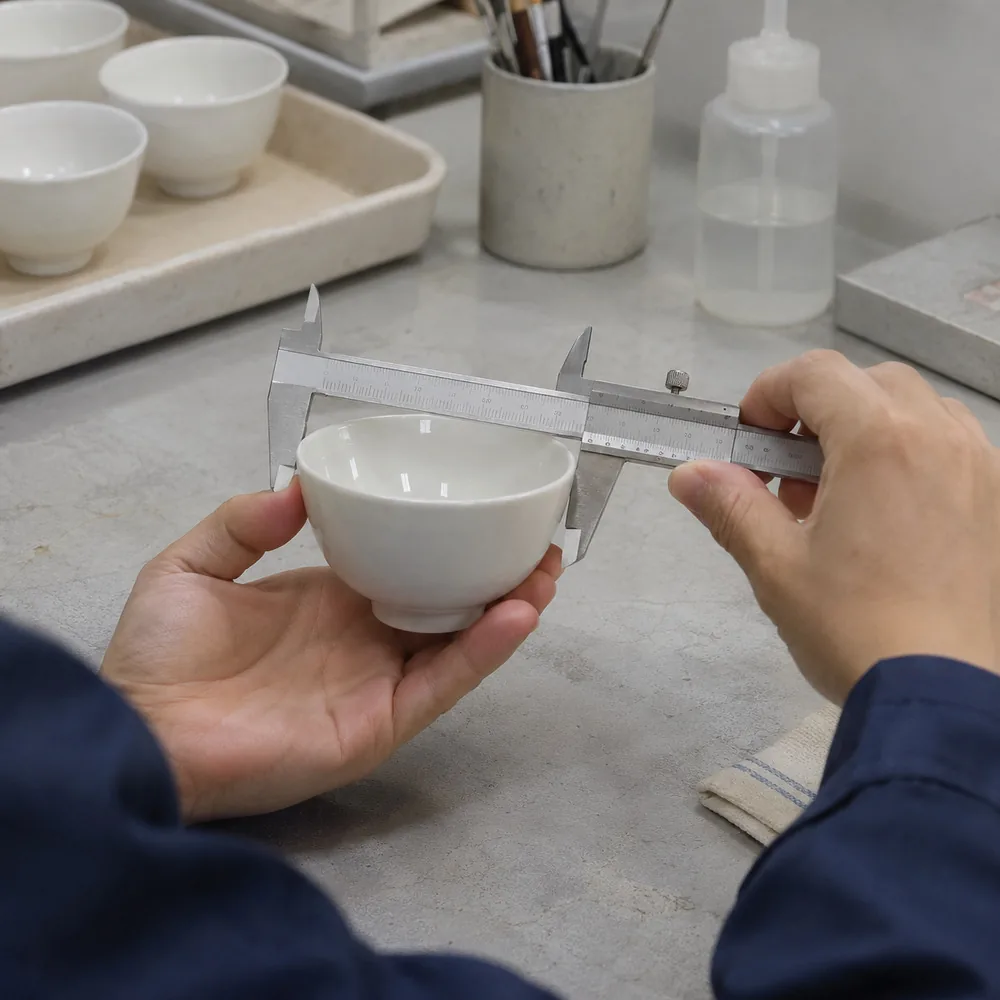
| Rim diameter | ±1.5 mm |
| Rim ovality | ≤ 1.5% |
| Plate warp | ≤ 1.2 mm |
| Pinholes | ≤ 0.5 mm, at most 2 per piece, never on the food surface |
| Glaze specks | ≤ 0.8 mm, at most 1 per piece |
| Gold line | Continuous, no gaps; survives 50 rubs without showing the base |
| Water absorption | ≤ 0.5% (high-white porcelain ≤ 0.3%) |
If you are not sure which body you are being offered, our guide to porcelain vs ceramic shows how to tell.
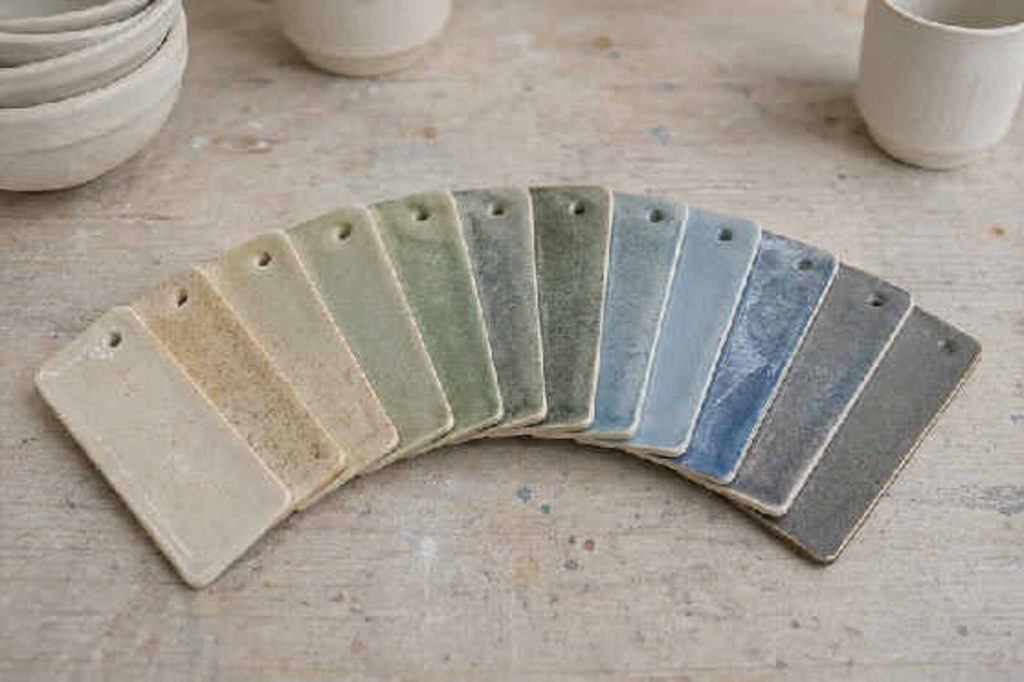
Two free stock samples come out of our sample room in three days; you pay only the courier. For a new shape, we 3D-print a prototype in three days before anyone cuts a mold. A printed model costs a fraction of a 15–20 day mold, and it is where a handle that sits wrong in the hand or a bowl that won’t stack gets caught. We recommend it for every new shape.
Keep one approved sample, signed and dated, at each end. When the bulk order arrives, compare against it, not against a photo.
What samples cost and how long they take
| Sample | Cost | Time |
|---|---|---|
| Stock samples | 2 pieces free; you pay the courier | Sent in 3 days |
| Custom samples | Charged, then refunded when you order | 7–15 days |
| 3D printed prototype of a new shape | Charged at cost | 3 days |
Order samples of every version you plan to sell, not only the plain one. A plate with a decal and the same plate in plain glaze are two products for testing, for care lines and for inspection.
Sign two, keep two
Sign and date two identical approved samples. One stays with us in the sample room as the production standard; one stays with you. At inspection and on arrival, both sides measure against the same thing.
Plan production around the weeks that can’t be compressed
Four parts of the schedule don’t shrink when you push. Build your calendar around them.
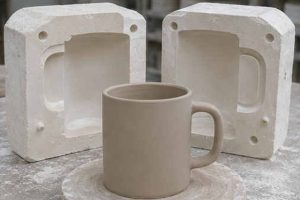
- Molds take 15–20 days. Plaster molds are cast from the master, dried and trialed before production. The mold is yours, not the factory’s.
- Firing is fixed. Our tunnel kilns fire at 1,260–1,320 °C, held within ±8 °C, and the cycle length does not change for a rush order.
- Peak season adds 7–10 days. July to October is when every holiday programme is in production at once. If your goods need to be on shelves by November, sign artwork by early summer.
- Artwork starts the clock. Lead times count from the deposit and signed artwork, so an unsigned decal proof is a delay you control.
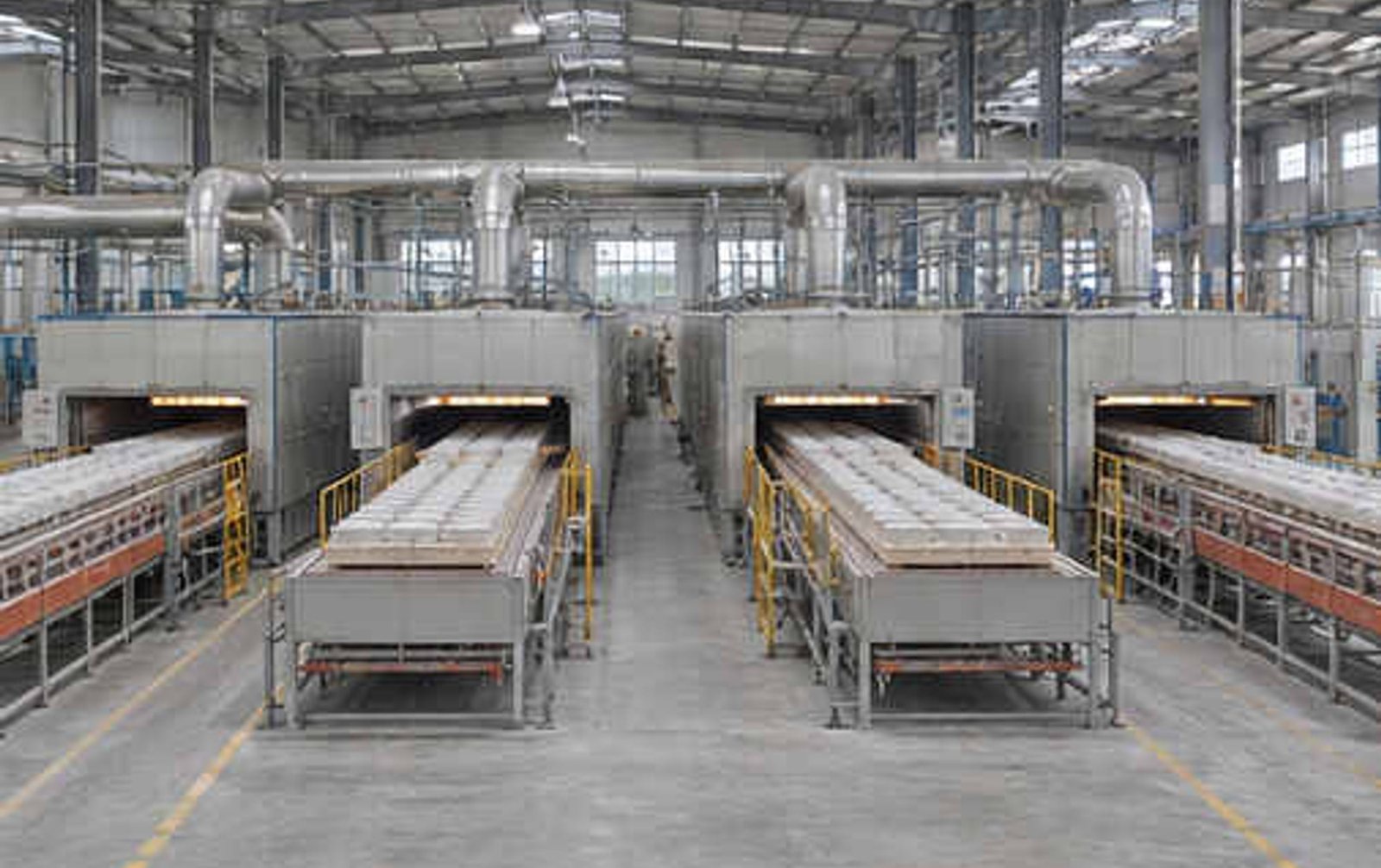
During production you should get something to look at. We send progress photos every 10 days. One of our clients, a Saudi gift company, has had three Ramadan seasons delivered on time, a deadline that does not move.
Our guide to custom ceramic molds covers lead times, ownership and when a new mold is worth it.
What a progress update should show
During production you should not have to ask how the order is going. We send photos and a short status every 10 days: the stage each SKU has reached, what has been fired and sorted, and any issue that could move the date. A good update shows your product, with your decoration, on our line, not a stock photo of the factory.
When something goes wrong mid-run
Problems are found in production, not only at inspection: a glaze batch that reads too dark, a decal that does not sit well on a curve. The question is how quickly you hear about it. Ask your supplier to report any issue that affects colour, size or the date within a working day, with photos and a proposed fix. You can then decide while there is still time to act.
Inspect before you pay the balance
The usual payment structure is a 30% deposit and 70% against a copy of the bill of lading. Inspection comes between the end of production and that balance, so it is your last chance to stop a bad shipment.
Final inspection to AQL 2.5 is the norm for dinnerware: in a sample drawn under ISO 2859-1, major defects are judged at 2.5 and minor defects at 4.0. Ask for 1.5 if your retailer requires it, and agree it before production, not at the inspection. Send your own inspector if you have one; we welcome them. Our guide to pre-shipment inspection for dinnerware shows what those numbers accept on a real order.
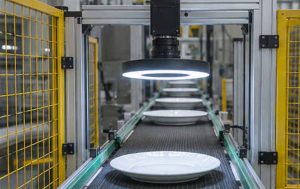
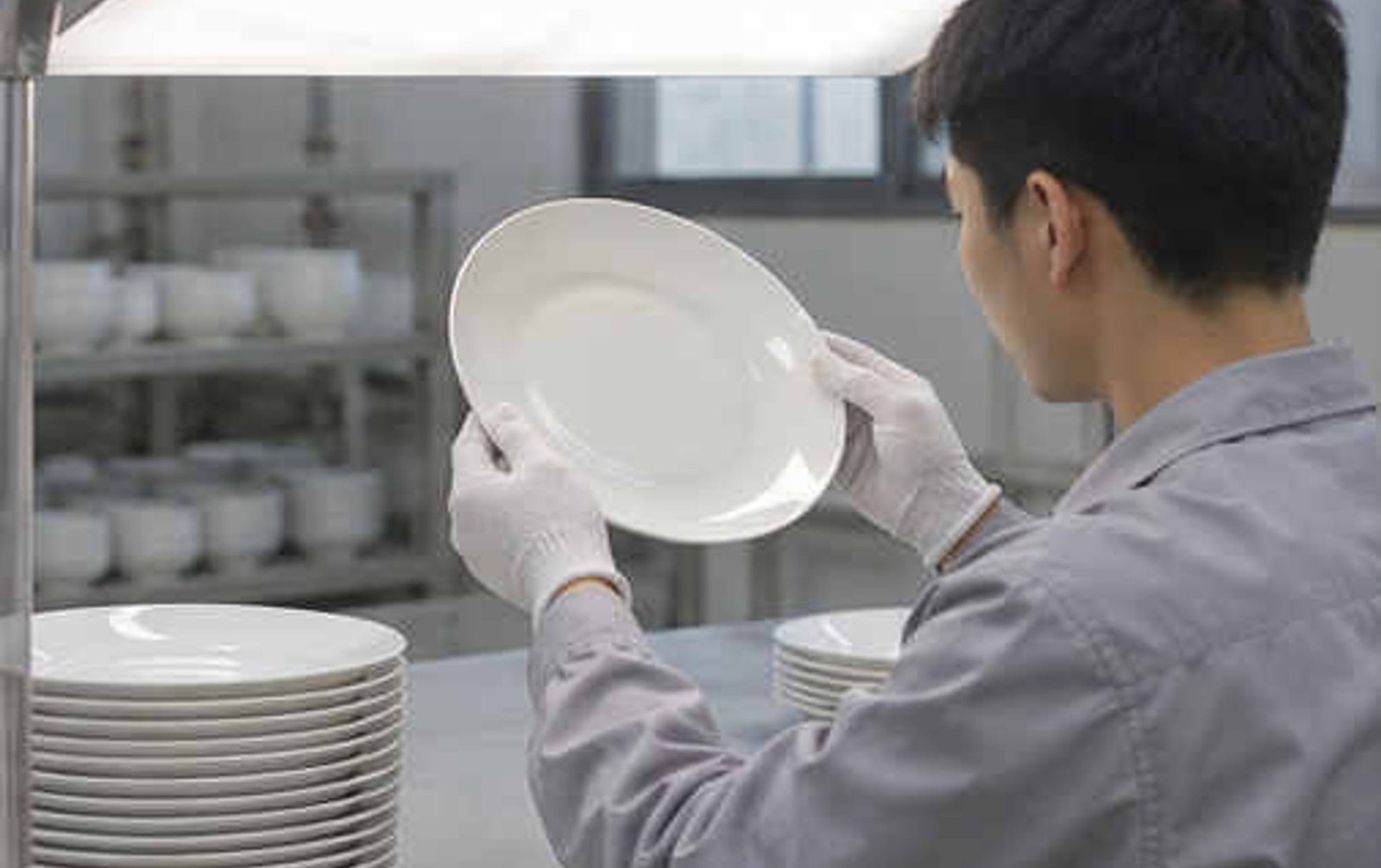
The factory should be checking long before the final sample. Every piece here passes machine vision and a manual check, and each piece is traced to its kiln run and shift, so a problem found in one carton can be followed back to the cause. Our quality control page shows the three inspection stages.
Booking the inspection
Book your inspector with 3 working days’ notice, for the point when production is complete and at least 80% of the order is packed. After a pass we load within 5 days. If you do not use a third-party inspector, ask for the factory’s own final inspection report, with the sample size, the defects found and photos. Our guide to pre-shipment inspection for ceramic dinnerware lists what the inspector should check, piece by piece.
Pack, load and compare landed cost, not unit price
The lowest unit price is rarely the lowest cost. One broken pallet, one rework, one claim or one missed sailing can absorb the difference between two quotes, so compare suppliers on what arrives sellable at your warehouse.
“Don’t use the unit price as the only measure of a supplier. A cheaper factory nearly always saves money somewhere you can’t see: the glaze, the inspection, the packing, the test reports, the after-sales cover. None of it shows on the sample. It shows when the goods arrive, go through customs and reach your distributor, and by then the buyer is the one paying. Compare prices, by all means, but compare the full cost of getting sellable goods to market.”
Min Zhou, Quality Director, TONFO
Start with how much fits in a container. Our DS-16 16-piece dinner set packs four sets to a 60 × 45 × 40 cm carton (0.108 m³), which works out to 2,044 sets in a 40-foot high cube at 92% fill. Ask every supplier for the same three numbers per SKU: pieces per carton, CBM per carton and units per 40HQ. If they can’t give them, their freight estimate is a guess.
Those numbers change the cost per piece more than most buyers expect. A container costs the same to ship whatever is inside it, so freight per piece follows how many pieces fit. Our BM-350 mug fits 41,616 to a 40HQ; the BM-500 fits 25,776. The bigger mug carries about 61% more freight per piece before anyone has quoted a unit price.
A smaller order works the same way at a different scale. 5,000 BM-350 mugs pack 48 to a carton, so 105 cartons and about 6.7 m³: a shared-container (LCL) shipment, not a full one.
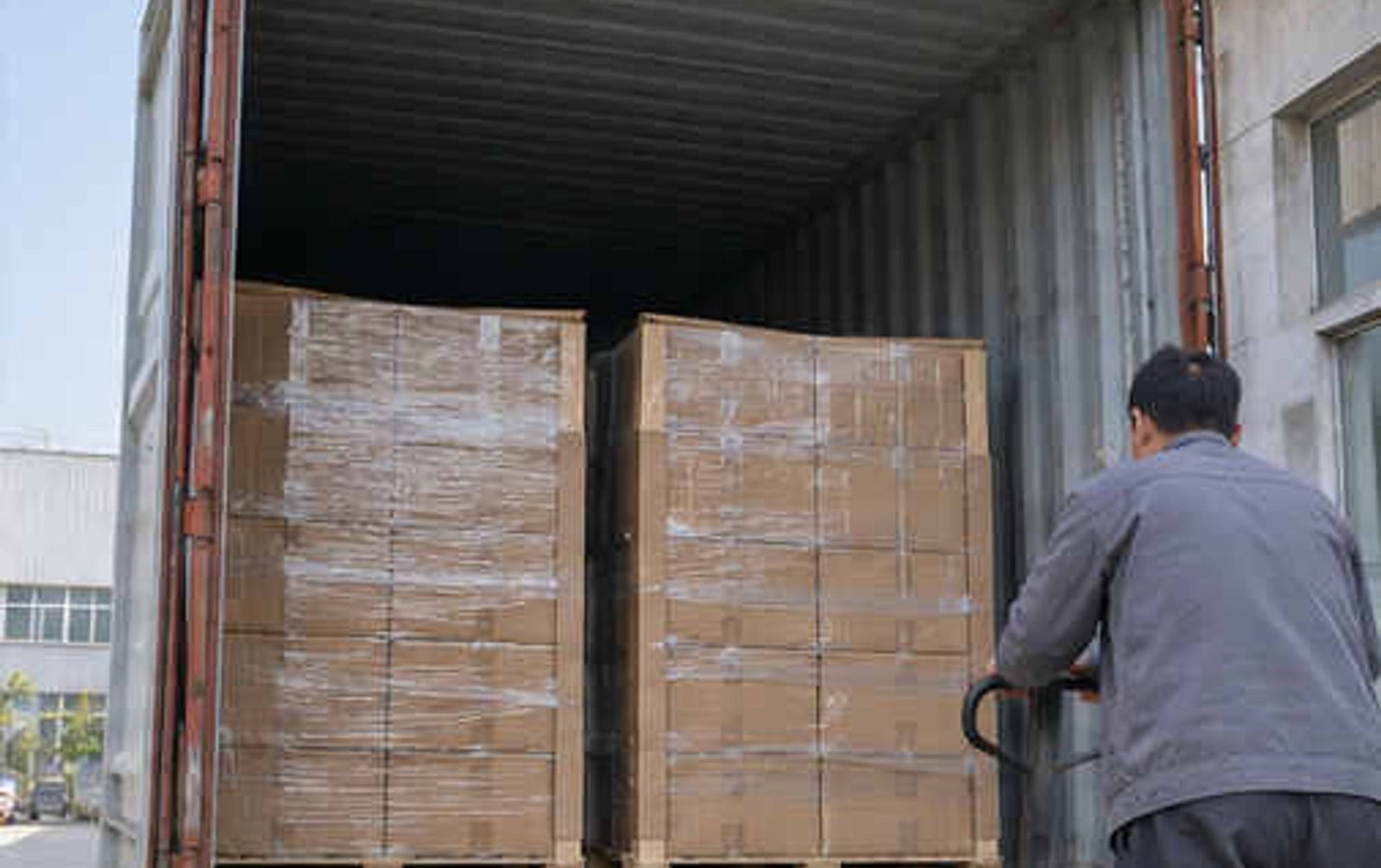
Then look at what protects the goods. Our cartons are five-ply, drop-tested from 1.2 m to ISTA 1A and 3A, with pulp or EVA inserts. Our transit breakage in 2025 was 0.21%, which on those 5,000 mugs means planning for about 10 broken pieces. Ask your supplier for their rate, and ask how they measure it.
Then add the terms that decide who pays when something goes wrong:
- Claims window: ours is 30 days from arrival, with an 8D report draft within 48 hours.
- Transit time: about 16–20 days to the US West Coast, 30–34 to the East Coast and 28–33 to Northern Europe.
- Documents: commercial invoice, packing list, bill of lading, certificate of origin, test reports and the EU Declaration of Conformity where needed, sent within three working days of sailing.
What a USD 1.10 saving cost one buyer
A gift buyer for a car brand in the Middle East orders about 12,000 mug-and-tray sets a year for new-car handover boxes. The specification is strict: dishwasher-durable glaze, matched colour across a set, food-contact compliance and packing that survives a sea crossing. Two factories quoted: us and a smaller plant. The smaller plant was USD 1.10 a set cheaper, its samples looked almost identical, and the buyer placed a 3,000-set trial order there.
When the containers were opened, the glaze had gone dull and patchy after three dishwasher cycles, colour varied so much within the batch that sets could not be matched, and thin foam packing had let breakage reach nearly 17%. There were no food-contact test reports, so the local distributor’s goods were held at customs, with demurrage and inspection fees. The factory offered to replace 5% of the goods and nothing else.
The saving on the order was USD 3,300. The costs of the detention, inspection, replacement goods, rework and a stop-gap supplier came to about USD 12,800, before the distributor’s penalty for late handover gifts.
The buyer then ran a 2,000-set trial with us. We tested to FDA and LFGB requirements before production, kept a sealed sample from every glaze batch, drop-tested a reinforced gift box for container shipping, sent production video and an inspection checklist before loading, and put two things in the contract: we replace any breakage above 3% and pay the freight, and the test reports travel with the goods and go to the buyer early for customs pre-clearance. Breakage on arrival was 0.8%, the goods cleared customs first time and passed the buyer’s dishwasher test. The full 12,000-set annual order has come to us every year since.
In the buyer’s words: “When I only looked at unit price, I thought I saved money. After calculating all hidden costs, the cheaper supplier turned out far more expensive.”
The client we have shipped to longest, a Nordic home retail group, has bought 16.8 million pieces from us since 2018, audited under IKEA IWAY 6.0. A US warehouse club we supply gets an SGS report inside every container. Our on-time rate in 2025 was 96.8% of orders, and complaints ran at 0.07%.
For Incoterms, ports and payment options, see our shipping and trade terms. Our guide to the true cost of importing dinnerware breaks down the costs that never appear on a quote, and the container loading guide has carton and 40HQ data for every model.
Five sourcing mistakes we see most often
Comparing unit prices only
The cheapest quote often loses on freight, breakage, testing or time. Compare landed cost per sellable piece, with every line filled in.
Accepting a certificate in place of a report
An ISO certificate shows a management system. A test report for your SKU, decoration and market shows the product is fit to sell. Ask for the report.
Approving a sample without numbers
“Looks good” cannot be enforced. Write colour, size, weight and defect limits into the contract, and approve against them.
Leaving packaging to the end
The carton decides breakage and the pieces per container. Approve the carton and the box at the same time as the product, not after production has started.
Forgetting the season
From July to October, kilns fill with Christmas and holiday orders and lead times rise by 7–10 days. Plan back from the shelf date, and confirm orders for the holiday season before the summer.
What a long-running sourcing relationship looks like
The point of all of this is not the first order. It is the tenth. Our longest-running customer, a Nordic home retail group, has bought from us every quarter since 2018: eight SKUs, colour held within ΔE 1.5, and a sample kept from every batch for three years. A German discount retailer receives twelve deliveries a year with its glaze recipe reserved. Both run on the same three things: a written list of what changes, limits expressed as numbers, and a supplier whose records can be checked.
A sourcing timeline you can plan around
Here is how the steps add up for an existing model with your logo, shipped to the US West Coast. Each figure is our standard; your supplier’s will differ, so ask for theirs in the same format.
| Step | Time |
|---|---|
| First reply | Within 24 working hours |
| Quote | Within 48 hours |
| Stock samples made | 3 days, plus courier |
| Production (one-colour decal, 1,000 pcs) | 35–40 days from deposit and signed artwork |
| Loading after a passed inspection | Within 5 days |
| Ocean transit to US West Coast | 16–20 days |
Add 15–20 days for a new mold and 7–10 days if production falls between July and October.
If you have a product, a quantity and a market, that is enough for a quote. Send them to us and our export team will reply within 24 working hours with the MOQ tier, the reports that cover your market, and a sample plan. Or browse all 46 ready models first.