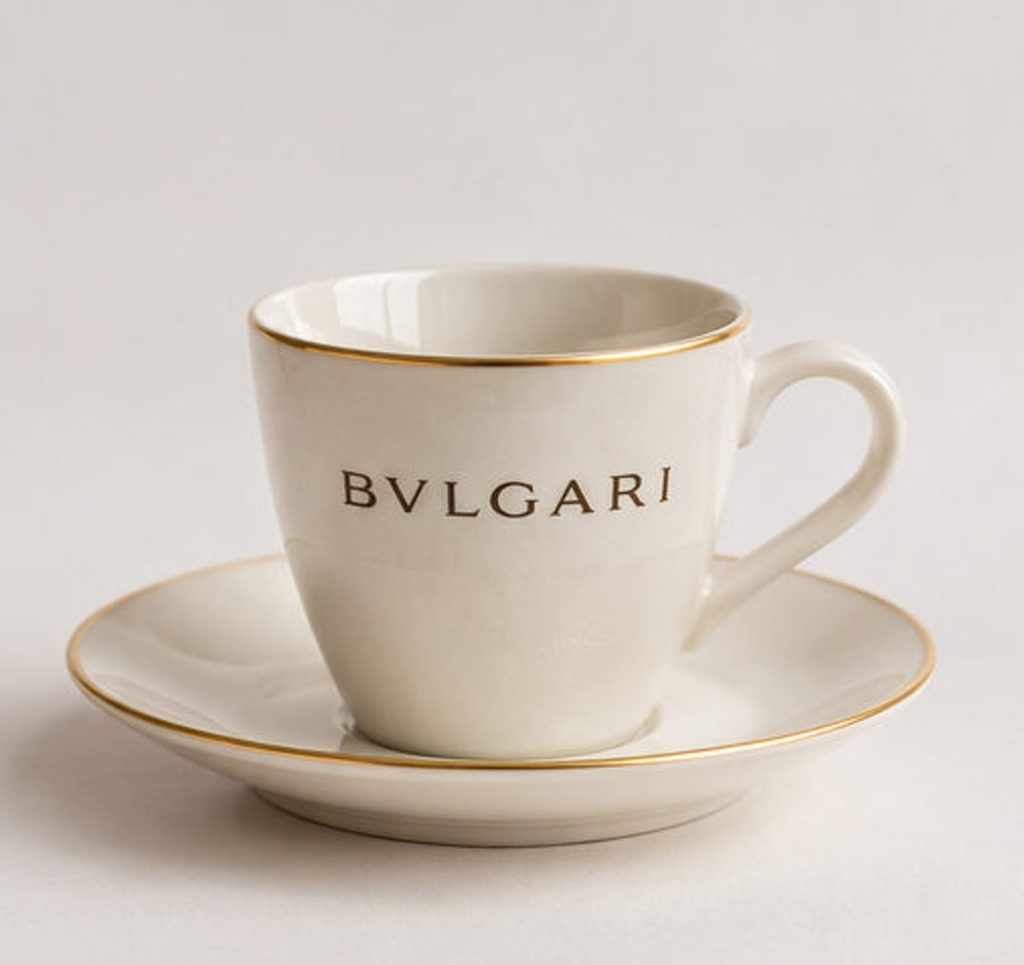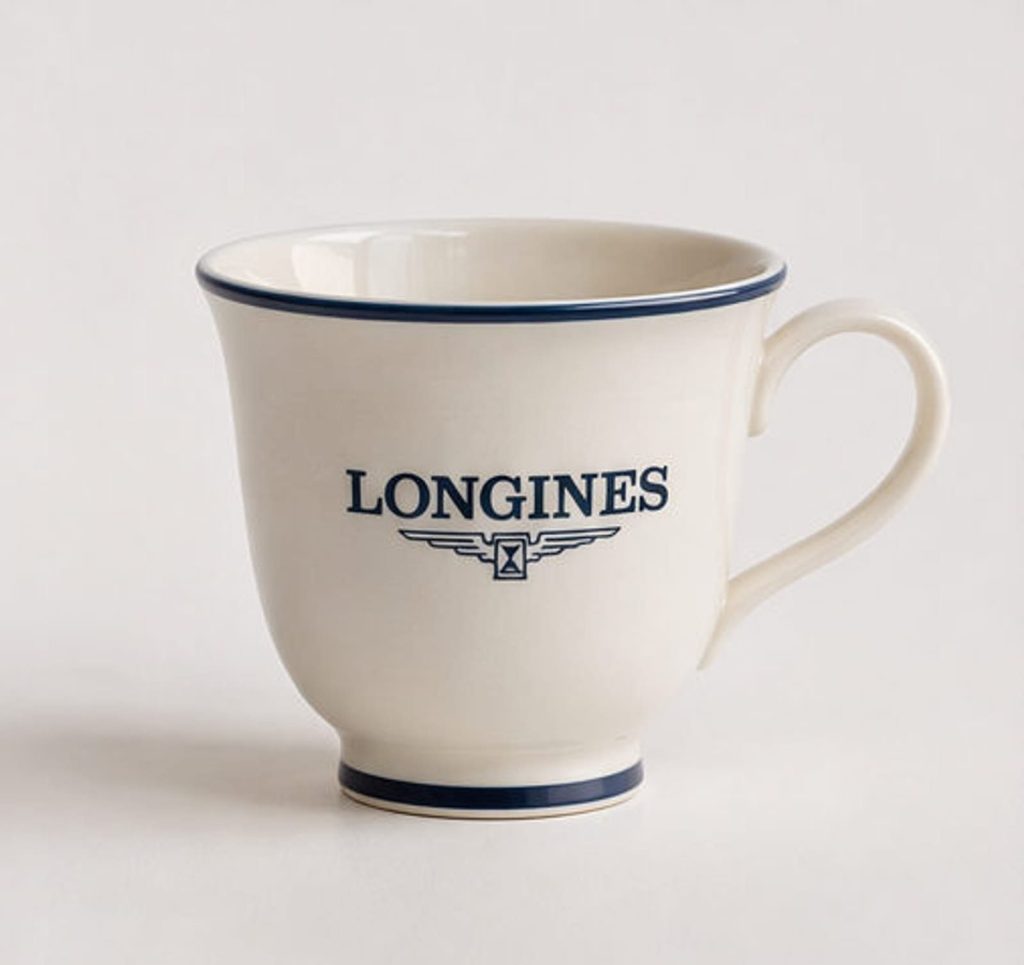
Factory direct from Jingdezhen · Wholesale, OEM and retail

Customer Cases

Each case follows the same format: what the customer needed, what we did, and what happened. Retail customers who asked us not to name them are shown by code.

Planning a range of your own? Our private label guide shows how a retail programme like these runs.

Brand projects, in photos

Sixteen brands we have made porcelain for. Each card shows the piece, the piece in use and its packaging. Click a photo to enlarge.

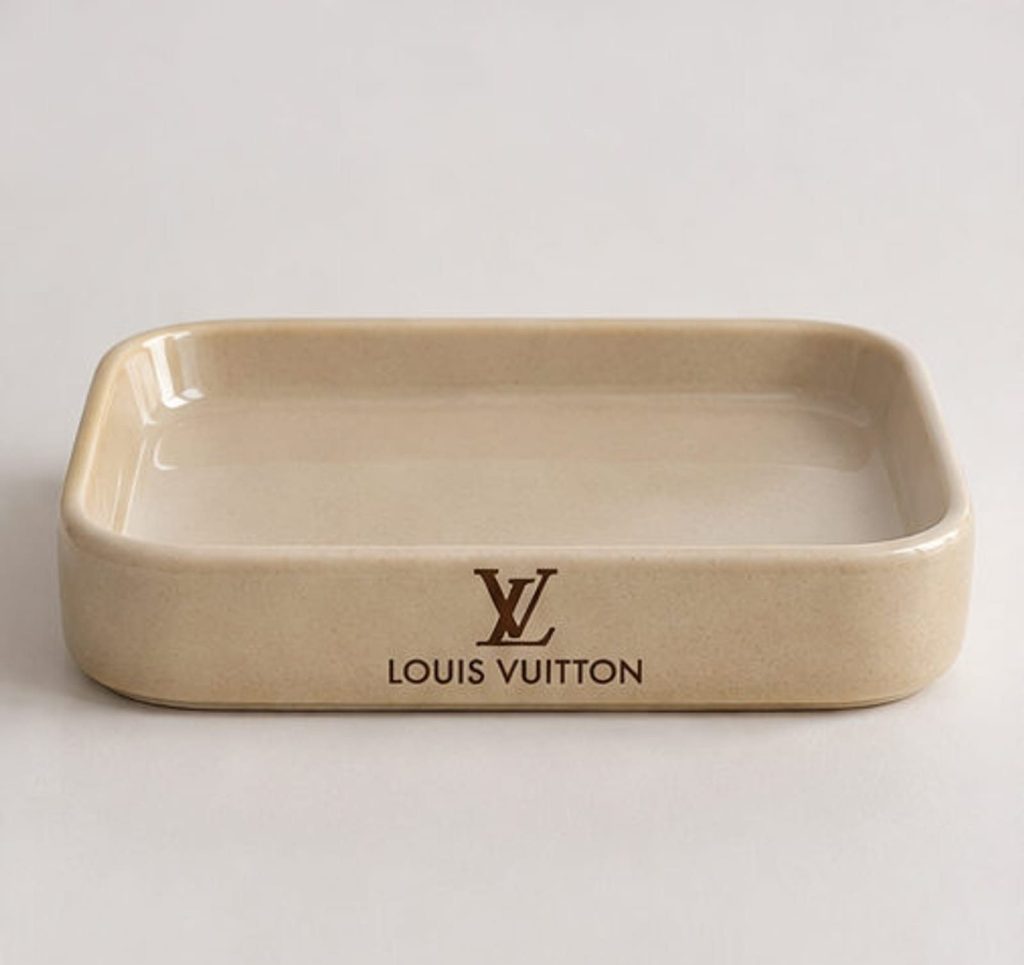
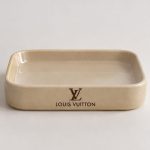
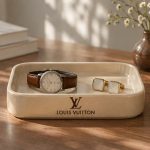
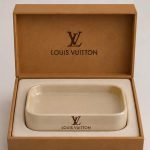
Louis Vuitton glazed ceramic valet tray with LV monogram

Louis Vuitton

A glazed ceramic valet tray with the LV monogram, in a tan presentation box.
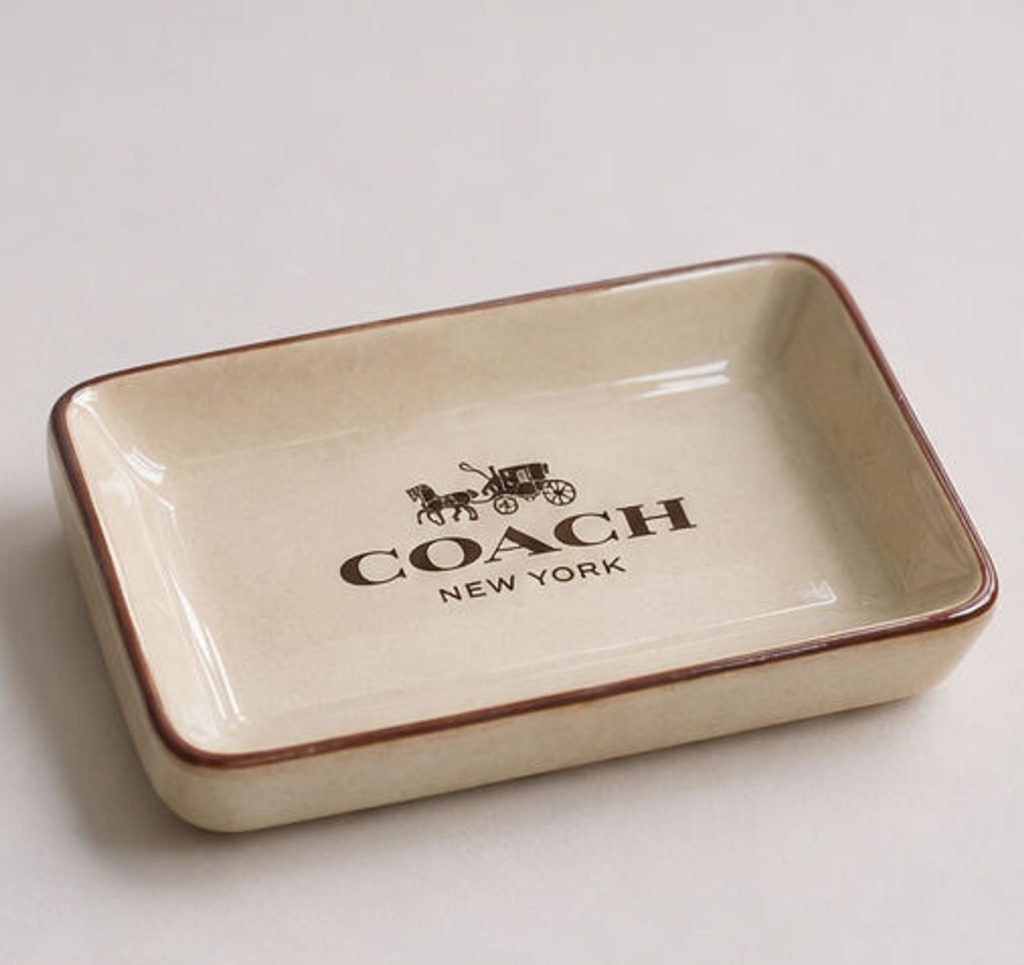
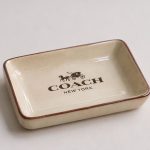
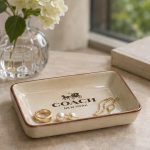
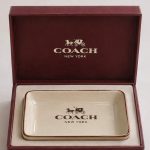
Coach rectangular porcelain tray with brown rim and horse-and-carriage logo

Coach

A rectangular porcelain tray with a brown rim and the Coach horse-and-carriage logo, in a burgundy box.
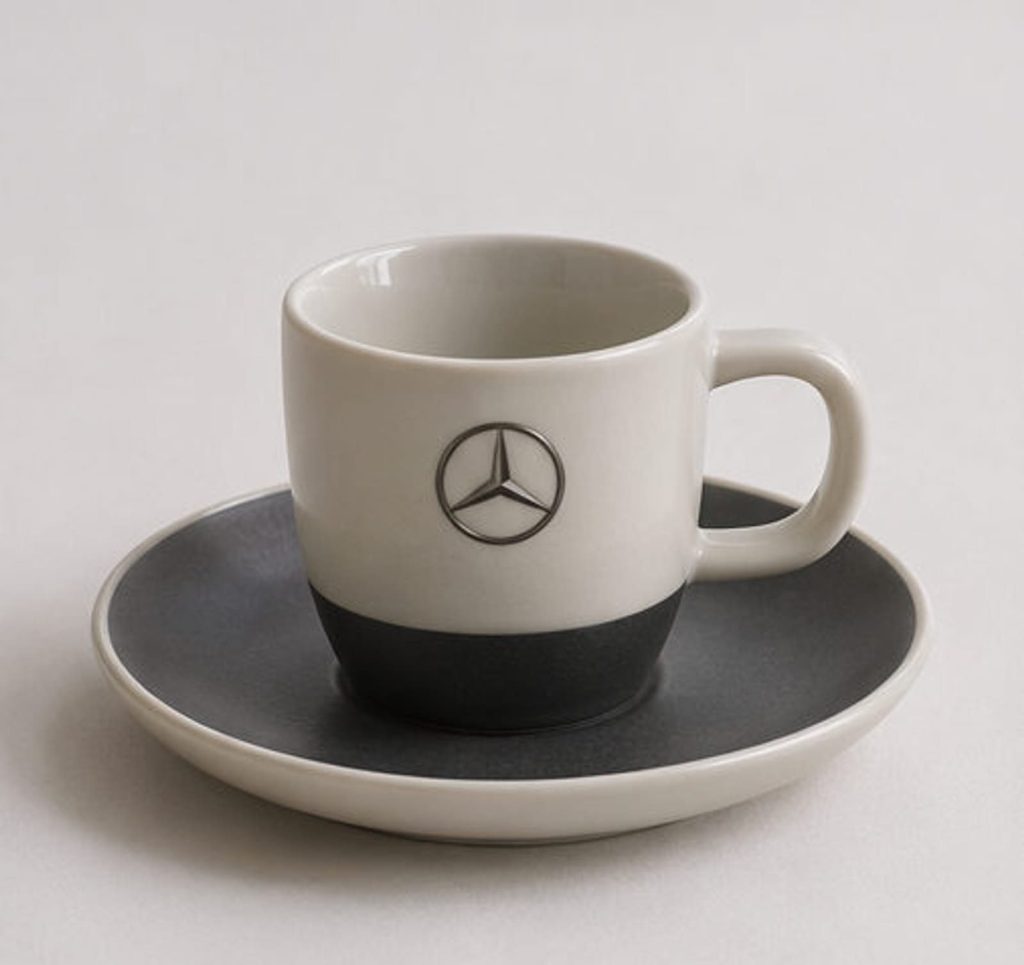
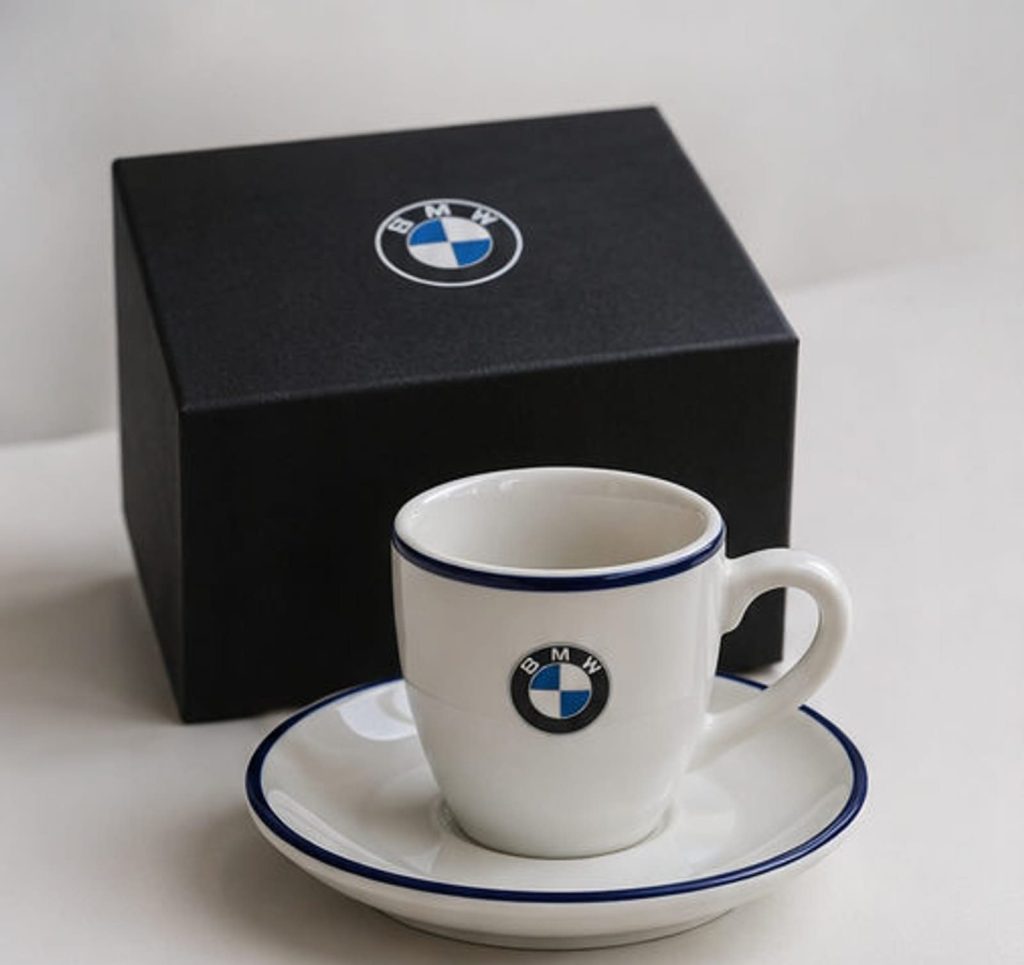
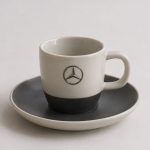
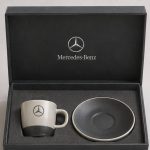
BMW porcelain espresso cup and saucer with navy rim

BMW

A porcelain espresso cup and saucer with a navy rim and the BMW roundel, in a black gift box.
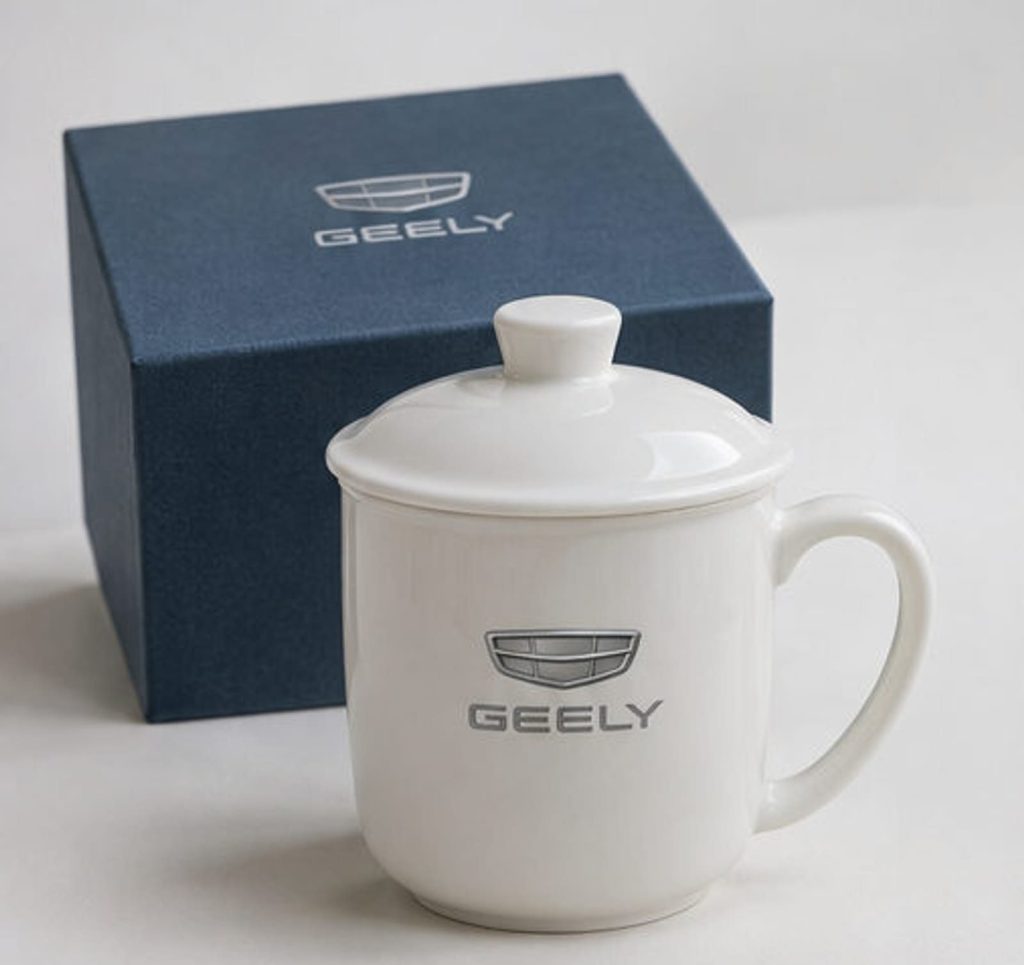
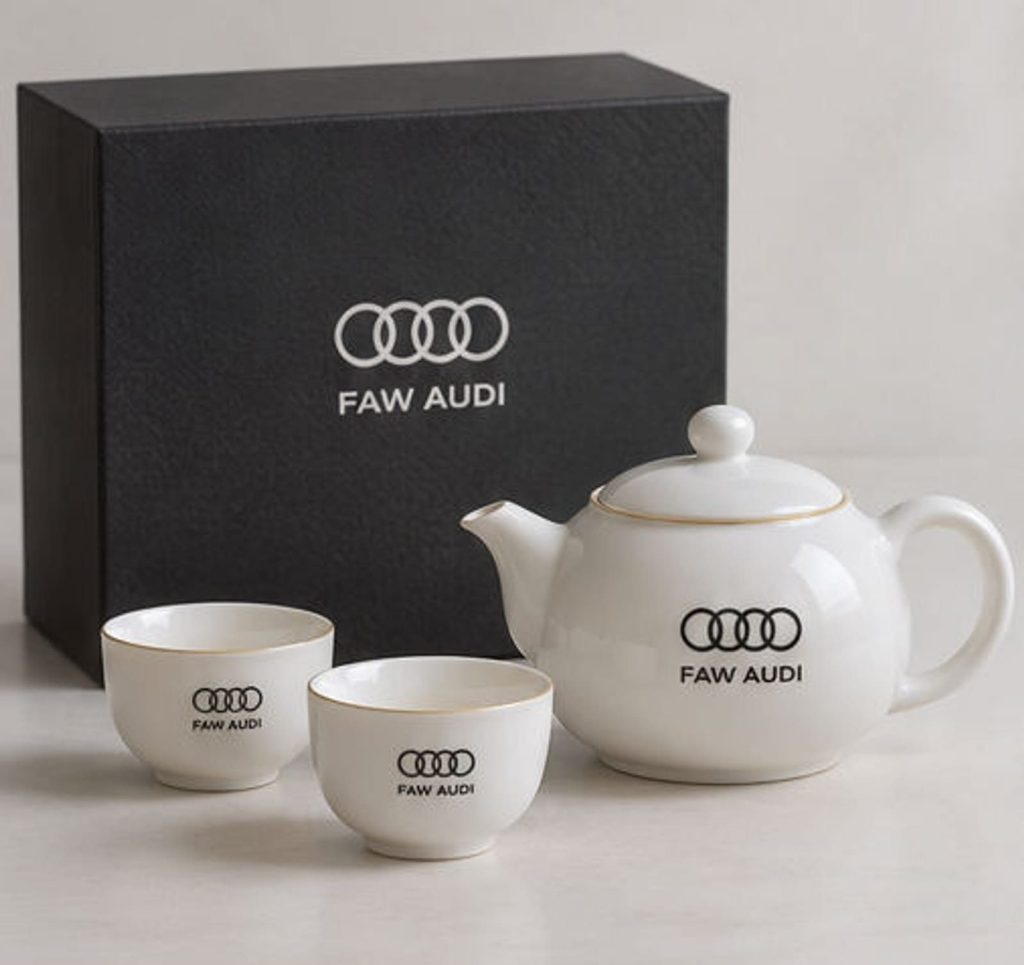
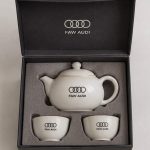
FAW-Audi co-branded porcelain teapot and cups

FAW-Audi

A co-branded porcelain tea set, teapot and cups with the four-ring logo, in a black presentation box.
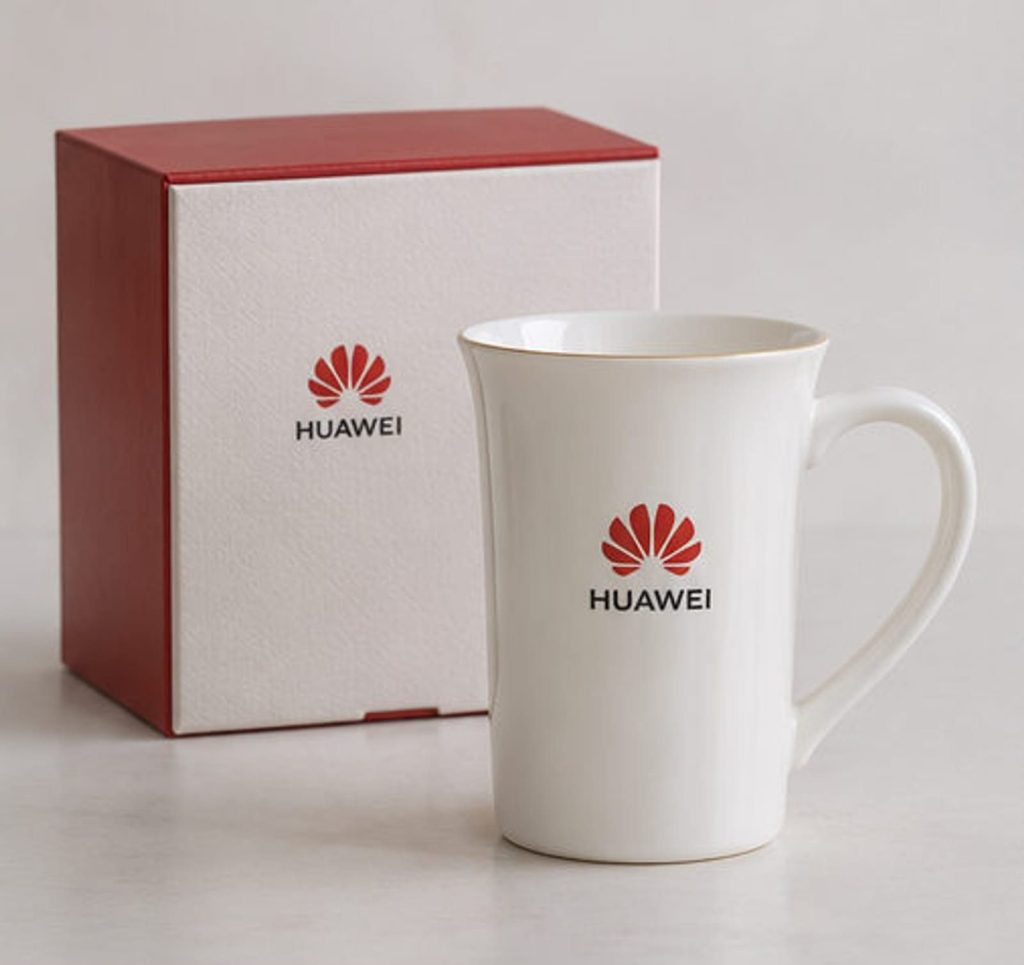
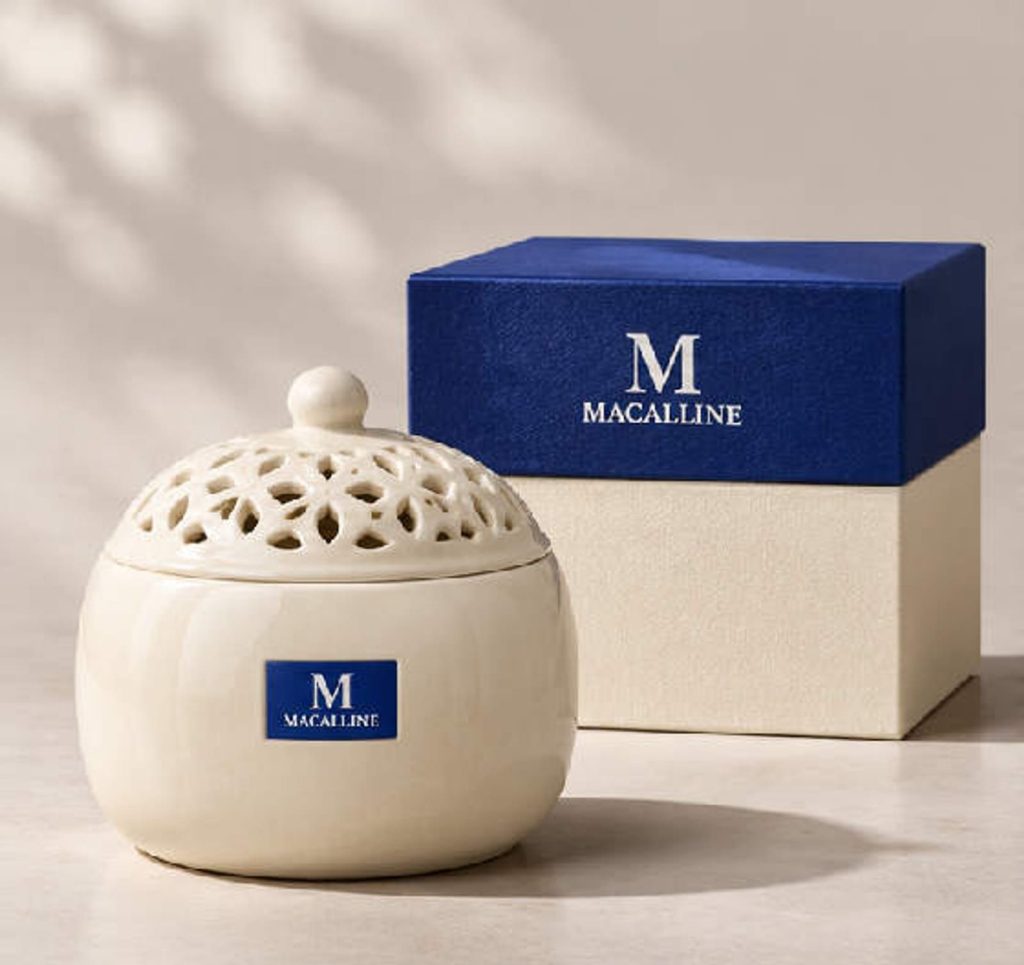
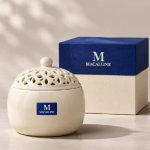
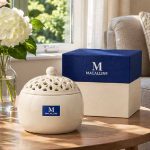
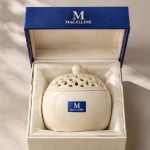
Red Star Macalline pierced porcelain lidded jar beside its blue gift box

Red Star Macalline

A pierced porcelain lidded jar with a blue Macalline plaque, in a blue gift box.

Bespoke & complex projects

Some briefs are hard: a shape a mold cannot make, ceramic combined with metal, glass or flame, a replica judged against a museum original, or a contract that must match batch after batch for years. These are projects we have taken on, set out as the brief, what made it hard, how we solved it and the result.

Case files

Ten recent projects in full: the brief, what made it hard, how we solved it, the inspection and test data, and the outcome. Start with the table, or open any case.

#ClientObjectMaterialsVolumeKey figure
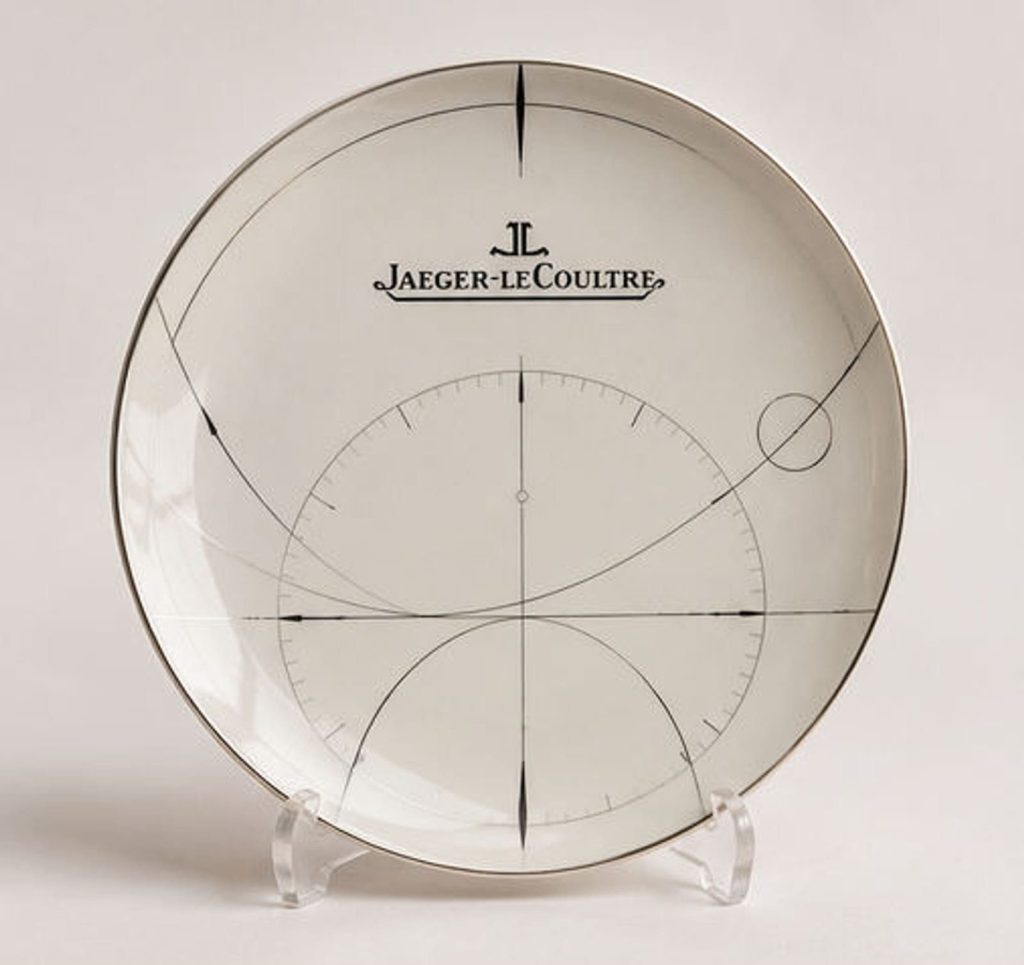
C-01Jaeger-LeCoultre268 mm anniversary plateporcelain + rhodium brass300 + 120warp 0.72 mm, ΔE 0.6
C-02Bvlgarilinked braceletporcelain + 18K gold + PEEK505,000 swings, 0 dust
C-03Mercedes-BenzAMG shift knobporcelain + 7075 aluminium2,4001,400 pressed, 0 cracks
C-04Kweichow Moutai500 ml zodiac bottleporcelain + aluminium + NFC20,0000.18% loss / 30 days
C-05Huaweispeaker shellporcelain + 316L5,0001,200 holes, 0.4% reject
C-06Longines1.2 m trophyporcelain + bronze81.5 mm/m straightness
C-07Jingdezhen China Ceramics MuseumYuan meiping replicaporcelain + aluminium mount3 + 3±0.7 mm, ΔE 2.8
C-08Private commission, Dubai1.8 m floor vaseporcelain + cast aluminium42.0 mm lean, 15° tilt
C-09J-01, Japankyusu with filterporcelain + 316L12,000/yr7.4 s pour, 1,000 cycles
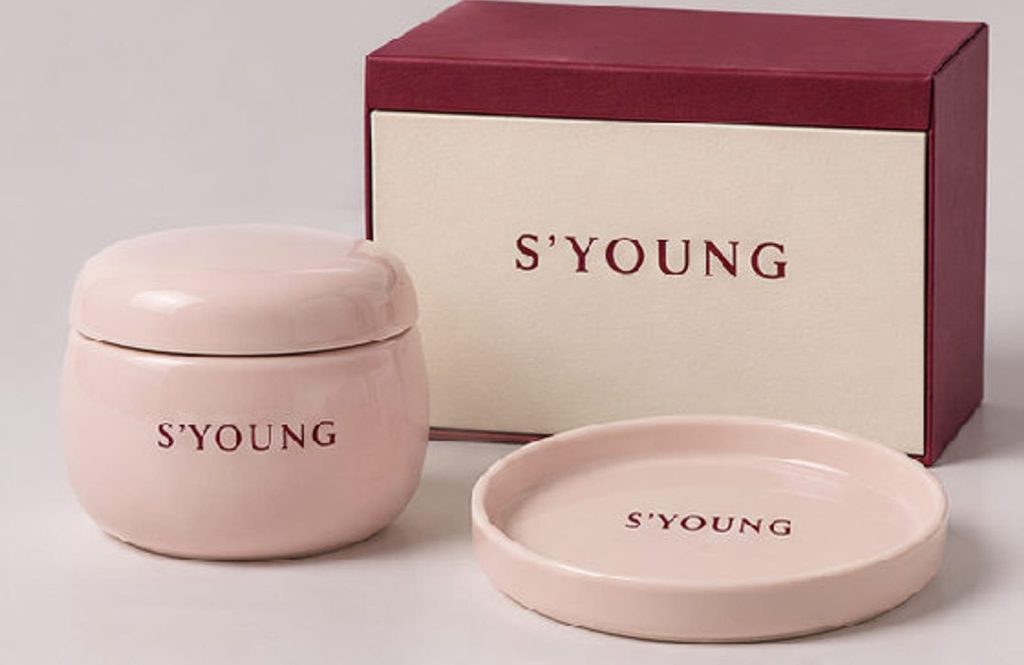
C-10SYoung50 g cream jarporcelain + aluminium30,000−0.08 MPa 24 h
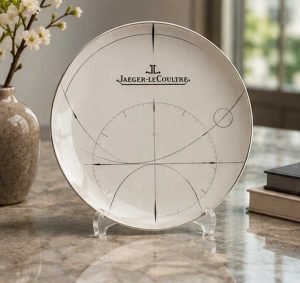
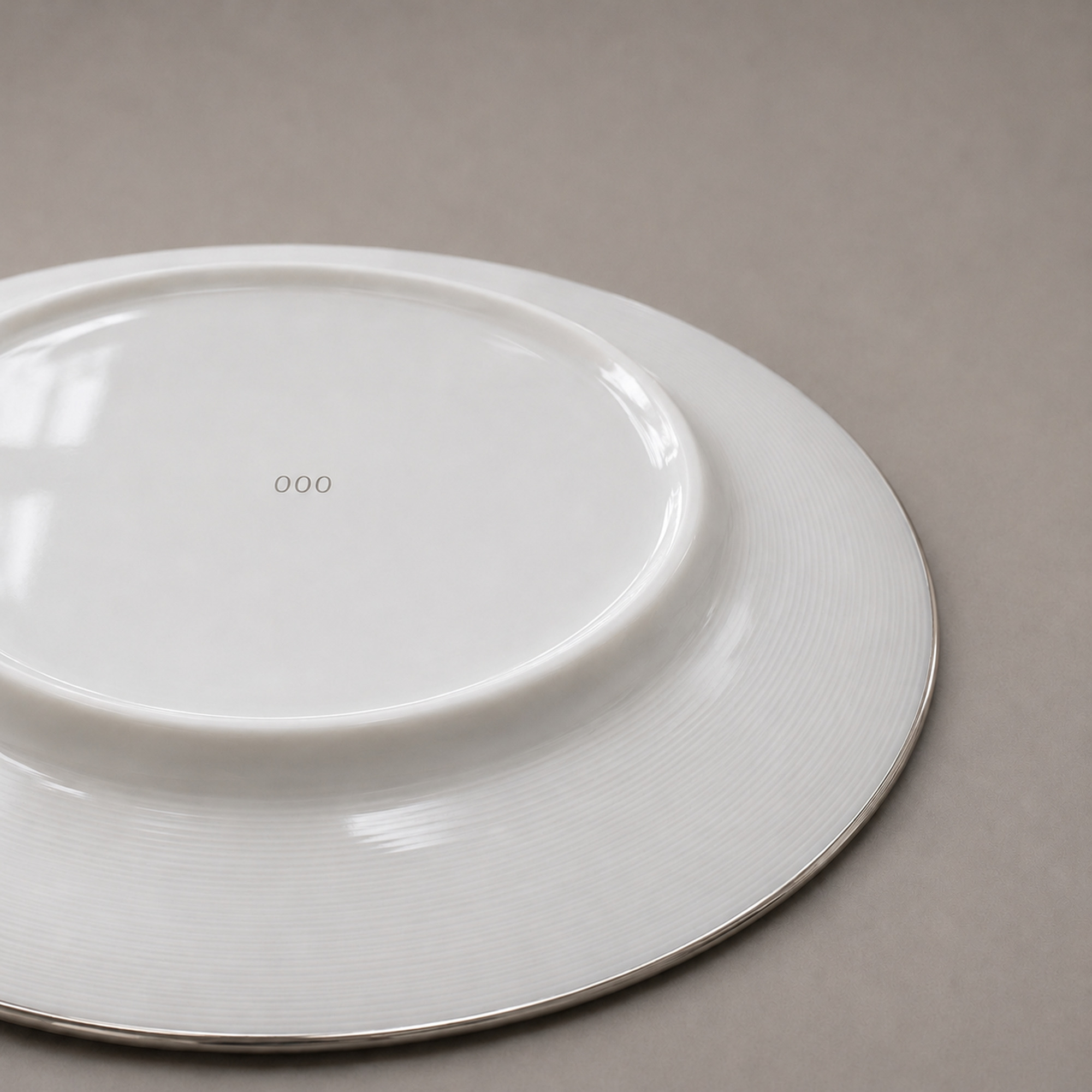
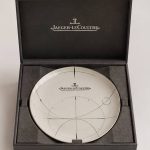
Delivered · Jaeger-LeCoultre, Le Sentier / Shanghai · 2025–2026C-01 · Jaeger-LeCoultre: Reverso anniversary presentation plate, porcelain with a rhodium-plated brass bezel

Volume: 300 numbered pieces (001–300), then 120 more (A01–A120).

Delivered: 6 March 2026, air freight to Geneva; second run 18 June 2026.

The brief

The brand's anniversary team wanted a presentation plate that could sit on the same table as a Reverso case: 268 mm across, the dial's concentric guilloché translated into ceramic, a fine metal edge in the same rhodium tone as the case, and the edition number on the back. Not for sale. Twelve boutiques, one auction dinner in Geneva, one press set in Shanghai.

What made it hard

  • A 268 mm flat plate shrinks 12.5% in firing. At that diameter, 1 mm of warp is normal. The metal bezel needed the rim inside 0.8 mm, so normal was not usable.
  • Porcelain and brass move differently: α ≈ 6.2 against 18.7 × 10⁻⁶/K. Brazing or a hard press-fit cracks the rim at the first temperature swing.
  • The guilloché lines are 0.25 mm apart. Glaze pools in a line that fine and closes it. The line has to be cut into the body before glazing, and it has to stay open through 1,300 °C.
  • Rhodium next to porcelain white is compared by eye, not by instrument. A 1.5 ΔE mismatch reads as "two different whites".
  • The edition number is laser-marked on the back. Mark too deep and the glaze stars; too shallow and it disappears after handling.

How we solved it

  • Body. Isostatic pressing at 300 bar instead of roller forming. Density across the disc became even, and green warp dropped from 1.9 mm to 0.5 mm before firing. Each disc sat on a 0.8 mm high-alumina setter with three point supports in tunnel kiln 1#, 1,300 °C, 38 minutes soak, with the curve logged by the nine thermocouples.
  • Bezel. The ring became a floating collar, not a clamp. Three 1.2 mm locating slots were cut on the inner face; the plate rim carries three 1.5 mm lugs. A 0.6 mm silicone O-ring (200 °C rated) sits between them, and 0.3 mm axial clearance absorbs expansion. The ring carries no load: it only frames the rim.
  • Lines. A 1064 nm fibre laser cut the concentric pattern into the bisque: 6 W, 0.12 mm kerf, 0.05 mm deep, 0.25 mm pitch. The grooves were filled by hand with 12% liquid bright gold and fired at 780 °C for 90 minutes in R2. Edge roughness after firing measured Rz 1.6 µm; no line closed.
  • Colour. Six brass coupons were plated at 0.6, 0.8 and 1.0 µm rhodium and compared with an actual Reverso case under D65. 0.8 µm with a Ra 0.25 matt finish matched. Measured on the finished plate: porcelain L* 94.2, bezel L* 93.8, ΔE 0.6.
  • Numbering. 20 W fibre laser, 40 kHz, 0.02 mm hatch, 8 µm depth. Heat-affected zone under 0.1 mm. All 300 pieces dye-penetrant inspected; zero glaze stars.

Inspection and test data

CheckMethodResult
Warp, all 300Dial gauge, 8 pointsmax 0.72 mm, mean 0.48 mm
Bezel fitFeeler gauge, 12 points0.28–0.34 mm clearance, no contact
Thermal cycling−20 °C ↔ 60 °C, 20 cycles, 2 h dwellno movement, no craze (ASTM C554 adapted)
Drop1.2 m, six faces, three edges, one corner, export carton0 breakage, 0 bezel shift
Gold adhesion3M 610 tape, 3 pullsno lift; 50 rubs no strike-through
ColourX-Rite Ci7800, D65/10°ΔE 0.6 porcelain-to-bezel

Outcome

300 pieces landed in Geneva on 8 March, zero damage in transit, zero rejections at the boutique. The brand ordered 120 more for the Shanghai presentation and put the plate into its annual gift framework for 2027. Tooling for the isostatic disc and the bezel CNC programme are held on our side.
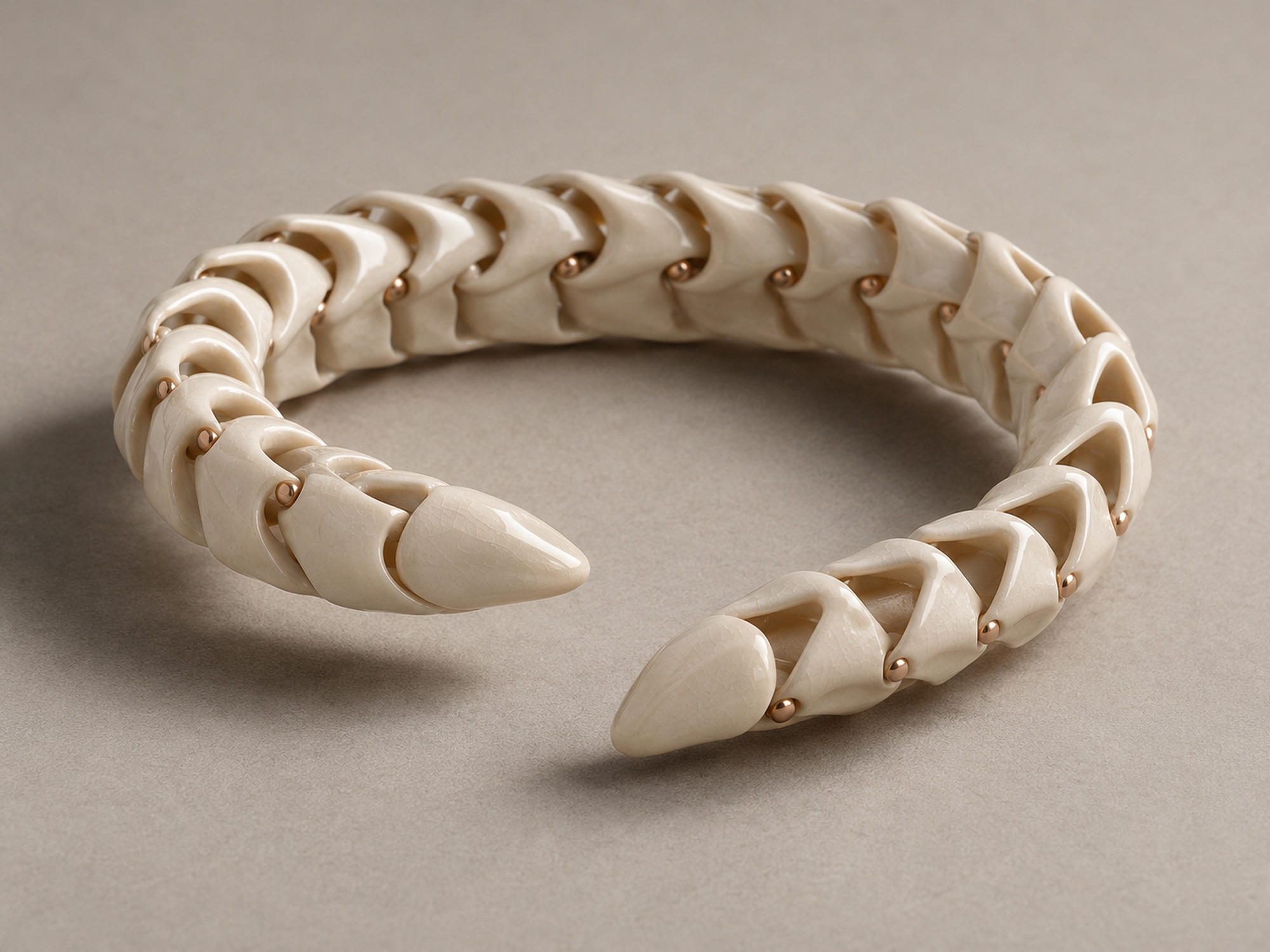
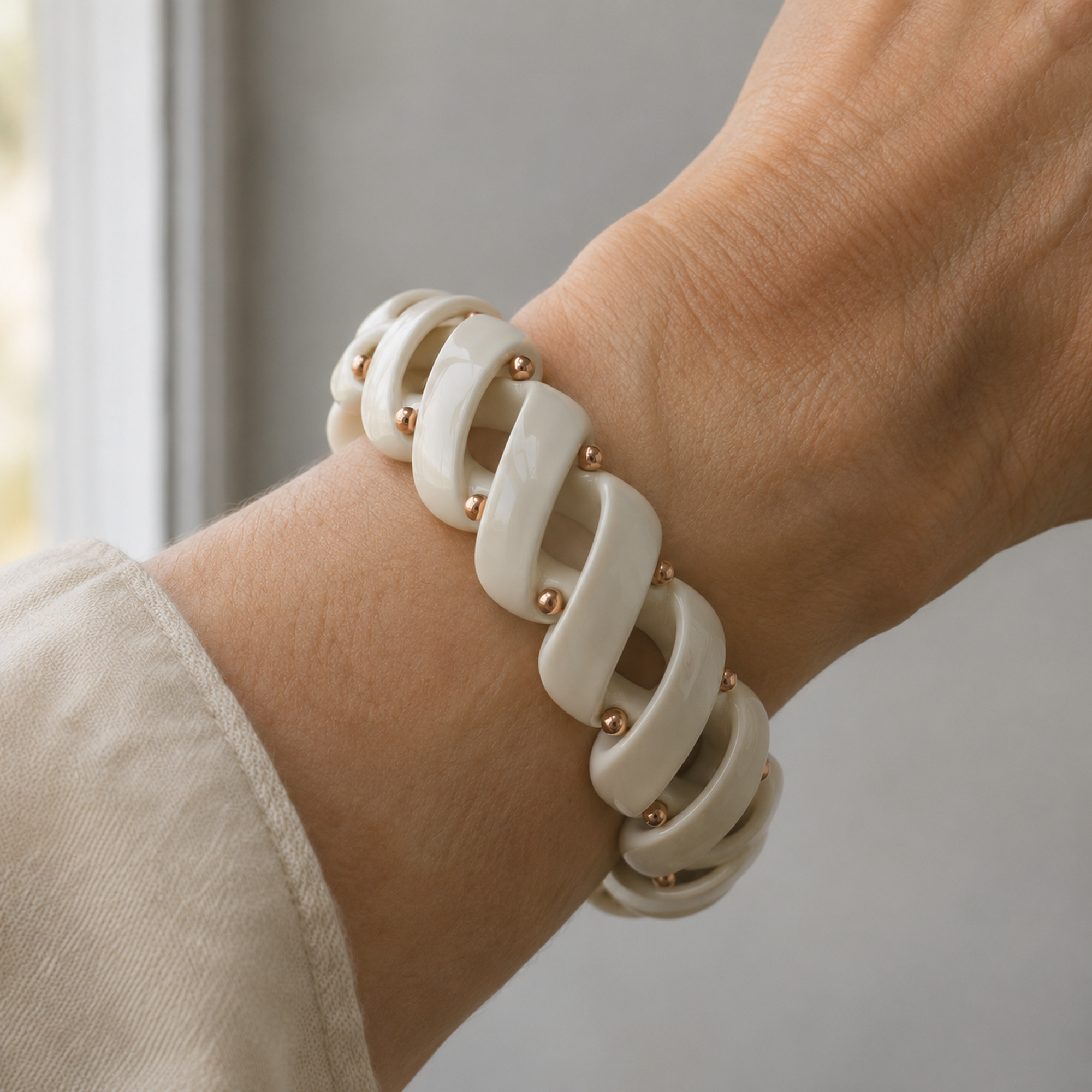
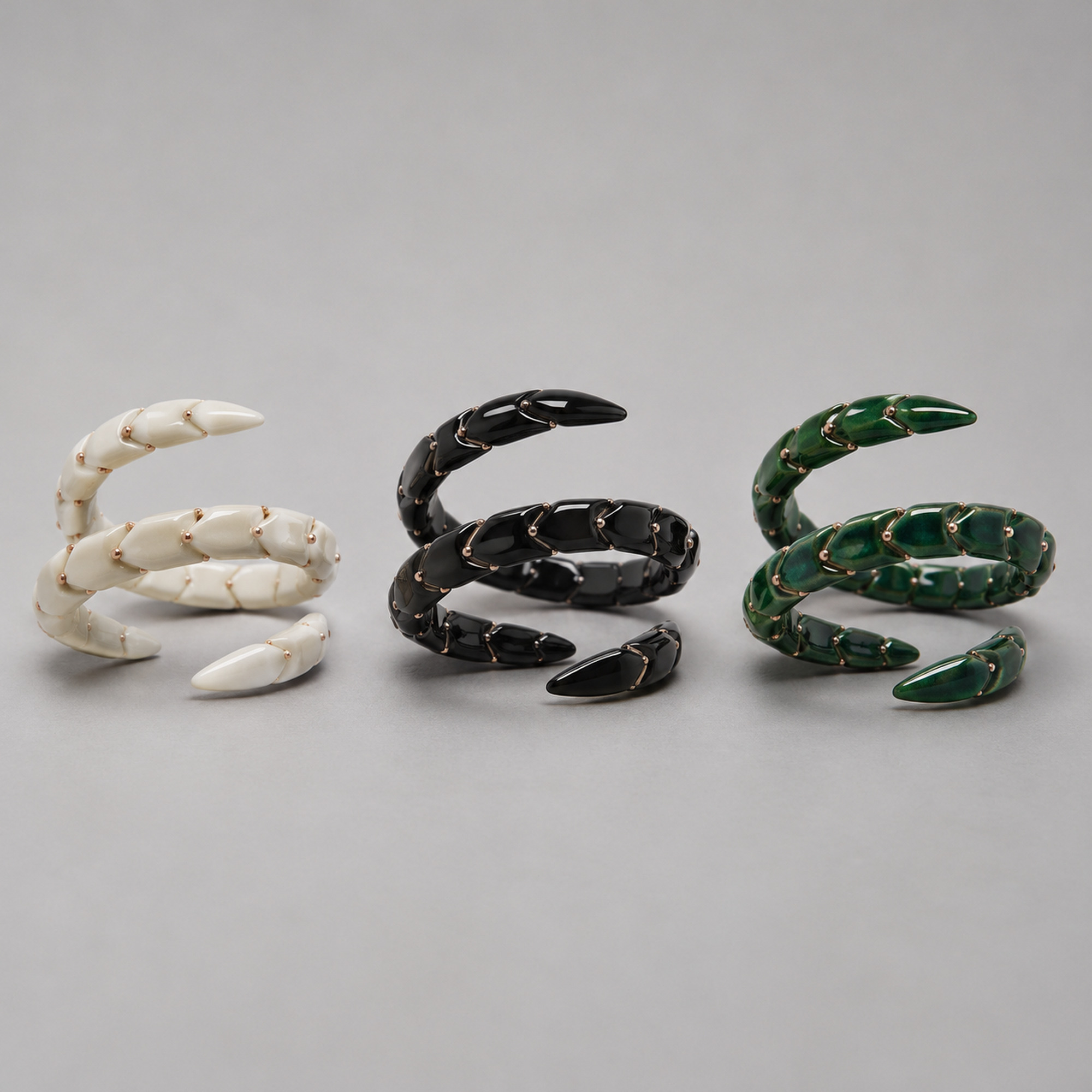
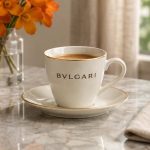
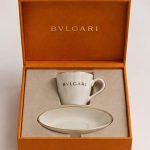
Delivered · Bvlgari accessories development, Rome / Dubai · 2025C-02 · Bvlgari: Serpenti ceramic link bracelet with 18K rose gold pins
Bvlgari coiled ceramic braceletBvlgari ceramic bracelet on wristBvlgari ceramic bracelet in three colours

Volume: 50 pieces, 3 colourways.

Delivered: 27 November 2025.

The brief

A limited bracelet built from ceramic links, not a ceramic inlay. Each link is a hollow shell 0.9 mm thick with two 0.6 mm cross-holes; the links are threaded on 18K rose gold pins and must swing 180° without play, rattle or ceramic dust. Three colours: bone white, black, and a deep emerald that had to match an existing stone sample.

What made it hard

  • 0.9 mm walls by slip casting are at the edge of what the mold will release. Dry the link too fast and it warps before it can be handled.
  • The two holes are 0.6 mm and must line up across 50 links: ±0.03 mm. Firing moves them.
  • Gold running directly in a ceramic hole wears the ceramic. The interface needs a bearing, not a pin in a hole.
  • Emerald is the hardest glaze colour to hold across a small batch: chrome-tin emerald drifts red at the edge of the kiln.
  • A bracelet is worn, not displayed: 5,000 swings, perfume, chlorinated water, and a 1.5 m drop onto stone.

How we solved it

  • Casting. A four-cavity plaster mold per link, slip at 1.72 g/cm³, 25 minutes dwell, demolded at 14% moisture and dried on a shaped alumina cradle for 36 hours. Wall thickness measured at four points per link: 0.88–0.94 mm.
  • Holes. The 0.6 mm holes were cored in the mold and then reamed after firing with a 0.6 mm diamond reamer (H7), 1,200 rpm, 0.02 mm/min feed. Hole position held ±0.02 mm; the link-to-link pitch was set by a hardened steel gauge, not by eye.
  • Bearing. Each hole takes a 0.15 mm wall PEEK bushing, press-fitted, then the 18K pin (φ0.596 mm) is inserted with 8 µm clearance. The pin never touches ceramic. Swings measured 5,000 cycles on a jig: torque 0.8 N·cm at start, 0.74 N·cm at 5,000, no dust in the tray.
  • Emerald. The glaze was milled in-house and fired on 40 test tiles across the 1,280 °C profile; the two edge positions of the kiln car were excluded from production. Final batch ΔE ≤0.9 against the stone sample.
  • Wear. Salt spray 48 h (ASTM B117), perfume immersion 24 h, chlorine 200 ppm 24 h. No colour shift, no pin corrosion.

Inspection and test data

CheckMethodResult
Wall thickness4 points/link, 50 links0.88–0.94 mm
Hole positionCMM, 100 holes±0.02 mm
Swing durability5,000 cycles, 180°0.8 → 0.74 N·cm, no wear dust
Salt sprayASTM B117, 48 hno corrosion on pins, no glaze change
Drop1.5 m onto granite, 10 pieces0 breakage, 0 pin displacement
ColourCi7800 vs stone sampleΔE 0.9 max

Outcome

50 bracelets delivered 27 November 2025, 48 passed the brand's own QC in Rome, 2 were re-polished on the pin ends and passed on re-check. A second colour (champagne) is quoted for 2026. PEEK bushings and the diamond reaming fixture are kept as project tooling.
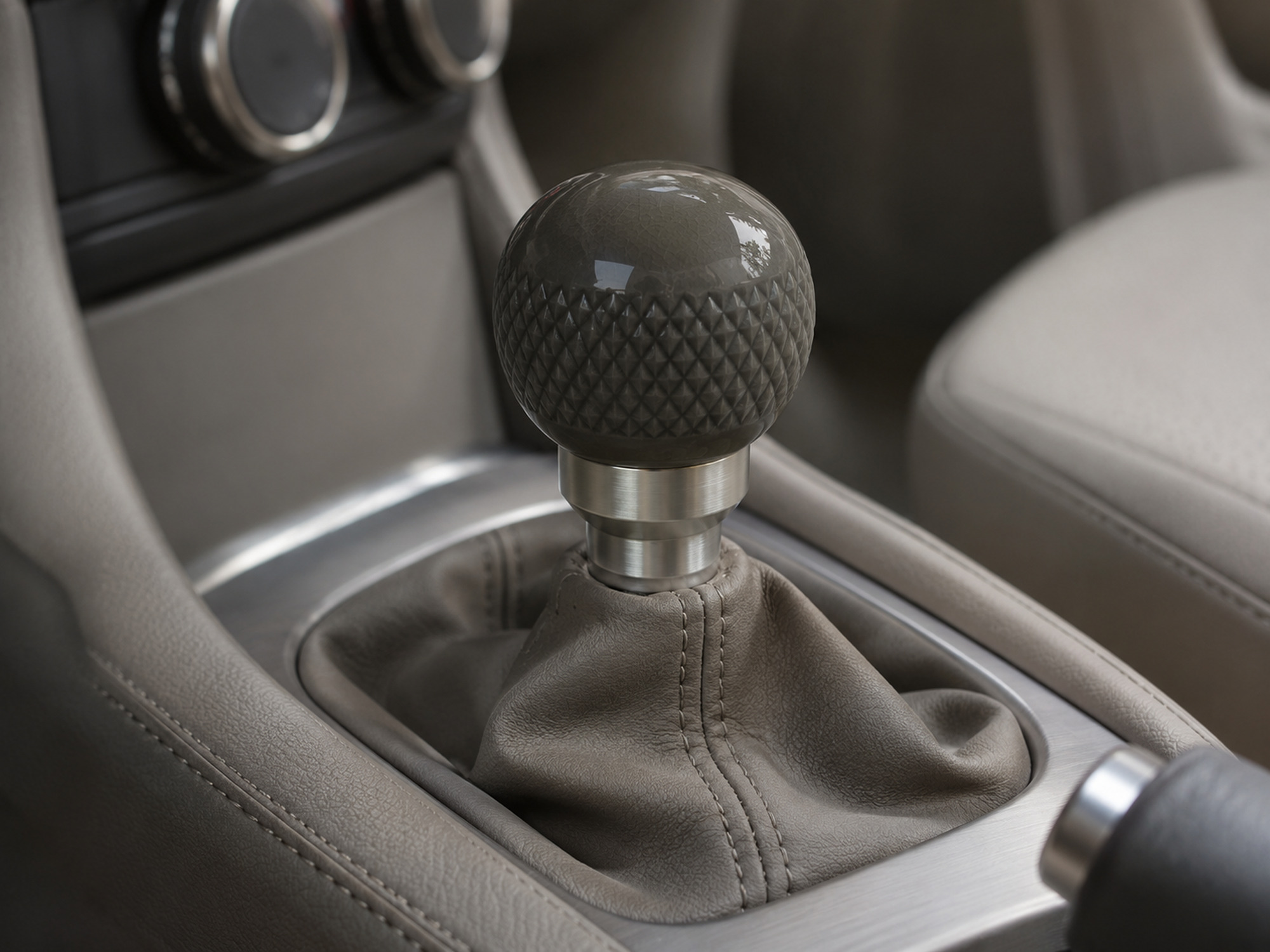
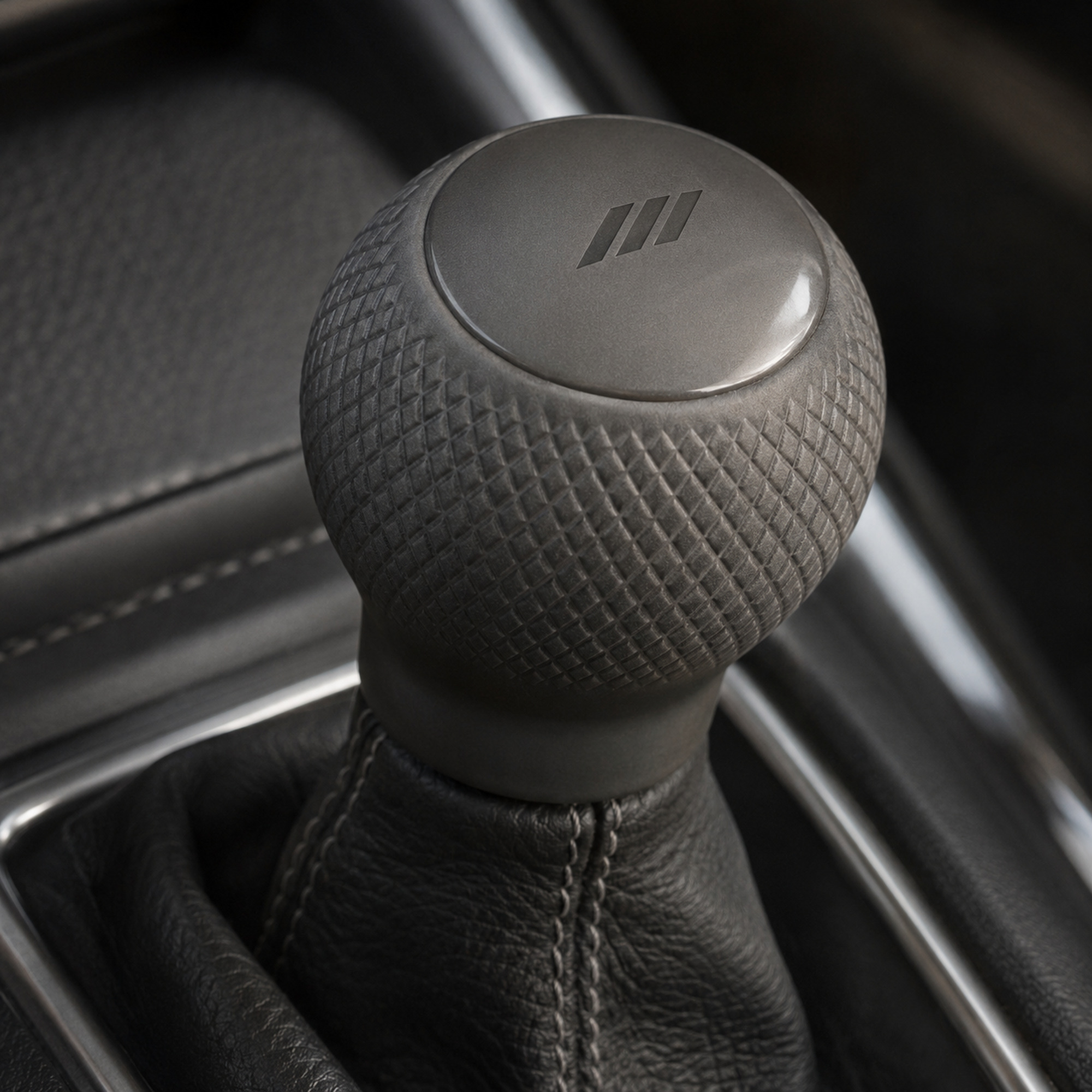
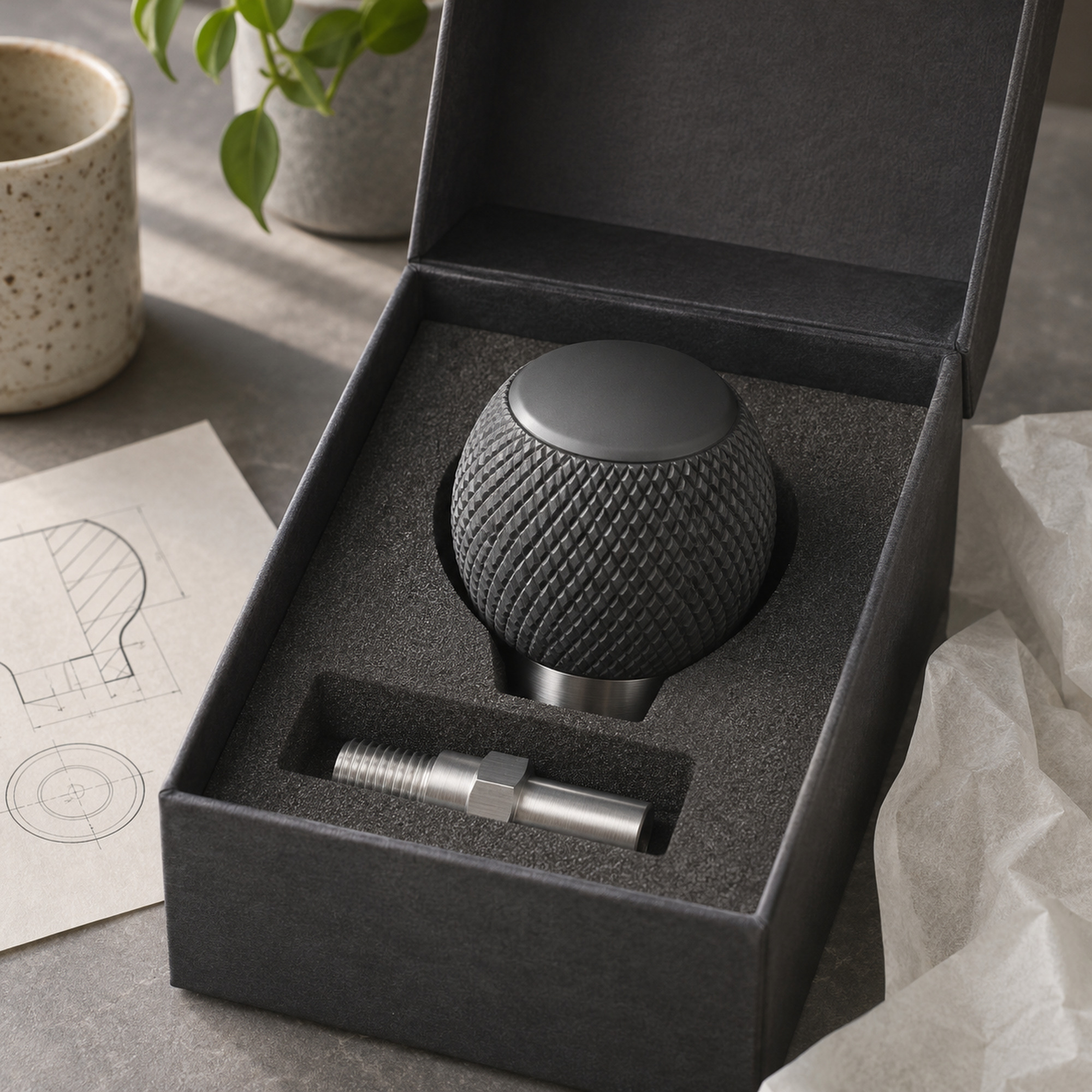
In production · Mercedes-Benz AMG owner programme, Affalterbach / Beijing · 2026C-03 · Mercedes-Benz: AMG owner gift, ceramic shift knob over a 7075 aluminium core
Mercedes-Benz ceramic control knob on consoleMercedes-Benz control knob crest detailMercedes-Benz control knob gift box

Volume: 2,400 pieces, 2 finishes.

Delivered: first 600 on 30 April 2026; balance through August 2026.

The brief

A shift knob that is genuinely ceramic on the outside, not coated, with a machined 7075 aluminium core, a laser-marked AMG crest, a knurled grip that has to be formed in the mold rather than cut after firing, and a push-fit that survives a −40 °C to 85 °C cabin cycle.

What made it hard

  • The ceramic shell is 3.2 mm thick with a φ18 mm bore. Pressing an aluminium core in by 0.04 mm interference cracked 7 of the first 200: the rim splits at the bore mouth.
  • The knurl is a 0.8 mm pitch diamond pattern. Cut after firing it exposes the body and stains; formed in the mold it welds to the plaster.
  • Glaze at Ra 0.4 is the hand-feel target. Below that the knob feels slick with gloves; above it, it catches skin.
  • The AMG crest is 15 µm deep. On a curved, glazed surface the laser focal length changes across the mark and the crest goes soft at the edges.
  • Thermal: aluminium grows 23.1 × 10⁻⁶/K, porcelain 6.2. At 85 °C the interference grows by roughly 0.03 mm; at −40 °C it can go loose.

How we solved it

  • Core interface. The bore was changed from a straight fit to a 1:200 taper, and the shell is now heated to 120 °C while the core is cooled to −20 °C. Press speed 2 mm/min with a 0.5 mm silicone buffer ring at the shoulder. First 200 after the change: 0 cracks. Full run to date: 1,400 pressed, 0 cracks.
  • Knurl. Formed in the plaster with a machined diamond insert, 0.8 mm pitch, 0.35 mm depth; the mold is sprayed with a semi-permanent release and the insert is pulled at 12% moisture. No post-cut, no exposed body.
  • Glaze. Two gloss levels trialled (Ra 0.32 and 0.45). Ra 0.45 selected after a 30-person glove test. Glaze thickness 0.28 mm, robot-applied, ±0.02 mm.
  • Crest. The laser runs a 5-axis path with dynamic focus; power 12 W, 60 kHz, hatch 0.015 mm. Depth verified 14–16 µm on 20 samples; no micro-crack under 10×.
  • Temperature. A 0.05 mm expansion gap is designed into the shoulder so the assembly is never pre-loaded at 85 °C. Cabin cycle tested −40 °C ↔ 85 °C, 30 cycles, 4 h dwell.

Inspection and test data

CheckMethodResult
Press fit100% load cell2.1–2.4 kN, no crack
Bore concentricityCMM, 60 pcs≤0.03 mm
Rotation durability10,000 cycles, 2 N·mtorque loss 8%
Thermal cycle−40 ↔ 85 °C, 30 cyclesno craze, no loosening
Vibration10–2,000 Hz, 4 h/axisno resonance failure
Crest depth20 pcs, profilometer14–16 µm
Drop1.5 m, 6 faces, 20 pcs0 breakage

Outcome

600 pieces shipped 30 April 2026 with the first batch report; the programme extended to 2,400. The taper and the buffer ring are now the standard method for any ceramic-over-metal knob we quote.
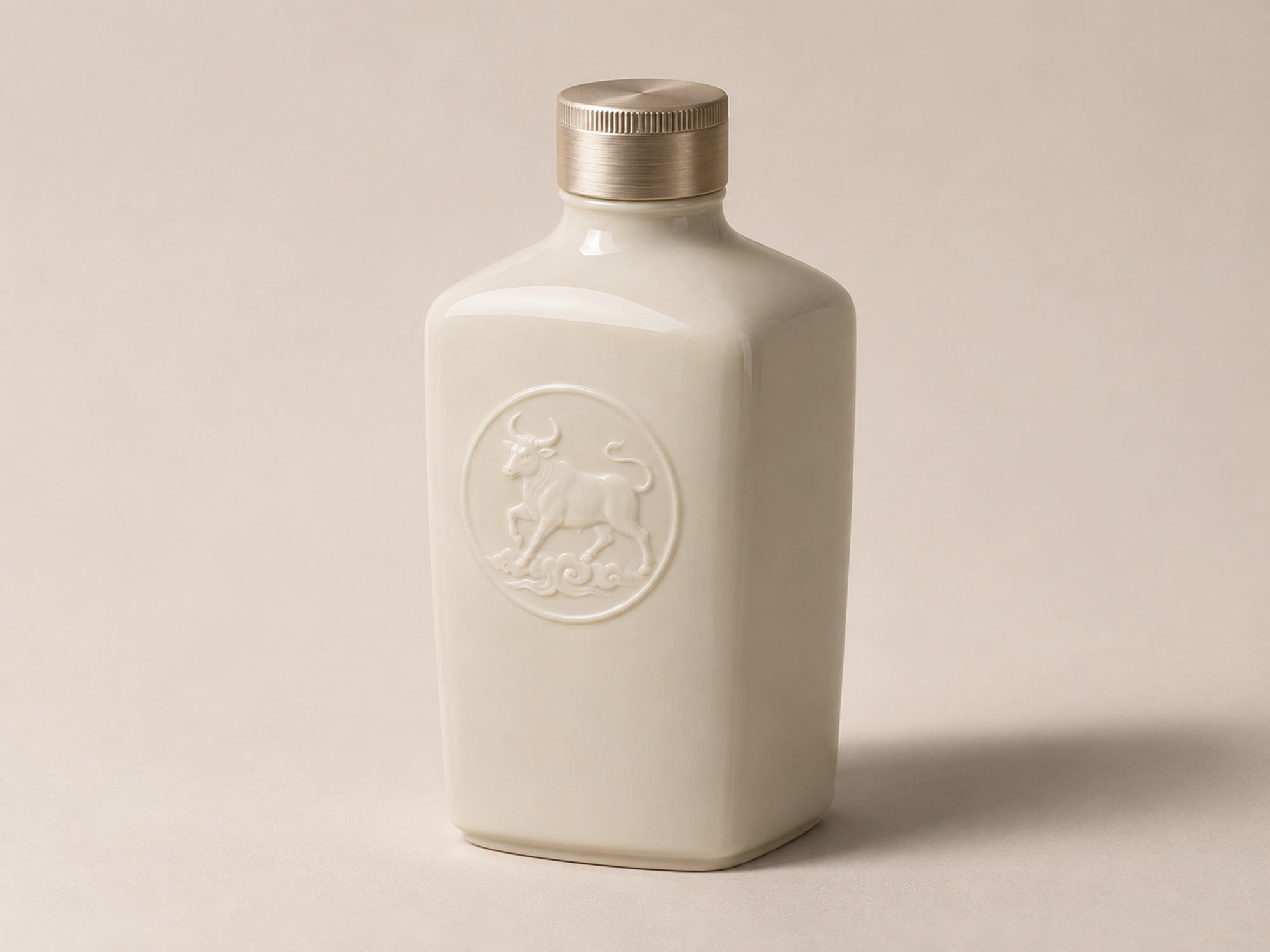
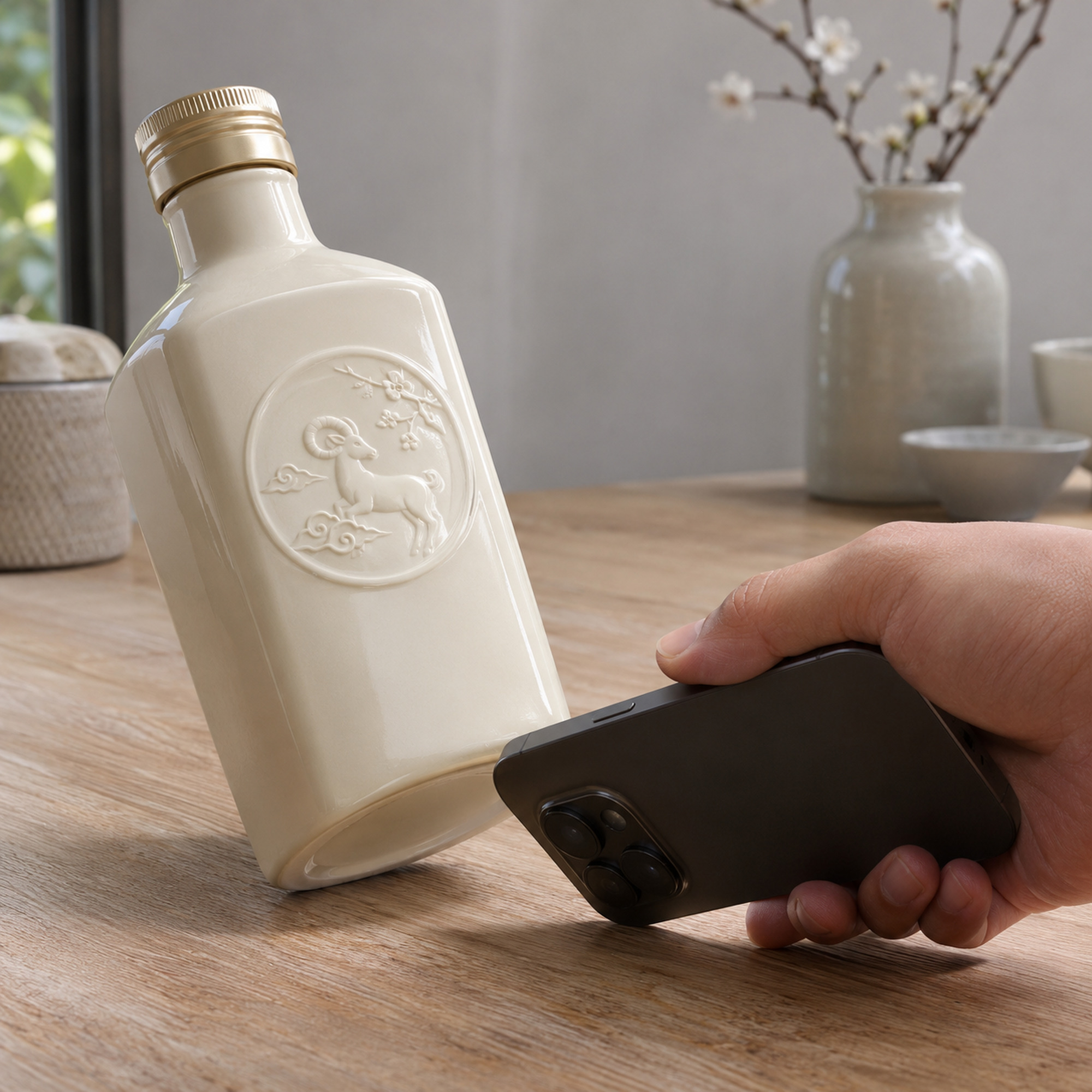
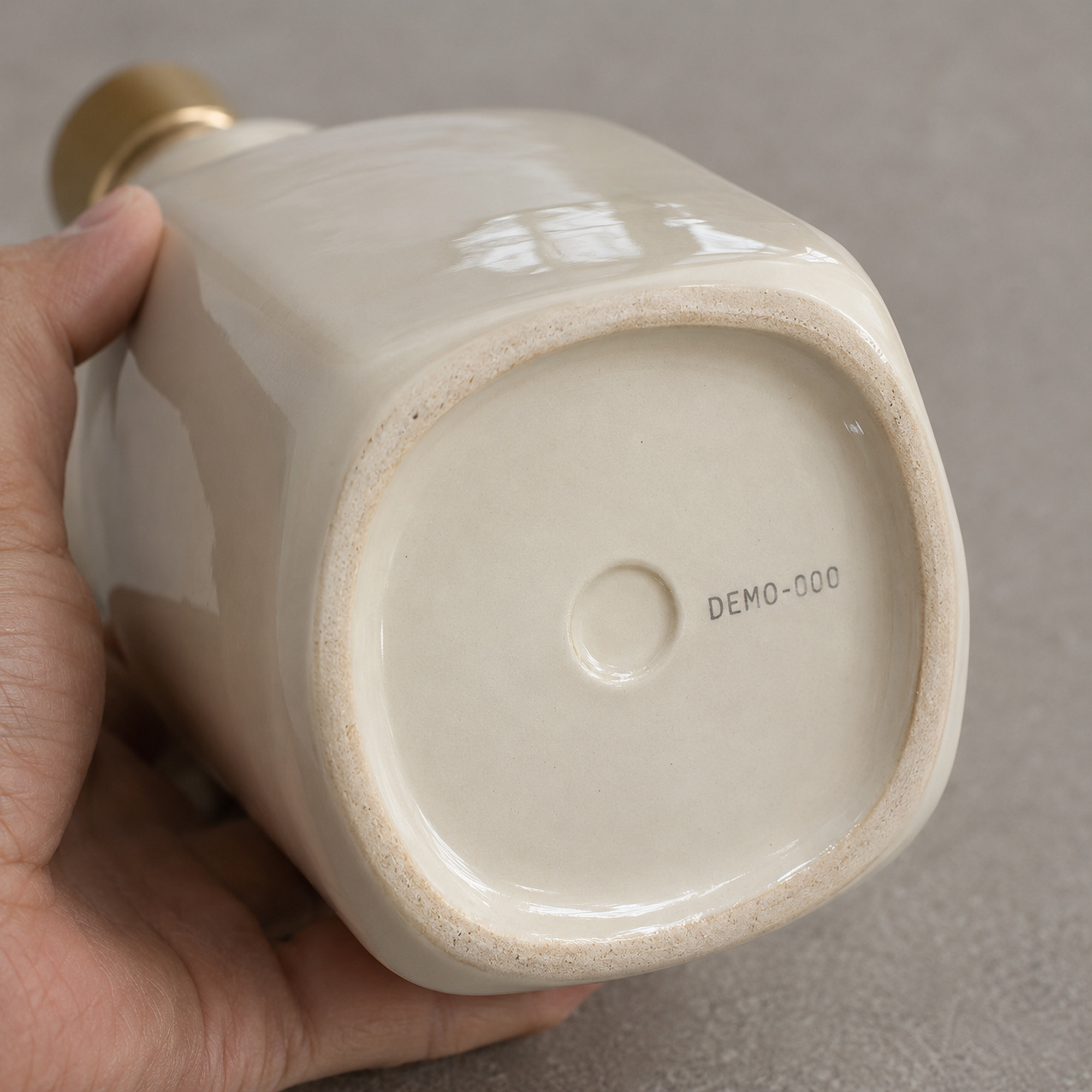
Delivered · Kweichow Moutai, Guizhou · 2025–2026C-04 · Kweichow Moutai: zodiac edition bottle, porcelain body, aluminium screw cap, NFC in the base
Kweichow Moutai porcelain bottle with capKweichow Moutai bottle NFC scanKweichow Moutai bottle base code

Volume: 20,000 bottles, 500 ml.

Delivered: 12 January 2026, 45 days from PO to container.

The brief

A 500 ml porcelain bottle for the zodiac release: M35 × 2 thread at the neck, a 0.6 mm aluminium screw cap with a food-grade LDPE liner, an NFC tag that must read through the base without being metal-shielded, and a seal that has to hold for a 30-day weight-loss test.

What made it hard

  • The neck thread is fired. A 12.5% shrink moves a molded thread by up to 0.3 mm; the cap then either cross-threads or leaks.
  • Aluminium directly over the tag kills 13.56 MHz. The tag cannot sit in the cap and cannot survive 1,300 °C in the body.
  • The bottle is a closed hollow form with a narrow neck, so roller lines cannot make it. High-pressure casting is the only route, and the neck is the last part to fill.
  • Weight loss: the target was ≤0.3% over 30 days at 20 °C. A single-lip liner passed at 0.9%.
  • The base has to stay flat enough to stand on a shelf and to take a laser code.

How we solved it

  • Neck. The thread is cast oversize and restored after firing on a diamond-thread reamer, 6 stations, 0.05 mm stock removal. Thread gauge pass rate 99.4% on 20,000 necks.
  • Tag. The NFC inlay is set into a 0.8 mm recess in the base, covered by a 0.6 mm porcelain disc that is glued after firing with a food-grade epoxy. The disc is non-metallic, so read range stays 30 mm. Read rate 100% on a 500-piece sample with a phone at 10 mm.
  • Forming. Six high-pressure casting machines, 25 bar, 8 minutes; the neck is fed last and the mold is vented at the shoulder. Wall 4.5 mm ±0.3.
  • Seal. The liner changed from single-lip to a double-lip LDPE with a 0.35 mm land. 30-day loss 0.18%. Inverted 72 h: no seepage.
  • Base. Fired on a flat alumina setter, base ground to 0.15 mm flatness; laser code 15 W, 3 passes, no glaze star.

Inspection and test data

CheckMethodResult
ThreadGo/no-go gauge, 100%99.4% first pass, remainder re-reamed
Weight loss30 days, 20 °C, 12 bottles0.18% average
Inversion72 h, 12 bottlesno seepage
NFC read500 pcs, phone at 10 mm100%
Drop1.2 m, ISTA 1A, 20 cartons0 breakage
Lead/cadmiumICP-MS, internal line 50% of limitpass
Base flatness0.15 mm, 100%pass

Outcome

20,000 bottles shipped 12 January 2026, ahead of the Spring Festival window, zero breakage in 4 containers. The NFC base construction is now quoted for two other spirit brands.
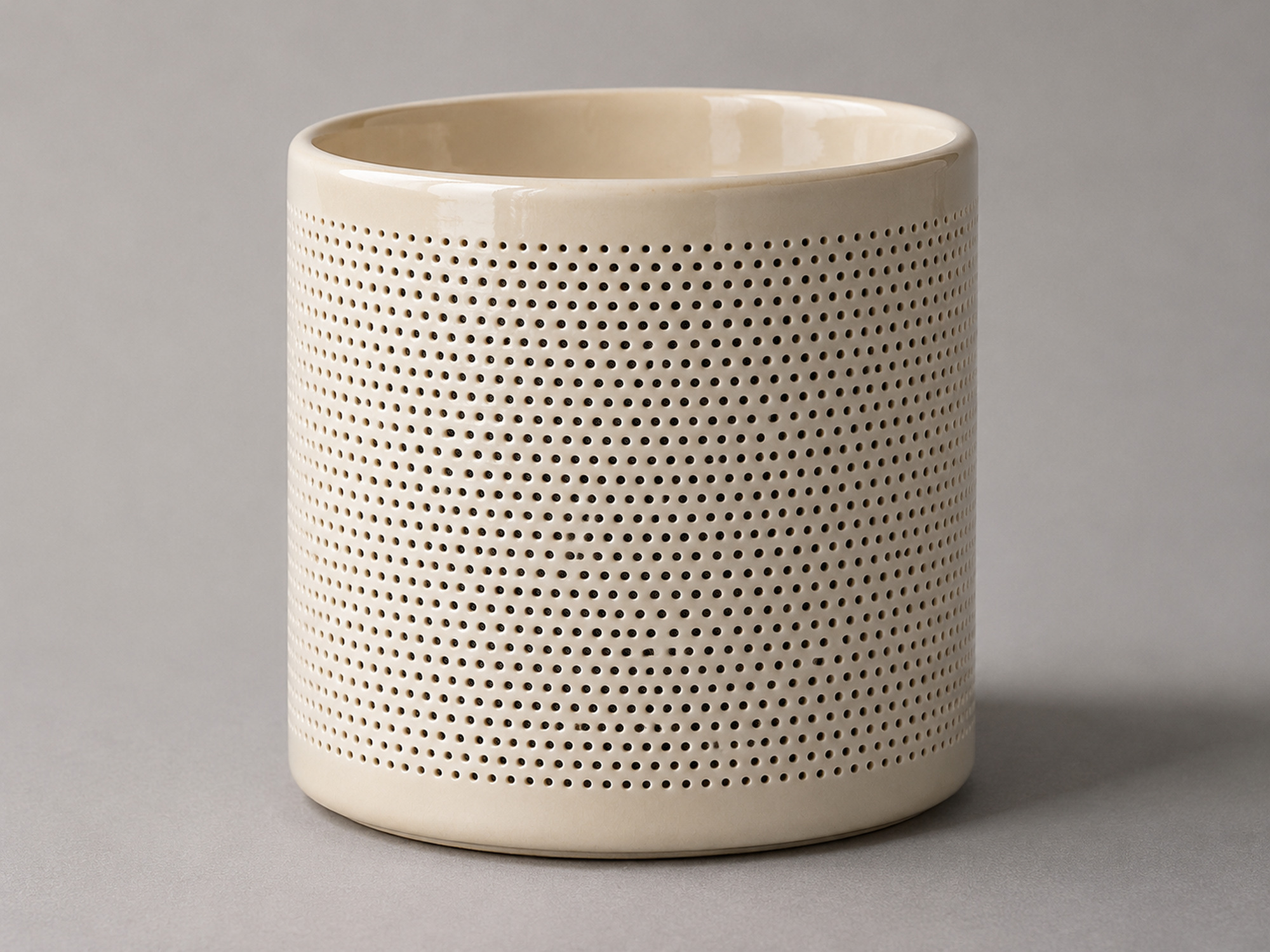
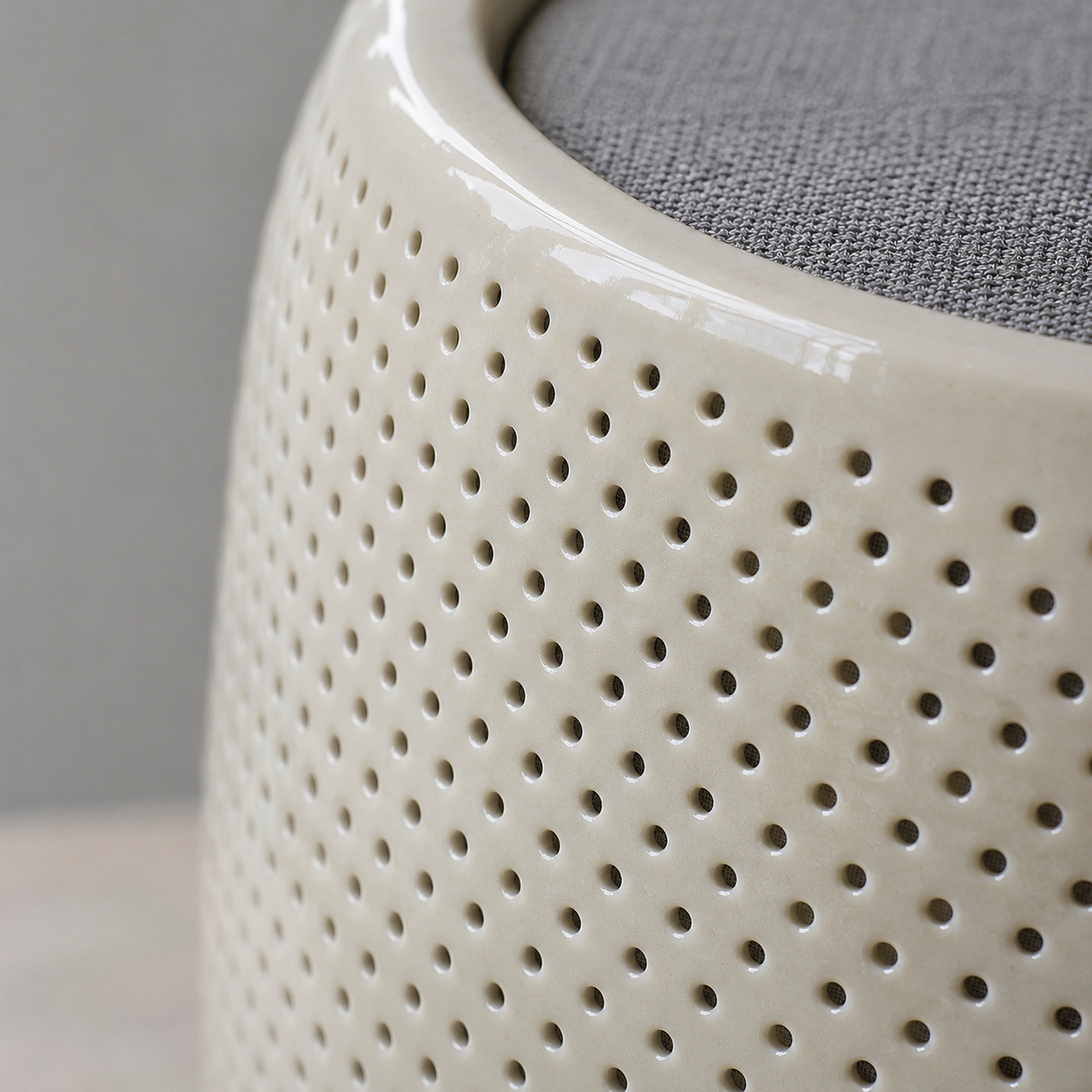
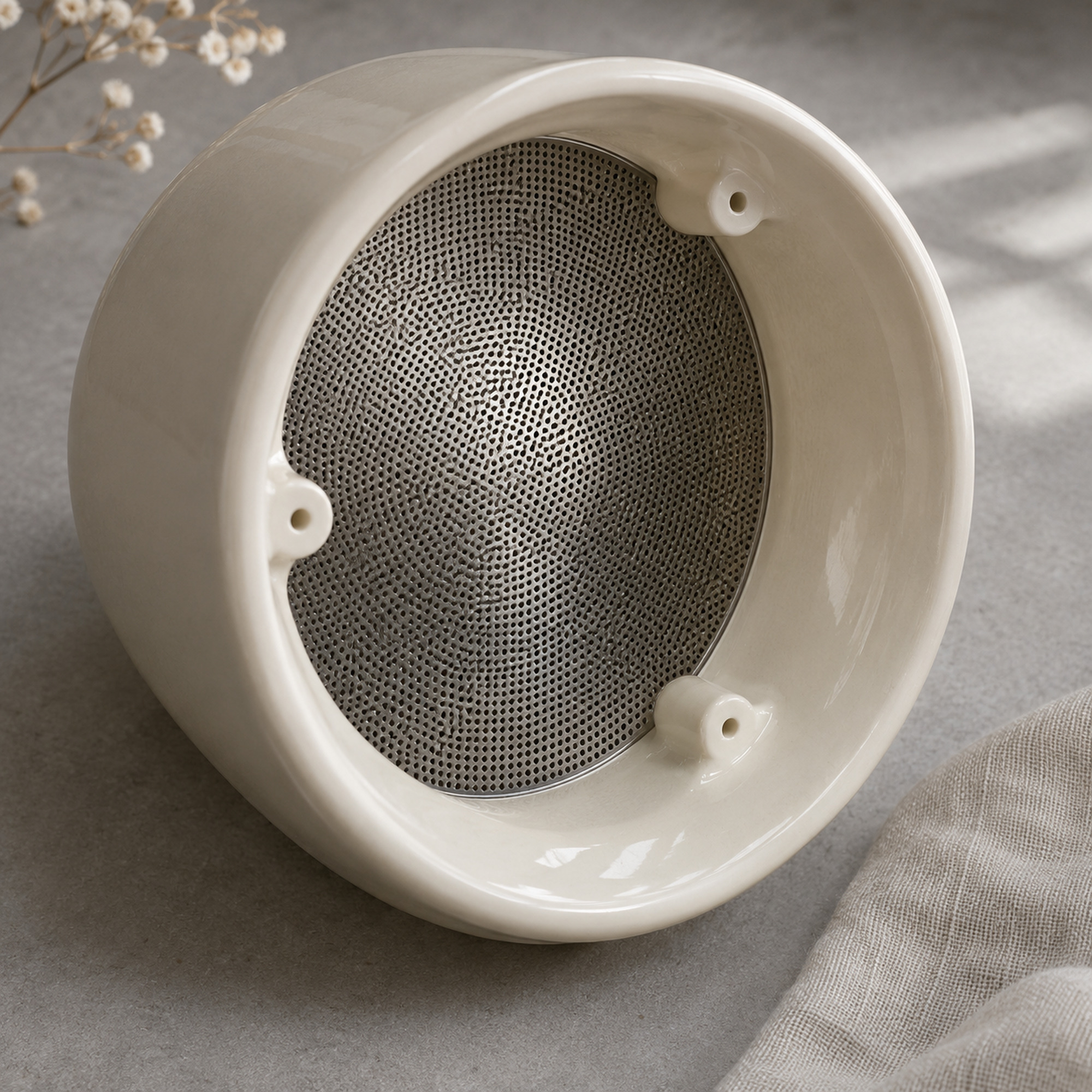
Delivered · Huawei consumer launch gift, Shenzhen / Dongguan · 2026C-05 · Huawei: limited smart speaker, ceramic shell with a stainless acoustic grille
Huawei ceramic shell front viewHuawei ceramic shell perforation detailHuawei ceramic shell interior grille

Volume: 5,000 units.

Delivered: 22 May 2026, 18 days before the launch event.

The brief

A launch-edition shell for a desktop speaker: a 118 mm diameter ceramic cylinder, 1,200 acoustic holes of 0.6 mm across the front 140°, a 0.3 mm etched stainless grille bonded inside, and an IPX4 claim. The shell replaces an injection-molded ABS part, so every internal boss had to move onto ceramic.

What made it hard

  • 0.6 mm holes in a 2.8 mm wall: 1,200 of them. Drilled after firing, the exit edge chips; drilled before firing, the holes close 12.5% and the pitch drifts.
  • The stainless grille sits 0.15 mm inside the shell. Any contact at the rim shows as a shadow line through the holes.
  • Ceramic is a stiff cavity. The first prototypes raised the 180–250 Hz band by 4.2 dB and made the bass sound hollow.
  • Curing the adhesive at 80 °C for 4 hours cracked 3 of 40 pilot shells at the boss roots.
  • IPX4 means splashing water must not reach the driver through the hole array.

How we solved it

  • Holes before firing. 0.68 mm holes were laser-cut in the bisque at 30% moisture (1064 nm, 8 W, 1,200 holes in 96 s), then the wall was glazed and fired. After 12.5% shrink the holes measured 0.59–0.61 mm. Break-out rate fell from 6.1% (fired-then-drilled) to 0.4%.
  • Grille. 0.3 mm 316L etched at 0.55 mm aperture, formed to the inner radius, and located by three molded ceramic ribs rather than by adhesive alone. A 0.5 mm silicone cord sits in the rib channel; the grille is never in hard contact with the shell.
  • Acoustics. Two internal ribs were added and the wall thickness went from 2.4 to 2.8 mm; the 180–250 Hz rise came down to 0.9 dB, inside the ±3 dB target from 200 Hz to 20 kHz.
  • Bonding. The structural adhesive was changed to a 25 °C-cure two-part epoxy with a 0.2 mm bond line, and the boss roots were filleted from R0.5 to R1.2. 0 cracks in the following 400.
  • Water. A 0.2 mm hydrophobic mesh is pressed behind the grille; splash test 10 min at 10 L/min from 1 m, no ingress at the driver.

Inspection and test data

CheckMethodResult
Hole diameterOptical, 200 pcs × 20 holes0.59–0.61 mm
Hole positionVision, 50 pcs±0.05 mm
Break-out100% visual0.4% reject
Frequency response200 Hz–20 kHz sweep±3 dB, 180–250 Hz +0.9 dB
IPX410 L/min, 1 m, 10 minno ingress
Thermal bond80 °C, 4 h, 400 pcs0 cracks
Drop1.0 m, 6 faces, 20 pcs0 breakage

Outcome

5,000 shells delivered 22 May 2026; 4,980 passed the acoustic line, 20 were held for the sample archive. The bisque laser drilling route is now standard for any perforated ceramic part.
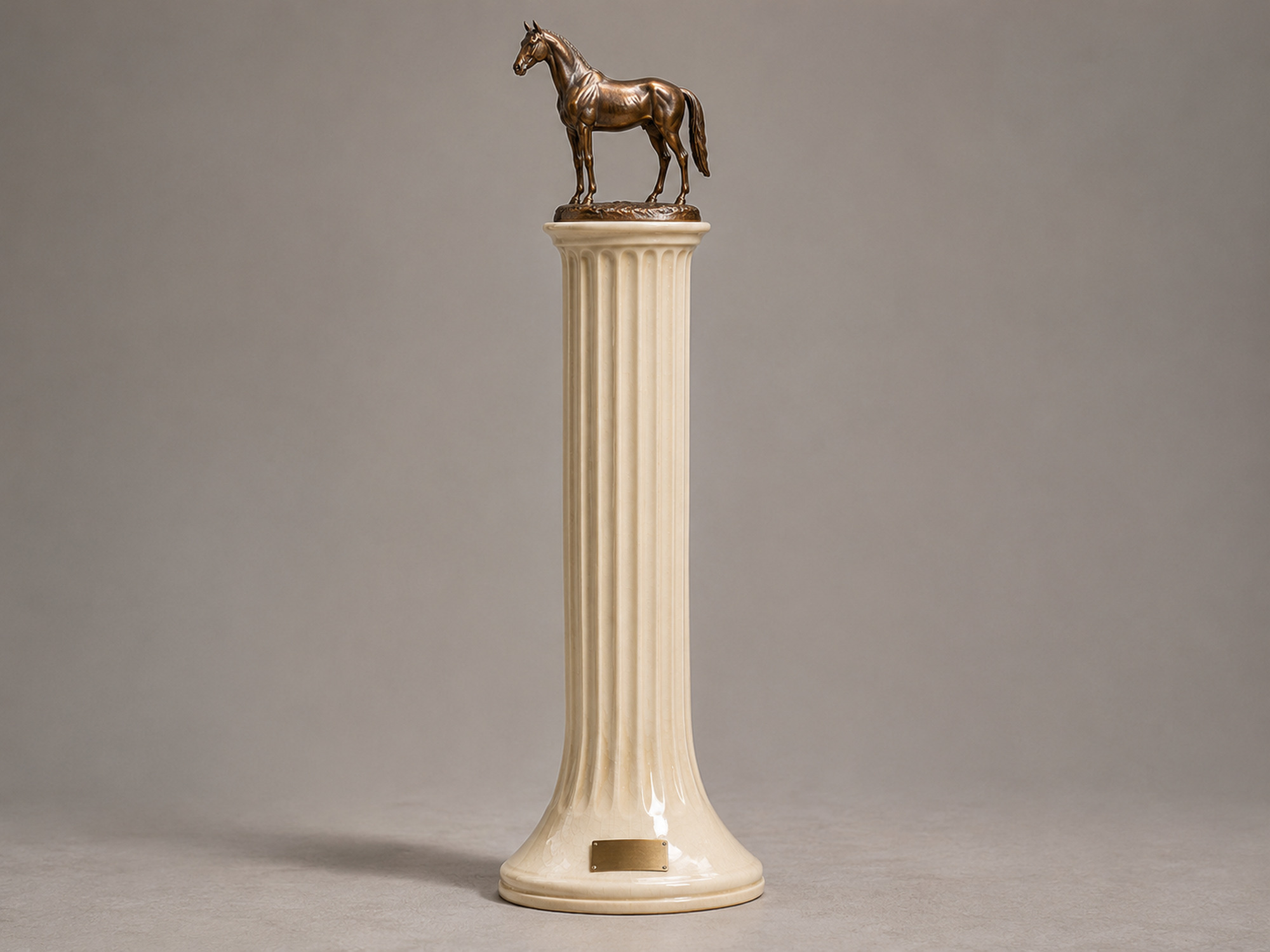
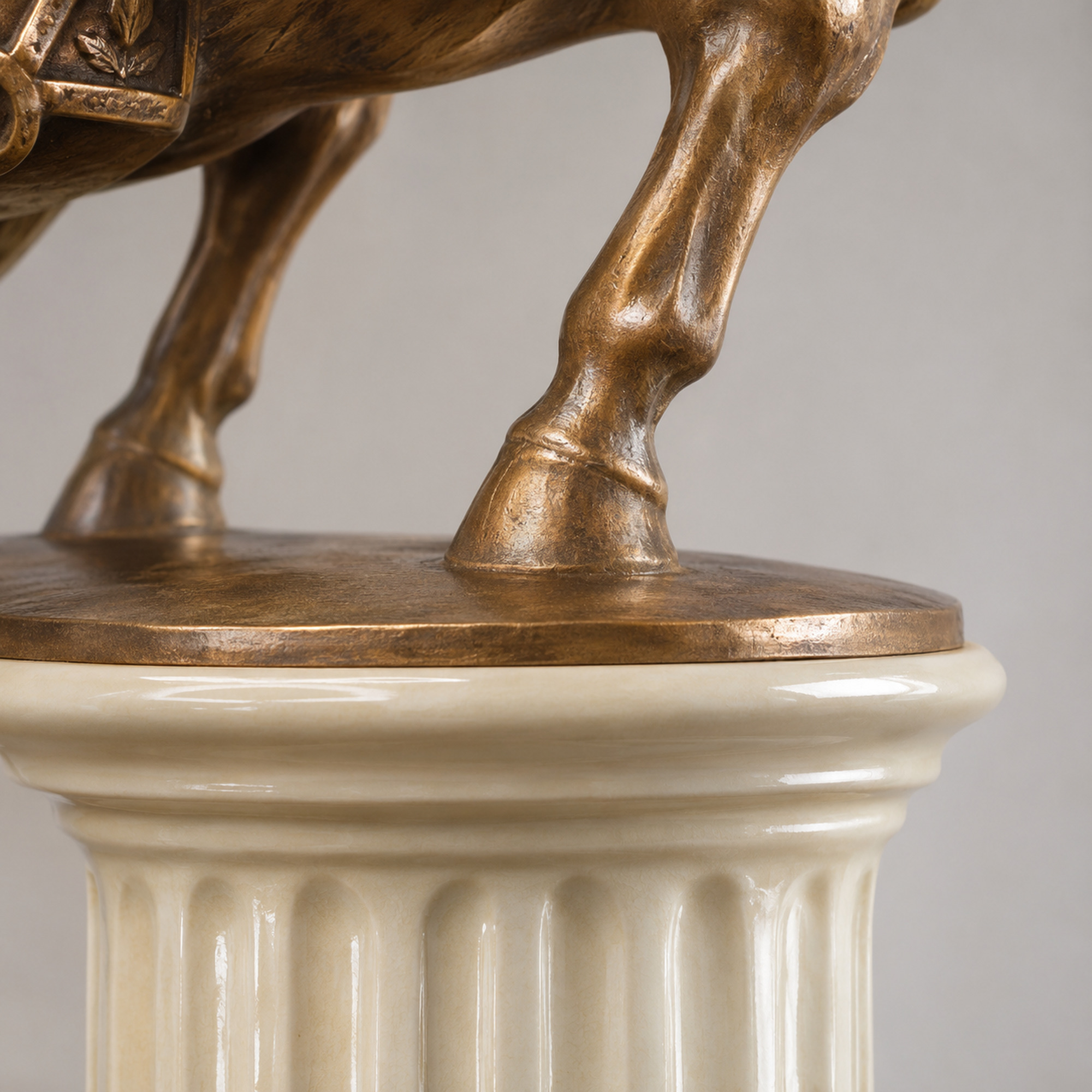
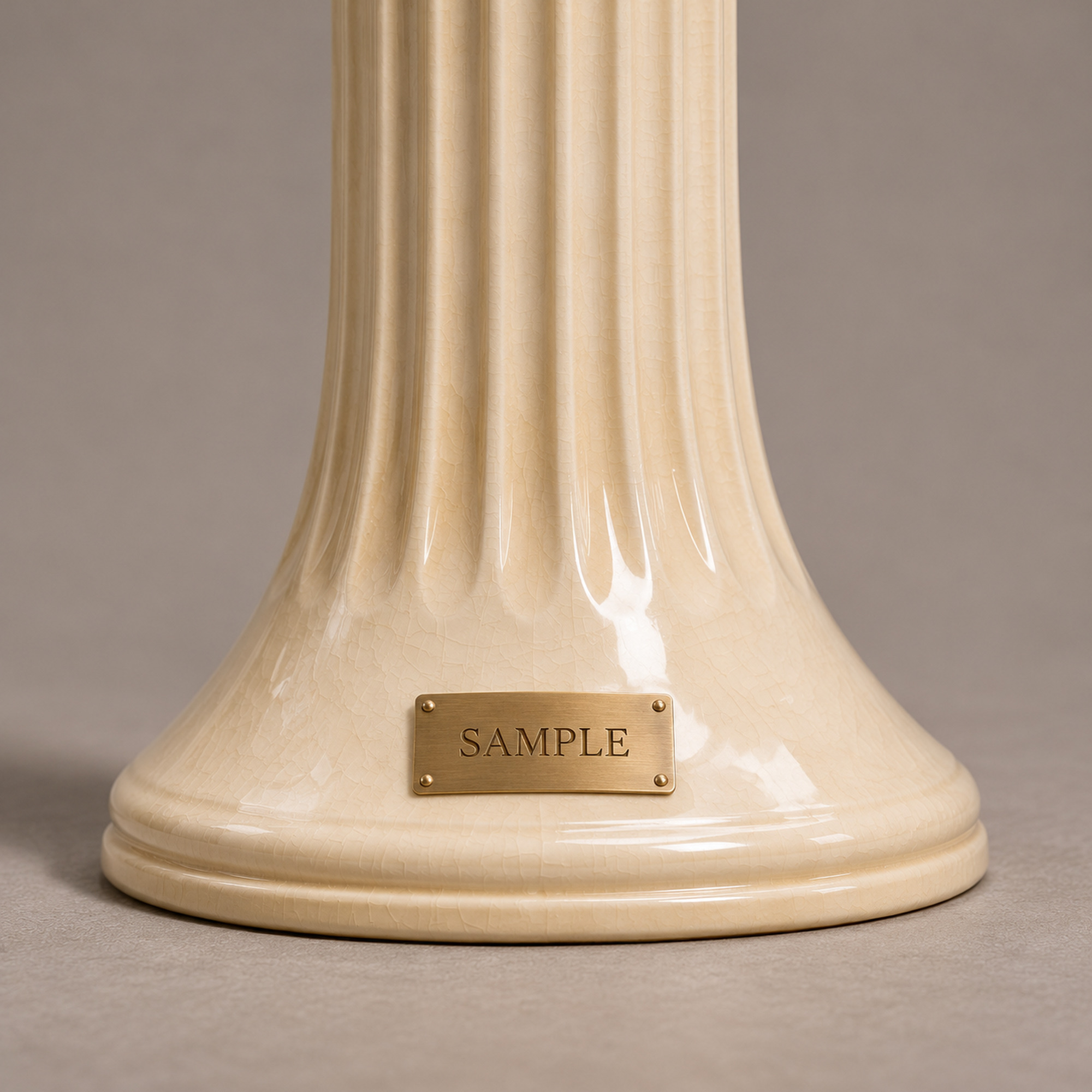
Delivered · Longines equestrian events, Saint-Imier / Shanghai · 2026C-06 · Longines: equestrian trophy, porcelain column and cast-bronze horse, 1.2 m
Longines ceramic trophyLongines trophy bronze jointLongines trophy engraved plate

Volume: 8 pieces (5 event trophies, 3 archive).

Delivered: 9 April 2026.

The brief

A 1.2 m trophy for the brand's equestrian programme: a fluted porcelain column with a flared foot, a cast-bronze horse of 3.8 kg on top, and a base that has to stay stable when the trophy is lifted by the column during a presentation. Eight pieces, each with an engraved event plate.

What made it hard

  • A 1.2 m porcelain column cannot be cast in one piece. It has to be built in sections and joined at leather-hard stage without a visible seam after glazing.
  • Firing a 1.2 m column upright is not possible in our kilns; it is fired horizontally on a cradle, and it sags.
  • Bronze at 3.8 kg on a porcelain shoulder is a point load of roughly 37 N on a 4 mm wall.
  • The trophy is lifted by the column on stage. The joint between bronze and porcelain takes the whole bending moment.
  • Eight pieces means no learning curve: the eighth has to match the first.

How we solved it

  • Sections. Three slip-cast sections (foot, shaft, capital), joined with the same body slip at 16% moisture, seam burnished with a silicone rib and a sponge, then dried 72 h under cloth. Seam line after glaze: invisible at 300 mm under 500 lux.
  • Firing. Horizontal in tunnel kiln 4# at 1,280 °C on a profiled alumina cradle with six supports, rotated 180° at the midpoint of the soak. Sag measured 1.8 mm over 1.2 m; straightness 1.5 mm/m, inside the 2 mm/m specification.
  • Bronze interface. Three M6 stainless studs cast into the bronze, passing through three alumina sleeves that were set into the porcelain before firing (so the ceramic is never drilled). Epoxy 3M DP460 plus a mechanical nut, torque 6 N·m. The load path is metal-to-metal, not ceramic.
  • Stability. A 12 kg steel plate is hidden in the base, bringing the centre of gravity to 0.42 m. Tilt test: 12° without tipping.
  • Repeatability. A full-size steel gauge was made from the first article; every subsequent column is checked against it at three heights.

Inspection and test data

CheckMethodResult
StraightnessGauge + dial, 3 heights≤1.5 mm/m
Vertical load120 kg on the capital, 24 hno crack
Joint torque6 N·m, 8 pcsno rotation, no craze
Tilt12° platformstable
Drop (crated)1.2 m, ISTA 3A0 breakage
Seam visibility500 lux, 300 mmnot visible

Outcome

8 trophies delivered 9 April 2026 to 5 countries; 3 have been presented on stage, lifted by the column, with no issue. The alumina sleeve method is now used for every ceramic-and-metal assembly above 2 kg.
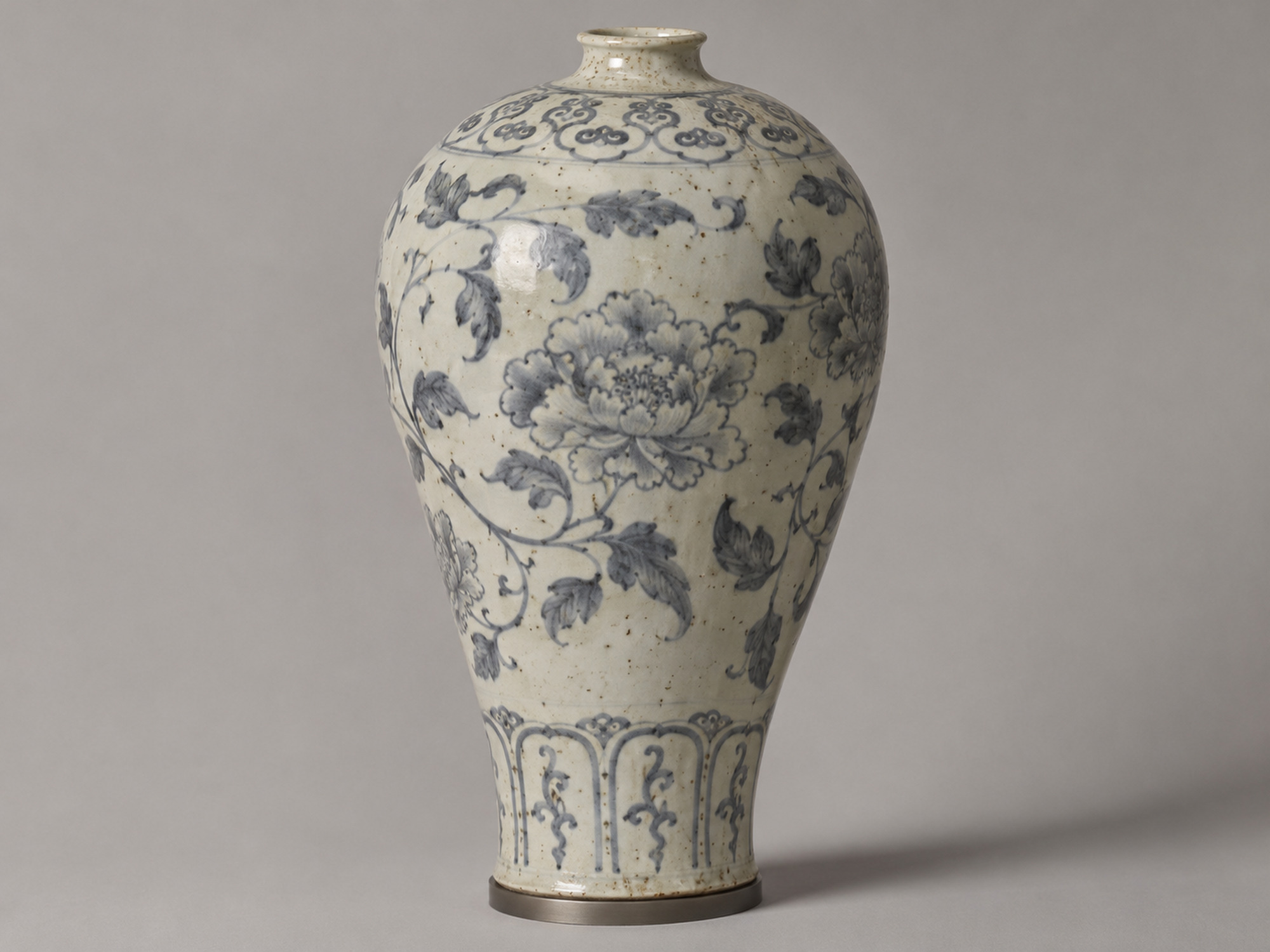
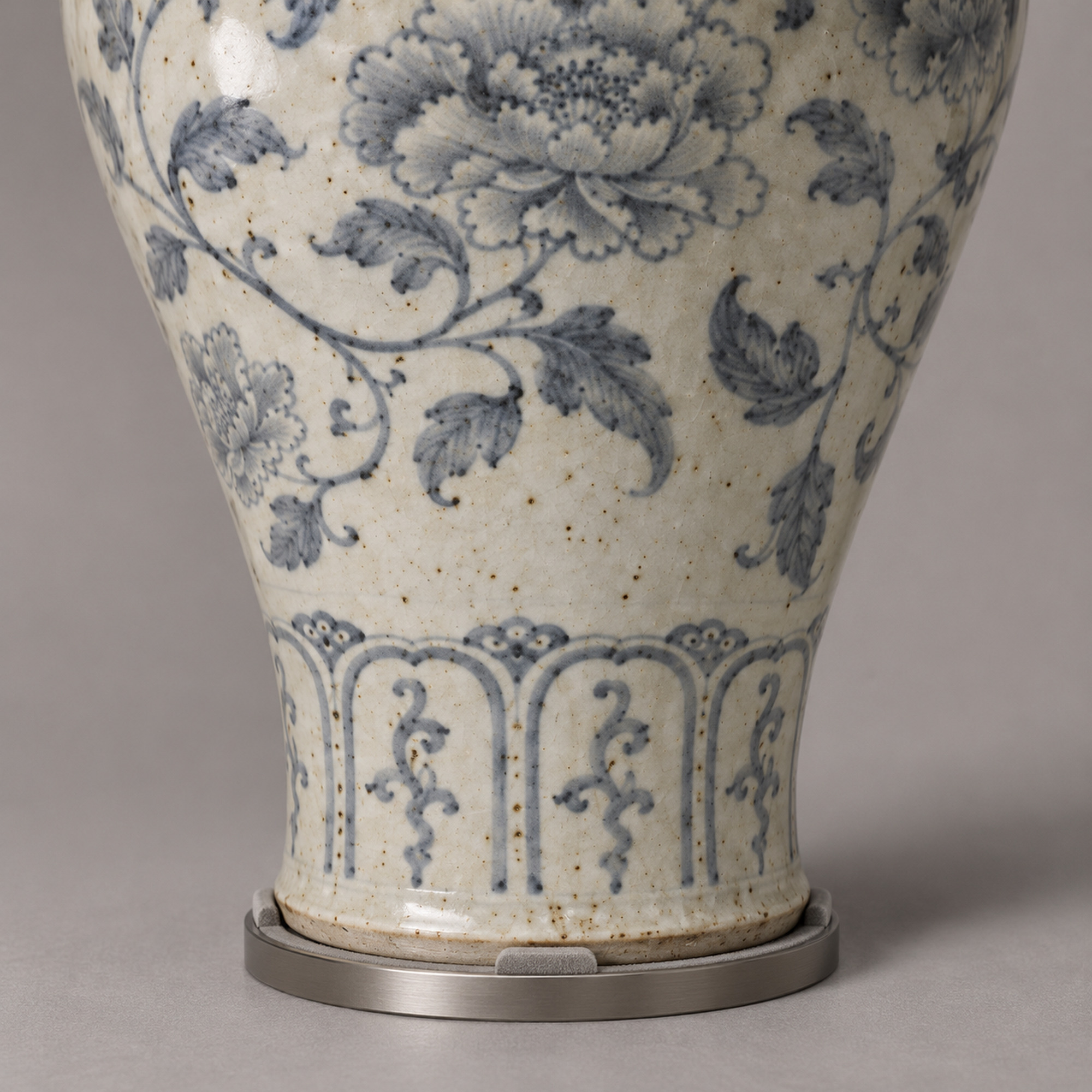
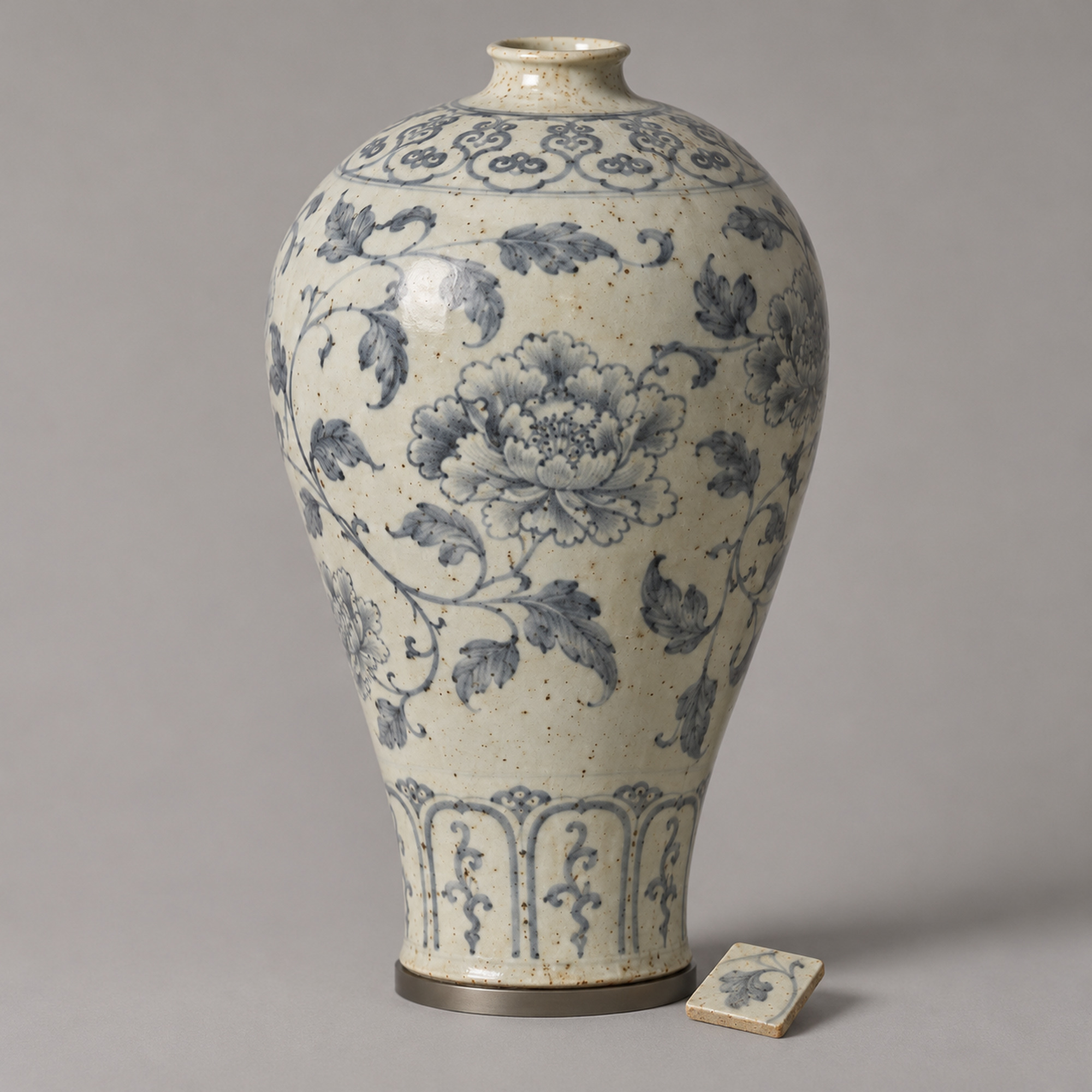
Delivered · Jingdezhen China Ceramics Museum, Jiangxi · 2025–2026C-07 · Jingdezhen China Ceramics Museum: Yuan blue-and-white meiping replica with a display mount
Jingdezhen Ceramics Museum replica three-quarter viewJingdezhen Ceramics Museum replica mount from belowJingdezhen Ceramics Museum replica with reference tile

Volume: 3 replicas (1:1, 425 mm high) plus 3 mounts.

Delivered: 16 February 2026, for a travelling exhibition.

The brief

A 1:1 replica of a Yuan meiping from the collection for a travelling show, accurate to ±1 mm on height, mouth, belly and foot, with the cobalt reading like the original, including the iron-oxide spots, and a display mount that holds the piece without touching the painted surface.

What made it hard

  • The original is 425 mm high with a 168 mm belly. Our first cast came out 3.1 mm short and 2.4 mm narrow: inside normal production tolerance, outside museum tolerance.
  • Sumali cobalt gives a grey-blue with dark iron spots. Modern cobalt is too clean; the replica reads as a copy at 2 m.
  • The mount must not touch the painted body. It has to hold at the foot ring and the inner shoulder only.
  • The piece travels by air and road; the mount has to survive 0.5 g random vibration without the piece moving.
  • Three replicas, three mounts, one specification: the mounts are not interchangeable unless they are made to a gauge.

How we solved it

  • Dimension. The original was scanned at 0.05 mm (structured light, 12 scans merged); a CNC-machined plaster mold was cut from the mesh. Shrinkage was corrected per axis rather than by a single factor: 12.8% vertical, 12.4% radial. Finished heights: 424.6, 424.8, 425.1 mm; belly 167.4–167.9 mm.
  • Cobalt. Twelve test tiles across three cobalt sources and two iron-spot additions; the selected recipe uses 4% iron oxide in a 0.08 mm spot pattern applied by hand before the glaze. Kiln position fixed to the centre of car 3 in S2, 1,290 °C. ΔE against the original reference tile: 2.8 (accepted by the museum's conservator).
  • Mount. 6061 aluminium, anodised matt black, three adjustable arms with 3 mm silicone pads: two at the foot ring, one inside the shoulder. No contact with the painted body. Arms adjust ±5 mm and are locked with a grub screw.
  • Vibration. 0.5 g random, 30 min per axis, on a shaker with the mount bolted to a flight-case base. Movement at the mouth: 0.15 mm; no contact marks.
  • Interchangeability. A steel setting gauge was made; all three mounts were set to it, and each replica was numbered to its mount.

Inspection and test data

CheckMethodResult
HeightCMM, 3 pcs424.6 / 424.8 / 425.1 mm
Belly diameterCMM167.4–167.9 mm
Mouth / footCMMwithin ±0.7 mm
Cobalt colourCi7800 vs reference tileΔE 2.8
Vibration0.5 g random, 30 min/axis0.15 mm movement, no marks
Mount contactPressure filmfoot ring and inner shoulder only

Outcome

3 replicas and 3 mounts delivered 16 February 2026; the show opened in March with no condition report issues. The museum has since asked for a second group of 6 shapes for 2027, quoted on the same per-axis shrinkage method.
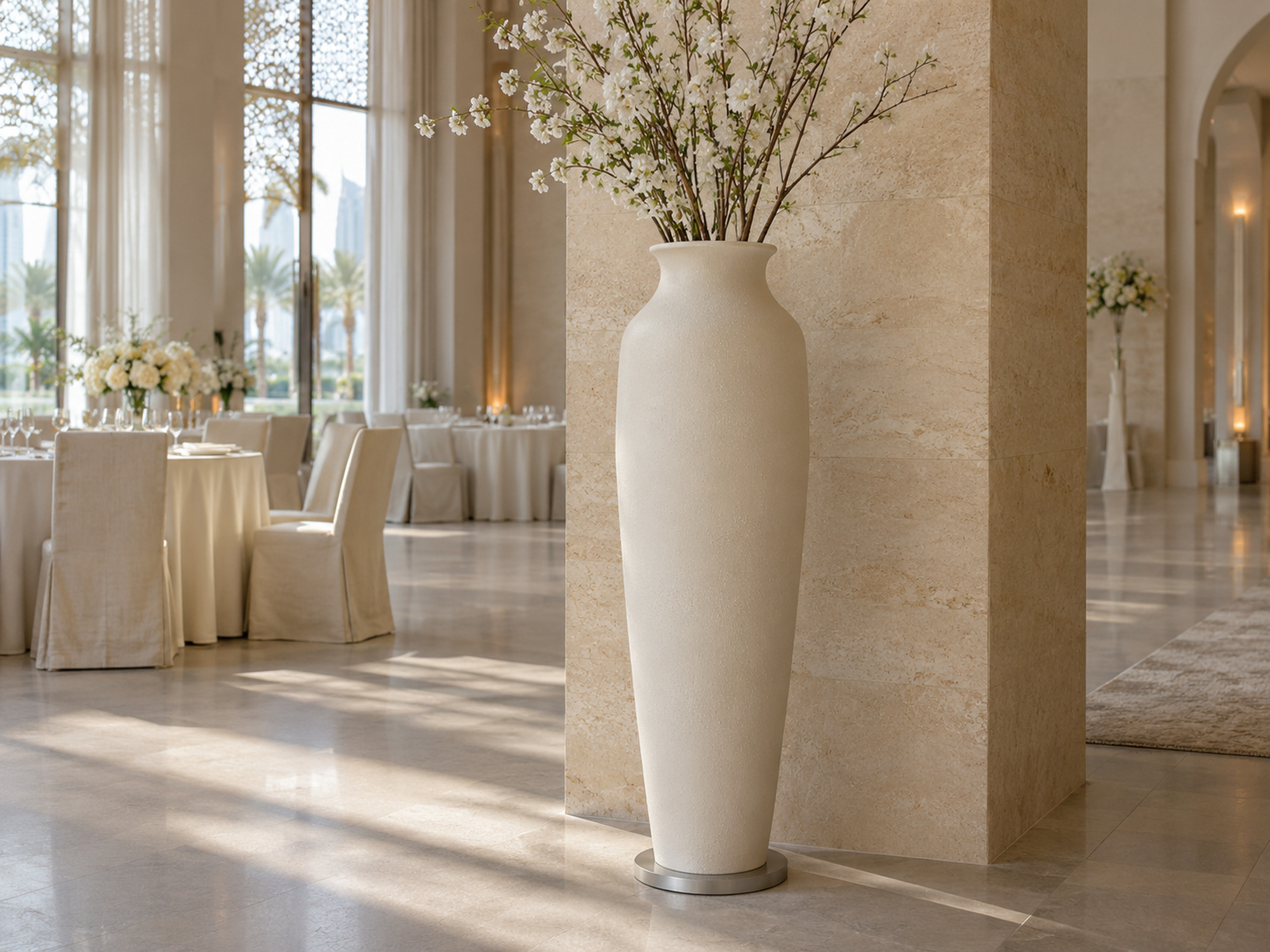
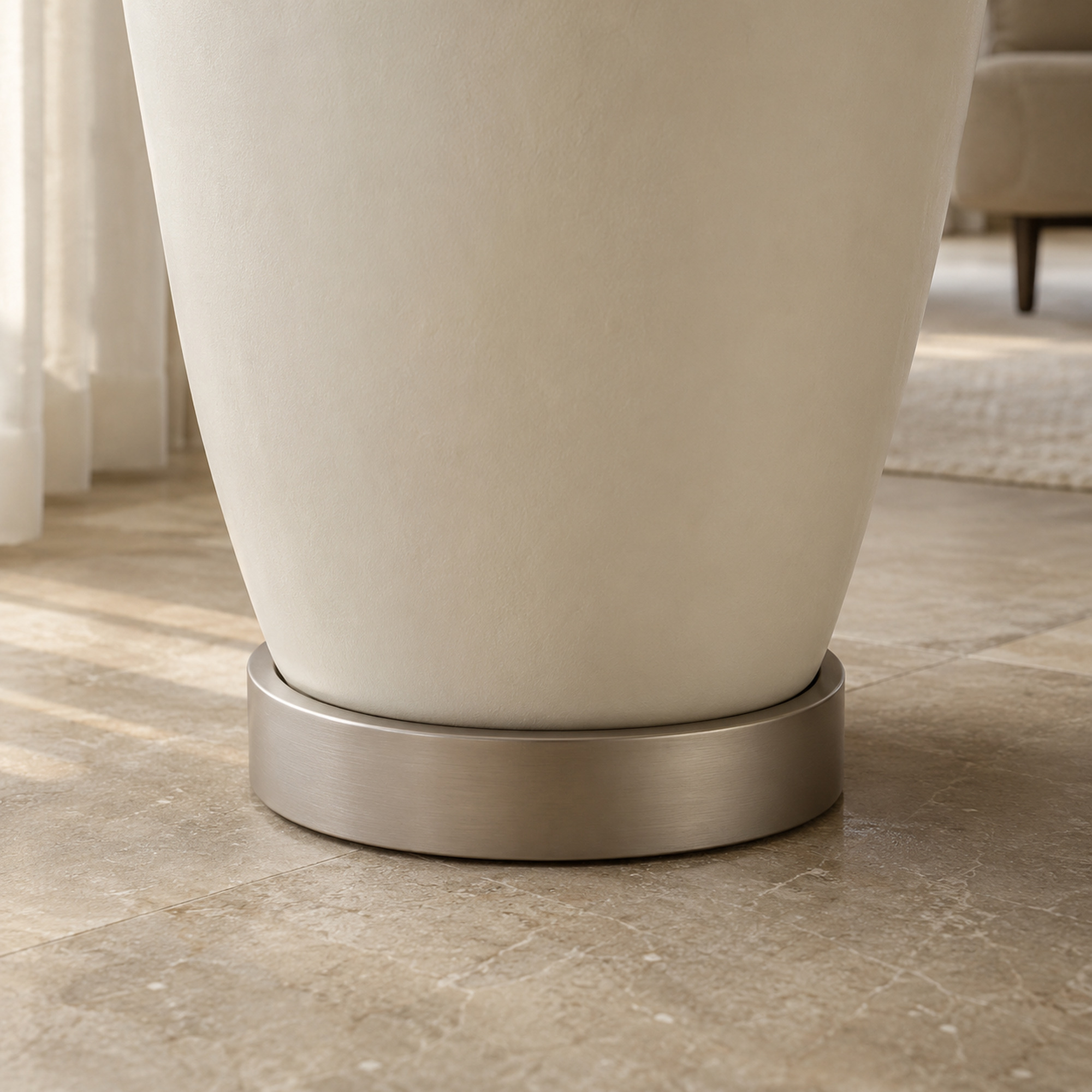
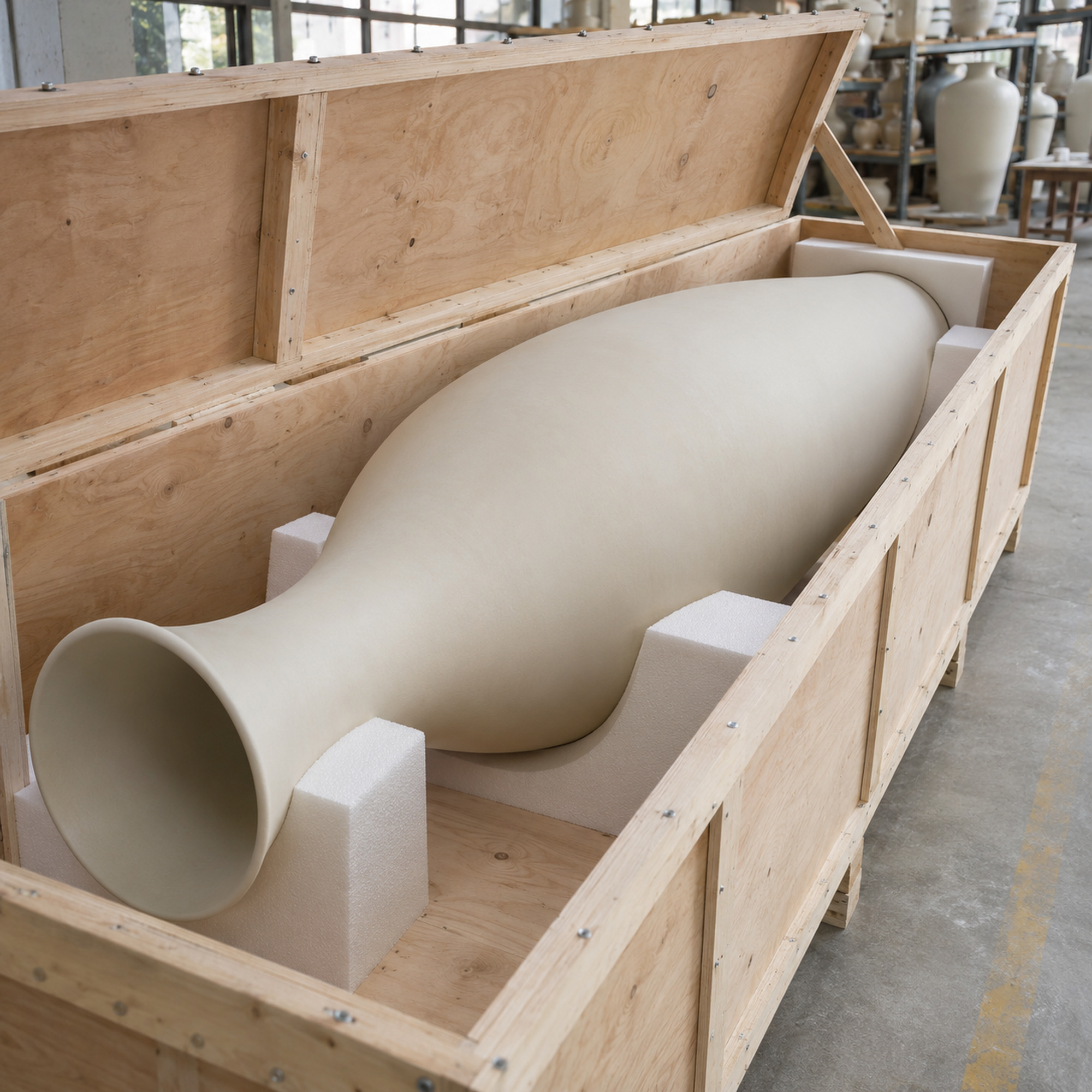
Delivered · Private commission via a hotel supply distributor, Dubai · 2026C-08 · Private commission, Dubai: 1.8 m floor vase, porcelain body on a cast-aluminium base
Dubai private commission ceramic vase in hallDubai private commission ceramic vase base jointDubai private commission ceramic vase shipping crate

Volume: 4 pieces.

Delivered: 3 March 2026, sea freight to Jebel Ali, then road to the venue.

The brief

Four floor vases for a wedding hall: 1.8 m high, 8 mm wall, 46 kg fired, a matt bone glaze outside and a sealed interior so the piece can hold water for cut flowers. Each stands on a cast-aluminium base and is lifted into place by four people, so it has to be stable empty and loaded.

What made it hard

  • A 1.8 m cast body shrinks 12.5%, or 225 mm. Any variation across the height shows as a lean, and a lean of 3 mm reads across a 6 m room.
  • Four slip-cast sections joined at leather-hard stage: the joints are the weak line when the piece is lifted.
  • Water inside an 8 mm wall means the body sees hydrostatic load and a cold face; the interior glaze has to be continuous over the joints.
  • Each base weighs 22 kg and must not tip when the vase is empty and someone brushes it.
  • Sea freight: 40 days, two humidity cycles, container temperature up to 58 °C.

How we solved it

  • Sections. Four sections (foot, lower body, shoulder, mouth), joined with body slip at 16% moisture. Each joint reinforced inside with a 12 mm overlapping strip of cast body, applied before drying. Joint strength tested on a spare section: 2.8 MPa, against 3.1 MPa for the solid body.
  • Firing. A 1.8 m piece cannot be fired upright in tunnel kiln 4#, so it was fired in two halves of 900 mm each on a profiled cradle, then joined with a ceramic sleeve and a fired-on glaze band in shuttle kiln S4. Final straightness 2.0 mm over 1.8 m.
  • Water. Interior glaze applied by pour-and-drain, two passes, 0.30 mm; the joint band is glazed before assembly and re-glazed after. 24 h water test: no seepage, no damp patch at the foot.
  • Base. Cast 6061 aluminium, 22 kg, with an 8 mm steel plate cast in and six M10 stainless bolts into threaded inserts set in the porcelain foot before firing. 3M DP460 plus mechanical fixing. Tilt test: 15° empty, 11° with 40 kg of water.
  • Freight. Each piece in a plywood crate on a 40 mm EPE cradle, 0.5 g vibration 30 min, then a 40-day container simulation at 58 °C / 90% RH. No craze, no base shift.

Inspection and test data

CheckMethodResult
HeightTape + laser, 4 pcs1,798–1,801 mm
StraightnessLaser, 5 heights≤2.0 mm
Joint strength3-point bend, spare section2.8 MPa
Water tightness24 h fillno seepage
TiltEmpty / 40 kg15° / 11°
Vibration0.5 g, 30 min/axisno movement
Container simulation58 °C / 90% RH, 40 daysno craze

Outcome

4 vases installed 6 March 2026; two hold water with flowers, two are dry with arrangements. The distributor has quoted a second set for a hotel lobby in Abu Dhabi.
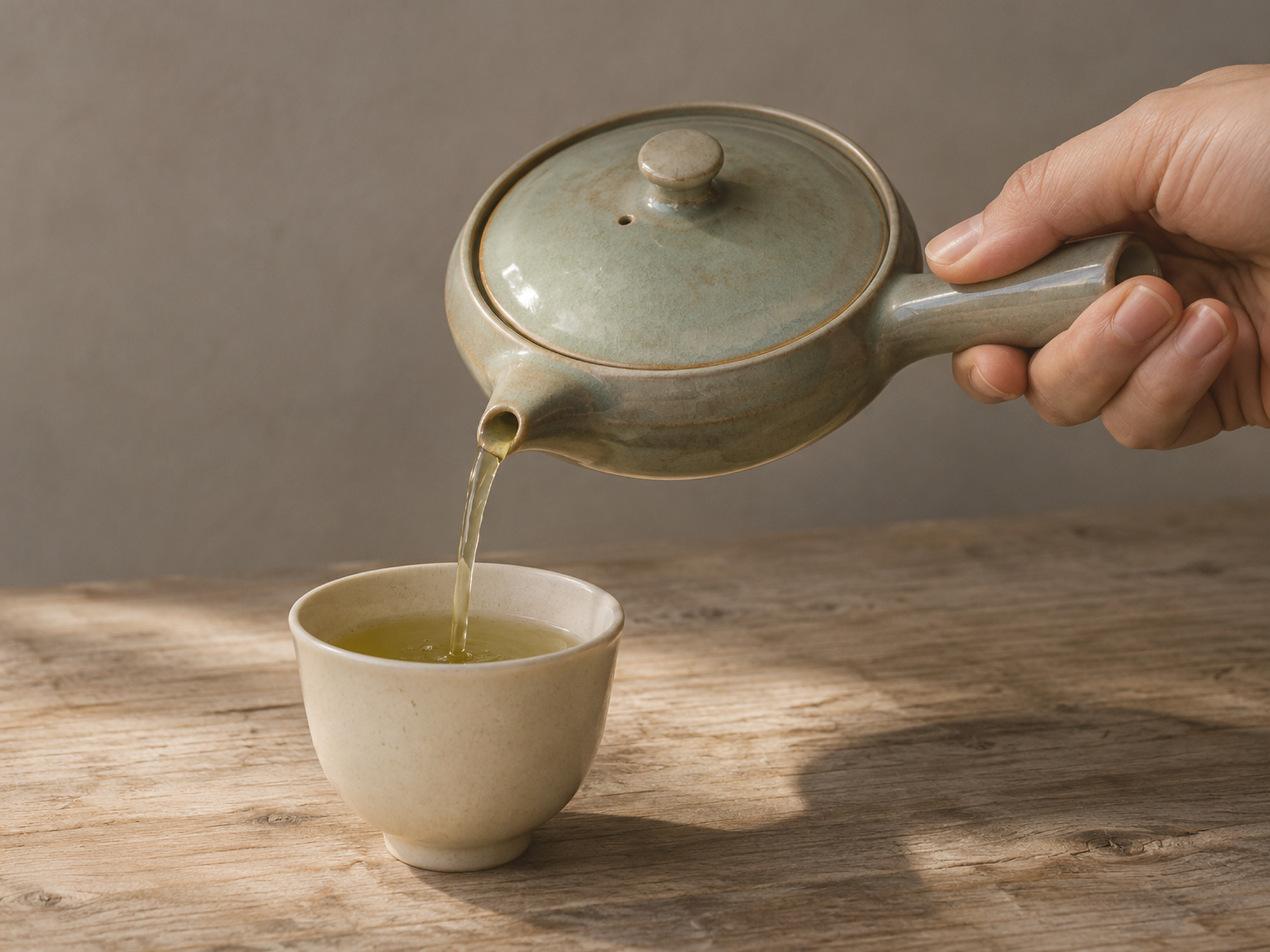
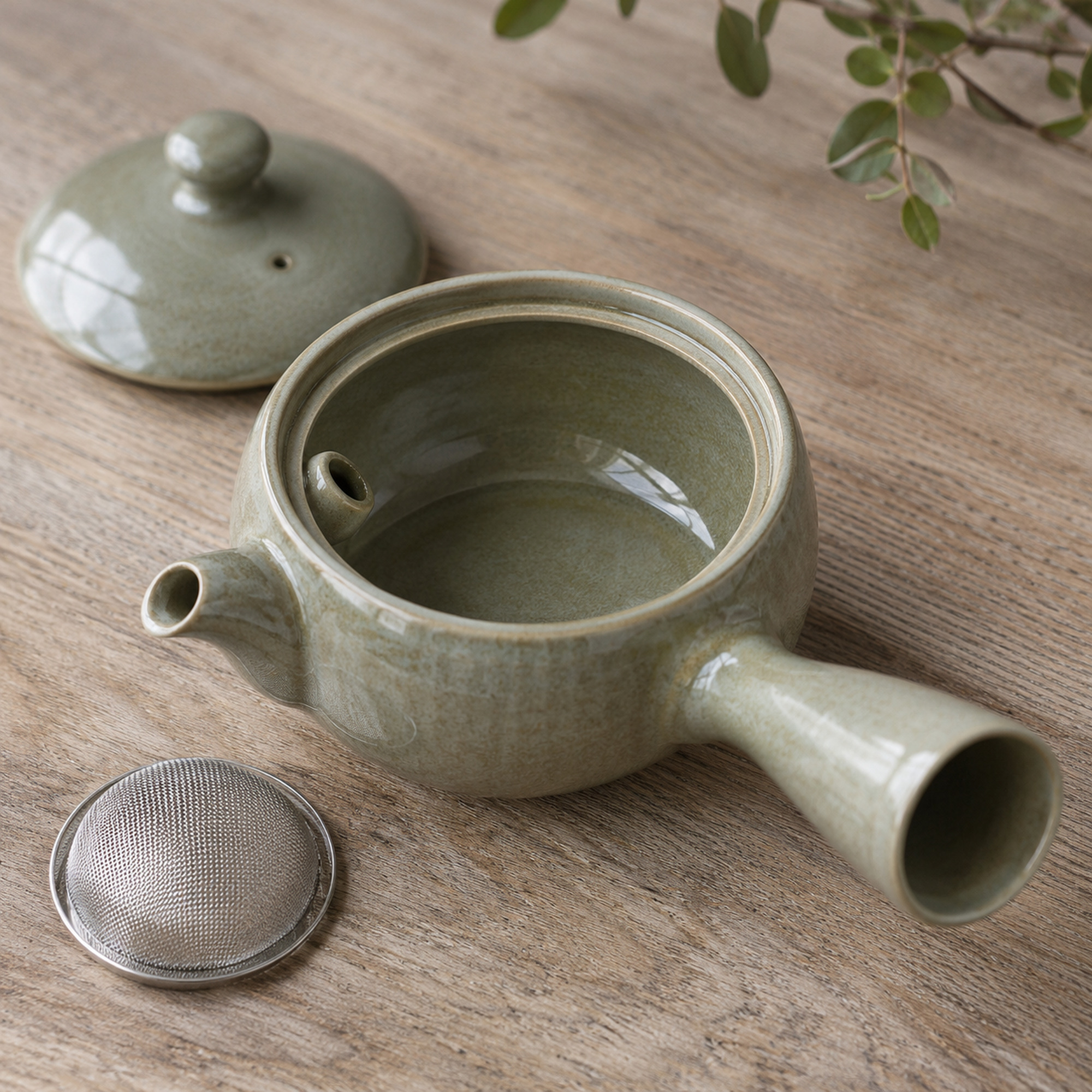
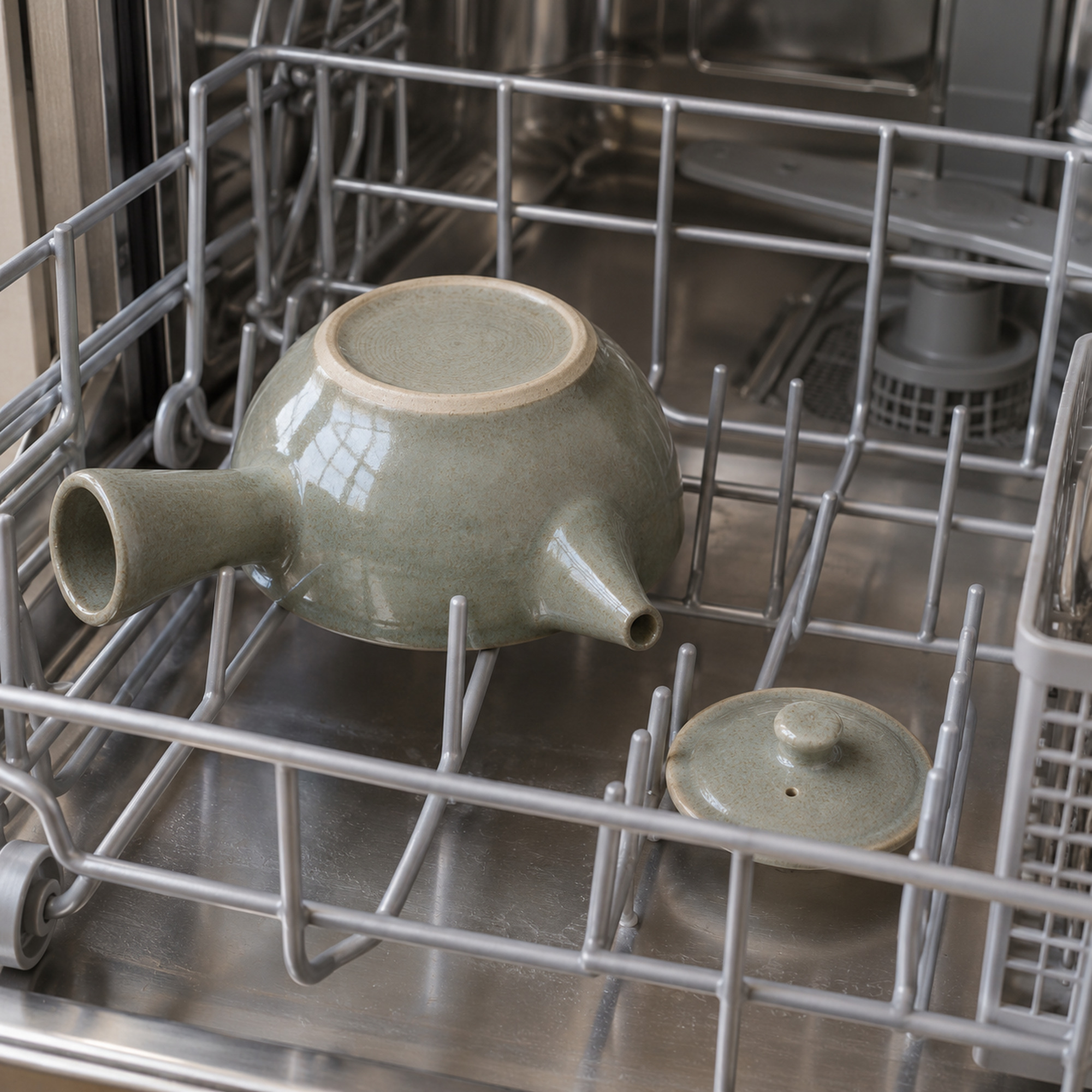
In production · Japanese lifestyle chain, Tokyo · 2025–2026C-09 · J-01, Japan: kyusu teapot with a 316L filter screen
Japanese kyusu teapot pouringJapanese kyusu teapot with filter removedJapanese kyusu teapot in dishwasher rack

Volume: 12,000 pieces a year, 3 sizes.

Delivered: first 4,000 on 20 December 2025.

The brief

A side-handle kyusu with a 1.6 mm body, a 316L etched filter screen fixed at the spout root, and an 8-second pour for 300 ml. Every SKU has to pass the Japan Food Sanitation Act, and the pot goes through a domestic dishwasher.

What made it hard

  • 1.6 mm slip-cast walls at 180 mm across: the body dries unevenly and pulls away from the spout joint.
  • The filter is metal in a ceramic seat. At 100 °C the stainless grows 16 × 10⁻⁶/K against 6.2 for the body; a rigid seat cracks the spout root.
  • Pour rate: 300 ml in 8 s needs a 0.3 mm aperture array that does not clog with leaf.
  • The filter must come out for cleaning without a tool, and go back with one hand.
  • Dishwasher 1,000 cycles with a metal part in contact with glaze.

How we solved it

  • Body. High-pressure casting at 25 bar, 6 minutes, demold at 15% moisture, spout joined at 18% moisture with a slurry collar, dried 48 h on a shaped cradle. Wall measured 1.58–1.66 mm.
  • Filter seat. A 0.35 mm silicone O-ring sits in a machined groove in the ceramic seat; the screen has a 0.2 mm rim and is held by a stainless snap ring. Radial float 0.2 mm absorbs expansion. No rigid contact.
  • Aperture. 316L, 0.2 mm thick, etched 0.32 mm holes on a 0.55 mm pitch, 420 holes. Flow test: 300 ml in 7.4 s with 3 g of leaf, 8.2 s with 5 g.
  • Removal. The snap ring has two 1.2 mm tabs; the screen lifts out with a fingernail and seats with a click. 200-cycle fit test: retention force 8–11 N.
  • Dishwasher. EN 12875-1, 1,000 cycles: no glaze wear at the seat, no screen deformation. Lead and cadmium at 50% of the regulatory limit (internal line), ICP-MS.

Inspection and test data

CheckMethodResult
Wall thickness4 points, 50 pcs1.58–1.66 mm
Pour rate300 ml, 3 g leaf7.4 s
Screen retention200 fit cycles8–11 N
Thermal shock180 → 20 °C, 20 cyclesno crack
DishwasherEN 12875-1, 1,000 cyclespass
Pb / CdICP-MS, 50% internal linepass
Drop1.0 m, 20 pcs0 breakage

Outcome

4,000 shipped 20 December 2025; 3,960 passed the chain's incoming inspection, 40 were held for colour and re-checked. The remaining 8,000 run through 2026. The screen assembly is now offered on two other kyusu shapes.
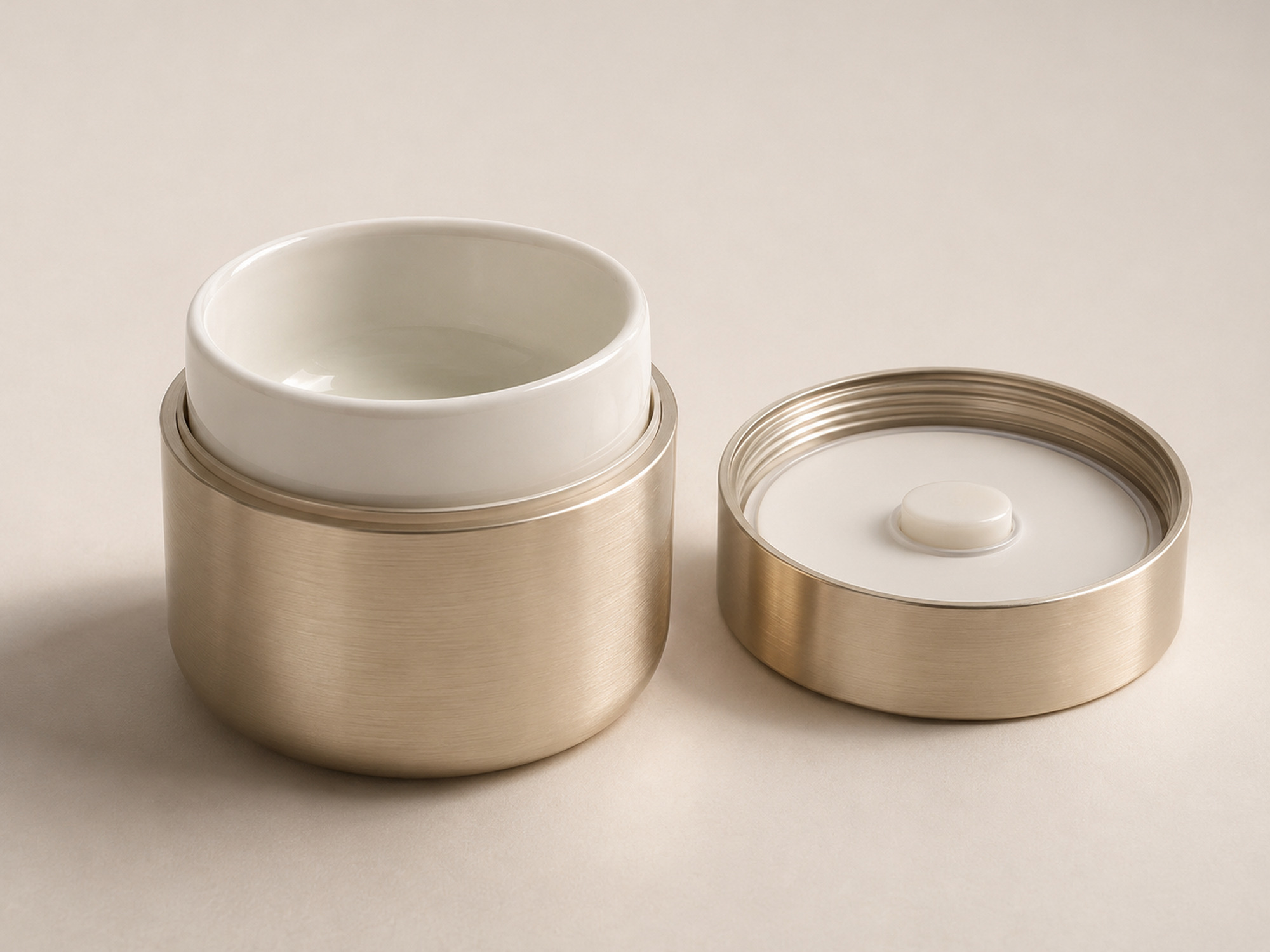
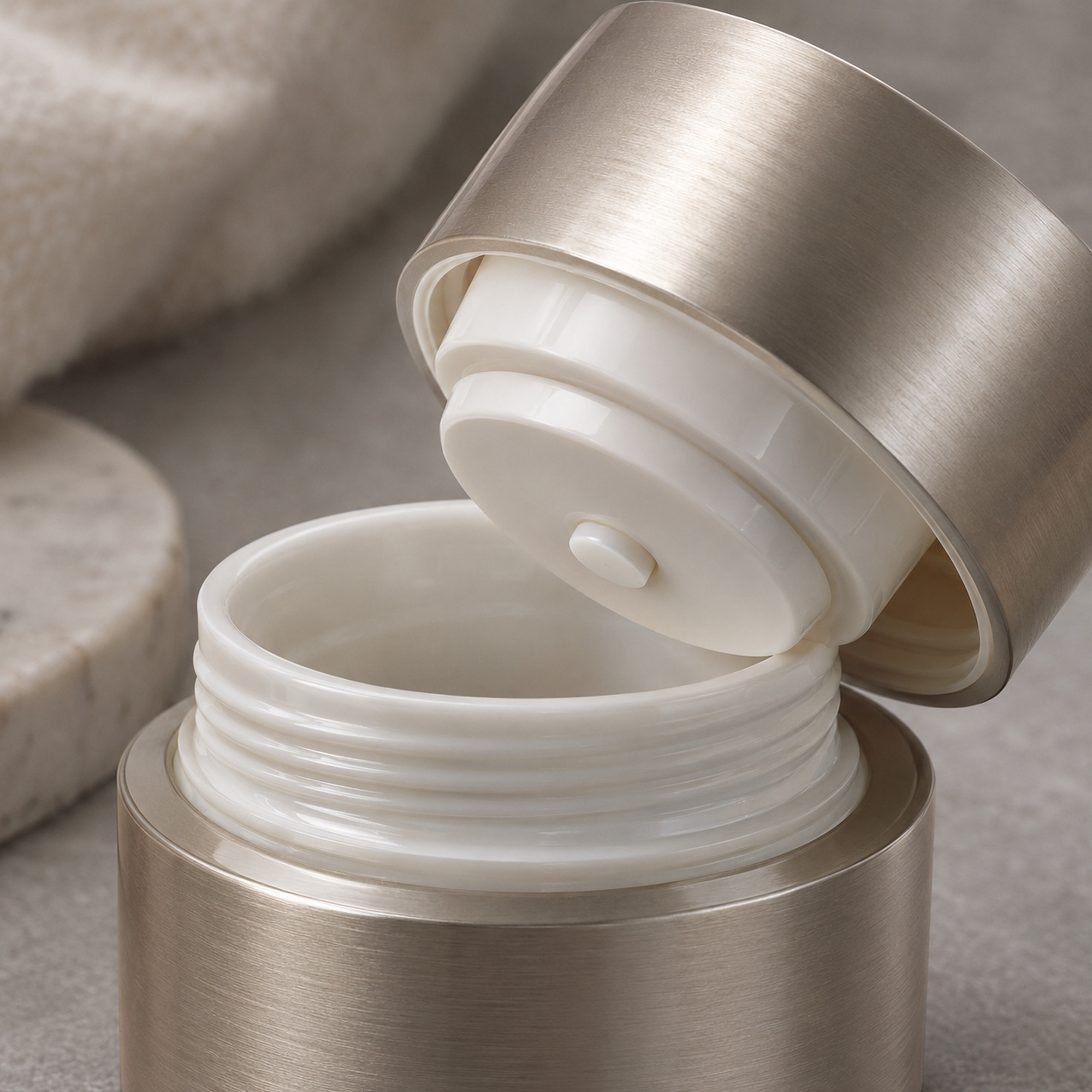
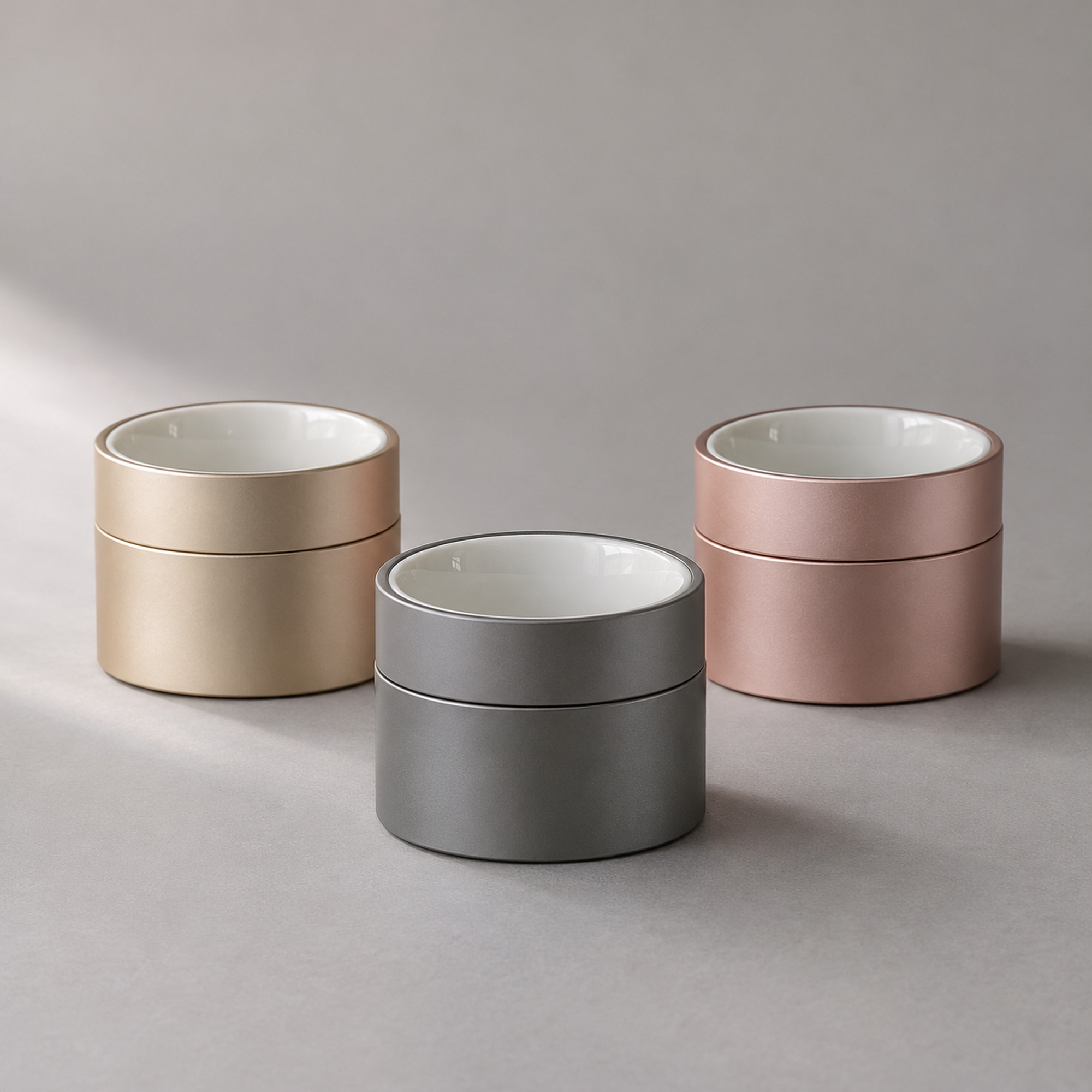
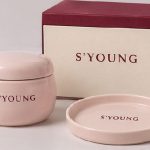
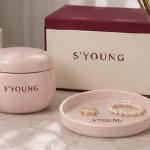
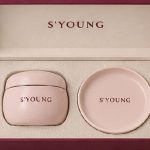
In production · SYoung Group, Changsha · 2026C-10 · SYoung: skincare jar, porcelain inner, aluminium shell, vacuum pump
SYoung ceramic jar openSYoung ceramic jar pump detailSYoung ceramic jar shell colours

Volume: 30,000 sets, 50 g.

Delivered: first 10,000 on 15 June 2026.

The brief

A 50 g cream jar where the product touches porcelain, not plastic: a 2.2 mm porcelain inner, a 0.8 mm anodised aluminium outer shell, a screw-on pump, and a 90-day compatibility test with a pH 5.5 cream. The jar has to survive a 1.2 m drop and hold vacuum.

What made it hard

  • Porcelain inner and aluminium shell: a 0.2 mm radial gap, and the shell must not rattle when the jar is shaken.
  • The pump threads into porcelain. Overtightening cracks the neck; undertightening leaks.
  • A 50 g jar with a 2.2 mm wall weighs 78 g empty, heavier than the plastic it replaces, and the fill line has to move.
  • Vacuum: −0.08 MPa for 24 h, no loss. The porcelain body is porous unless the interior glaze is continuous.
  • 90 days at 40 °C / 90% RH with a cream at pH 5.5: no discolouration, no glaze attack, no aluminium corrosion at the thread.

How we solved it

  • Fit. The shell is laser-cut to the fired inner's measured diameter (each inner is measured, and shells are sorted into 0.05 mm bands). A 0.15 mm silicone cord sits in a groove at the shoulder; no rattle, no hard contact. Assembly by hand press at 0.3 kN.
  • Thread. The porcelain neck is cast with a 1.5 mm wall and a square thread; the pump is torqued to 1.2 N·m with a slip clutch. 500-cycle open/close: no crack, no leak.
  • Weight and fill. The inner was reduced from 2.6 to 2.2 mm and the base recessed, bringing the jar to 71 g. Fill line moved down 3 mm; the client's filling line was re-set with a 20-piece trial.
  • Vacuum. Interior glaze by pour-and-drain, two passes, 0.32 mm; the neck thread is masked and re-glazed. −0.08 MPa, 24 h, 20 pcs: no loss.
  • Compatibility. 90 days, 40 °C / 90% RH, 12 jars filled with the actual cream. No colour shift (ΔE 0.4), no glaze attack under 200×, no corrosion at the thread. Aluminium is anodised 12 µm and sealed.

Inspection and test data

CheckMethodResult
Inner diameter100%, laser gaugesorted to 0.05 mm bands
Shell fitRattle test, 200 pcsno rattle
Pump torque1.2 N·m, 500 cyclesno crack, no leak
Vacuum−0.08 MPa, 24 h, 20 pcsno loss
Drop1.2 m, 6 faces, 20 pcs0 breakage
Compatibility90 d, 40 °C / 90% RHΔE 0.4, no attack
Anodising12 µm, eddy currentpass

Outcome

10,000 sets delivered 15 June 2026, filling line validated on 20 June; the remaining 20,000 run through September. The porcelain-inner construction is being quoted for a second SKU in the same range.
More projects

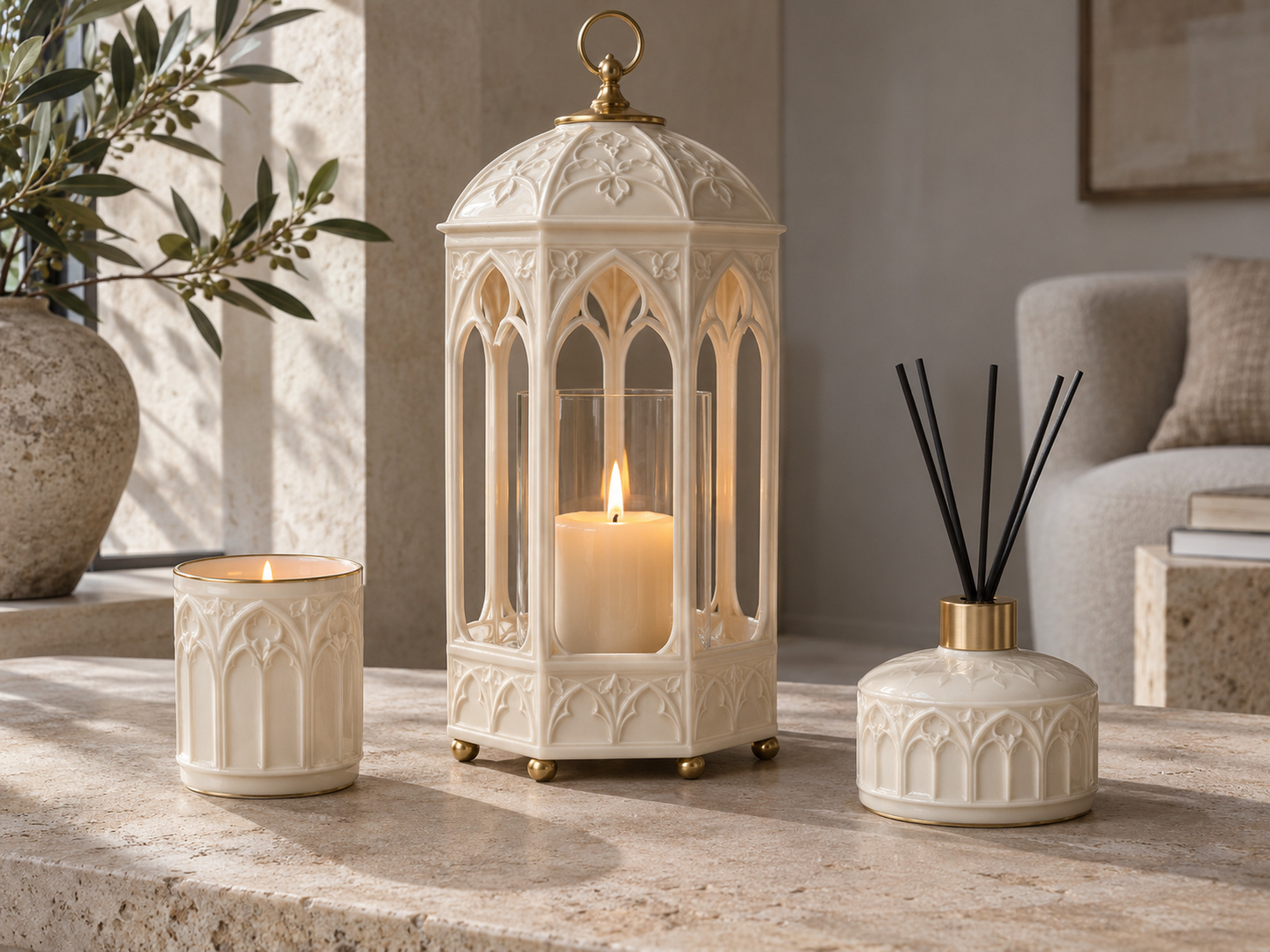
Moria Lumière ceramic home fragrance set
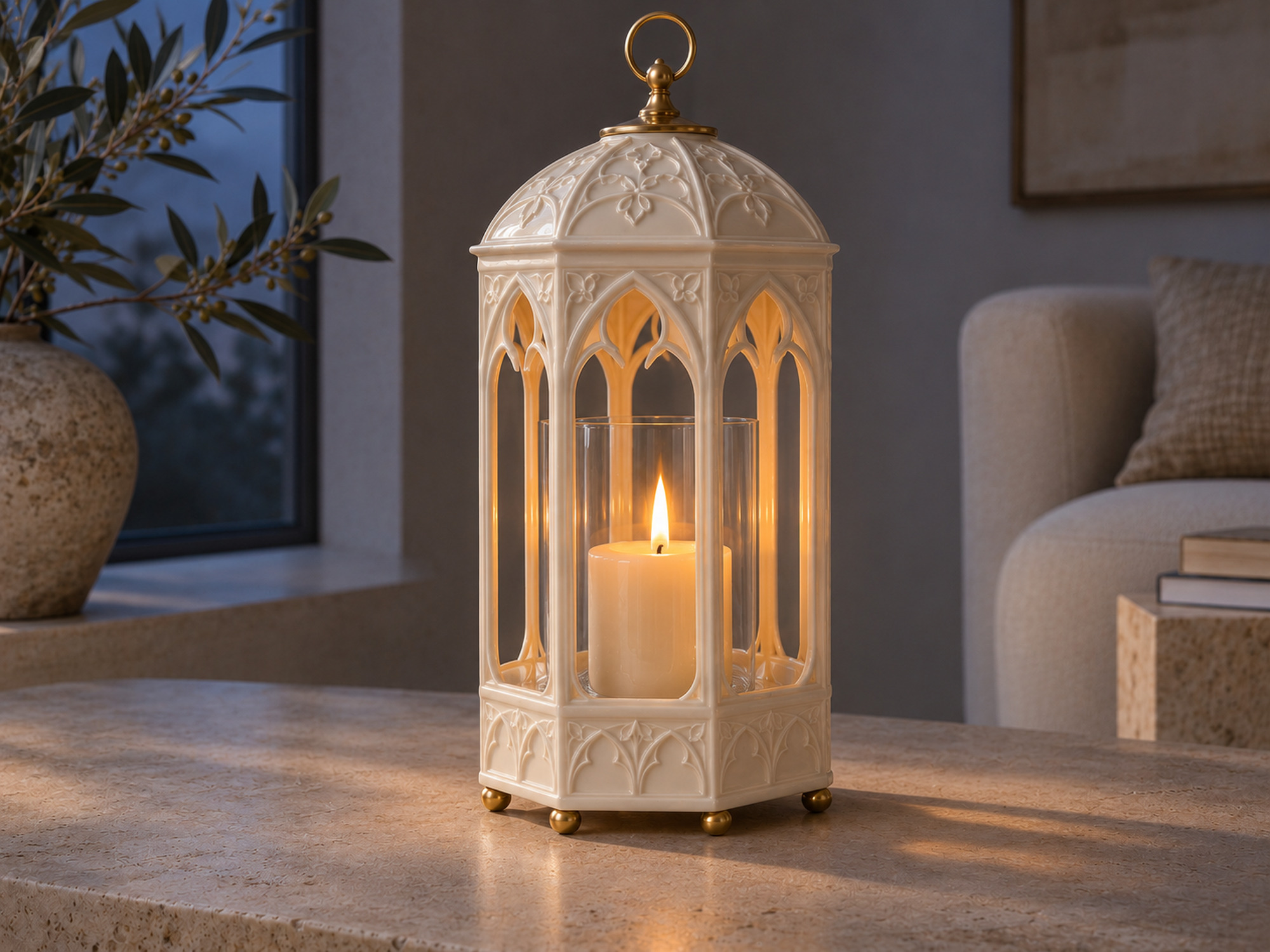
Moria Lumière ceramic lantern lit

Completed · Moria, luxury home fragrance, Israel · 2026

Moria Lumière: a ceramic lantern, diffuser and candle set

The brief

Moria, a luxury home fragrance brand from Israel, came to us with the Lumière set: a candle vessel, a reed diffuser bottle and a 26 cm ceramic lantern with an arched, pierced body, gold-tone fittings, four ball feet and a candle that changes from underneath. Ceramic, metal, glass and an open flame in one object, plus Moria's own pattern and monogram on every piece.

What made it hard

  • The lantern's ceramic walls are pierced and thin. A slip-cast shell of that shape will not stay upright through firing.
  • A candle inside a closed ceramic body needs a hidden air intake at the base and an exit at the top, so the glass, shell and metal stay within safe temperatures and soot does not build up.
  • The candle changes from the bottom, so the base has to lock and stay on when the lantern is lifted.
  • Moria wanted the arches, the gold detailing and the ball feet kept, at a lower cost than the first proposal.

How we solved it

  • We 3D printed the lantern shell in ceramic, so the thin pierced walls keep their shape. The candle vessel and diffuser bottle are slip cast.
  • Borosilicate 3.3 glass from standard tube sizes replaced custom quartz glass.
  • A hidden mechanical connection replaced ceramic-to-metal brazing, and a locking base holds the candle platform in place.
  • We led the whole development, working with metal and glass partners and assembling in our factory, and Moria's product engineer worked directly with our team. Every stage was signed off in writing before the next began.
  • Before shipping, prototypes were lit and tested in our factory for heat and ventilation, soot, heat resistance, stability and the candle-change lock.

Why it matters to you

If your product mixes ceramic with metal, glass or heat, we can take the whole development, not only the ceramic part, and tell you early where the shape or the material needs to change. See ceramic prototyping.
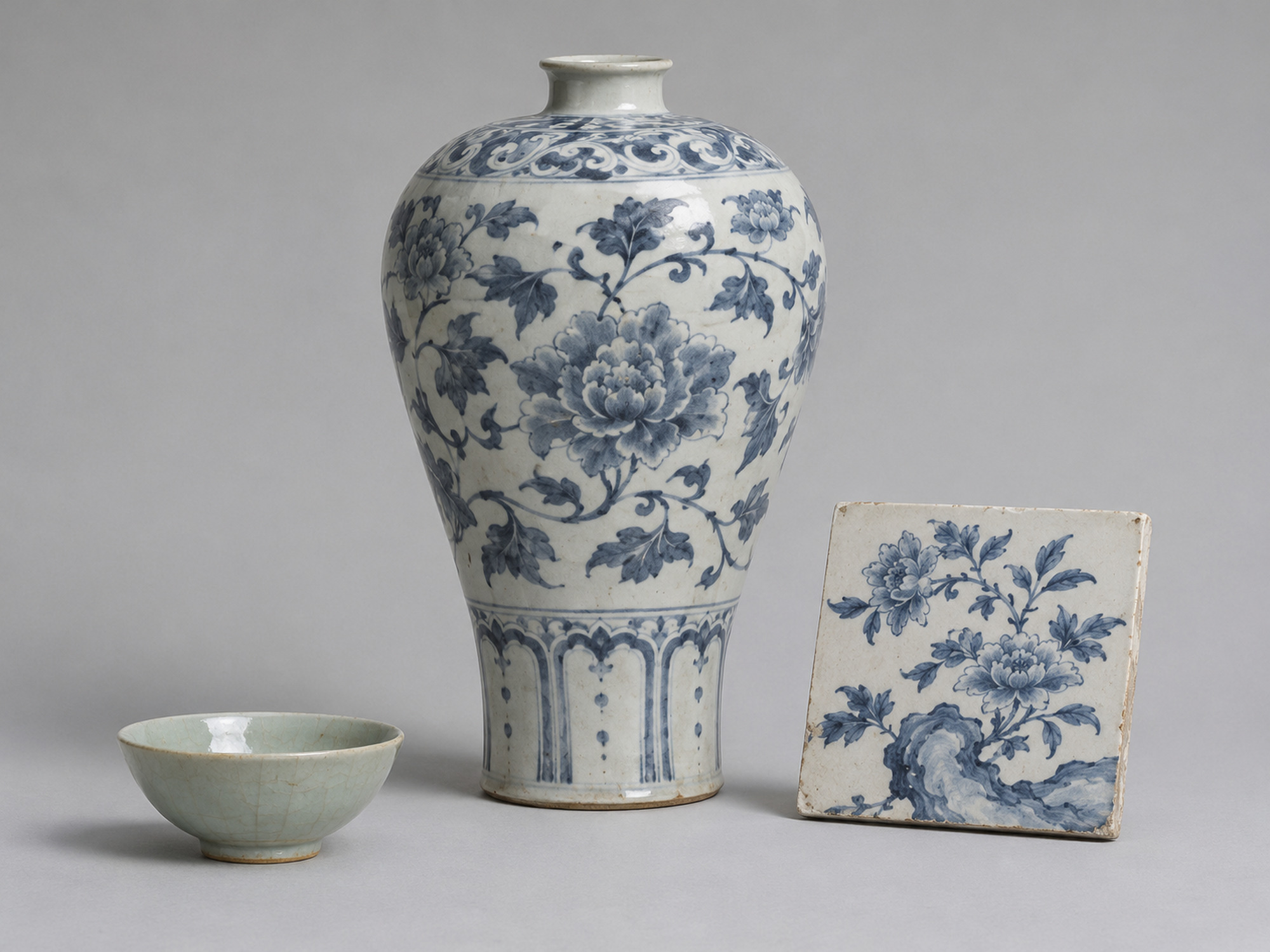
Jingdezhen China Ceramics Museum replica

Ongoing since 2023 · Jingdezhen China Ceramics Museum

Collection replicas and museum IP pieces

The brief

The museum asked us to reproduce shapes from its collection and to make IP products based on them for its shops: 12 shapes in supply.

What made it hard

  • A replica is judged against the original, so the profile, foot and glaze have to read true.
  • Museum runs are small and spread over many shapes, which most tableware lines are not set up for.

How we solved it

  • Shapes are restored from the originals and made on our slip-casting lines.
  • Small batches are fired in our shuttle kilns, which we keep for vases, samples and short runs.

Result

12 shapes and about 90,000 pieces a year.
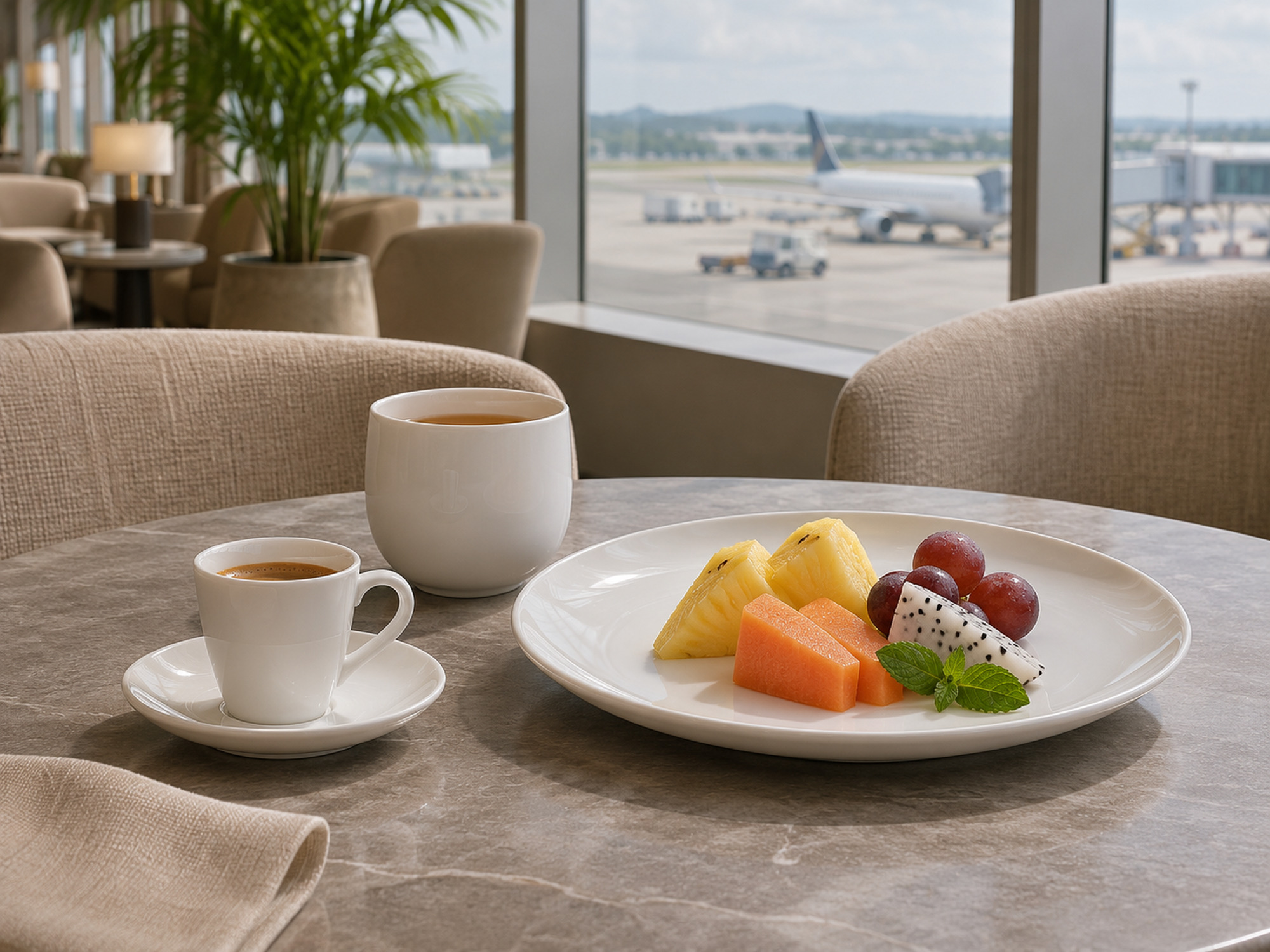
Hainan Airport VIP lounge porcelain

2026–2028 · Hainan Airport, VIP lounges

VIP lounge porcelain for an airport group

The brief

Hainan Airport selected us in its central purchase of VIP lounge porcelain for 2026 to 2028. The first batch is 6 shapes and 32,000 pieces: high-white cups and saucers, flat plates and tea cups.

What made it hard

  • Lounge porcelain is washed in commercial dishwashers many times a day and has to stay white and unchipped.
  • A multi-year contract needs the same colour and shape batch after batch.

How we solved it

  • Shapes were chosen for the lounges' dishwasher conditions.
  • Each shipment travels with our EN 12875 dishwasher report (1,000 cycles) and the test data for that batch.

Result

First batch of 6 shapes and 32,000 pieces, with supply running to 2028.
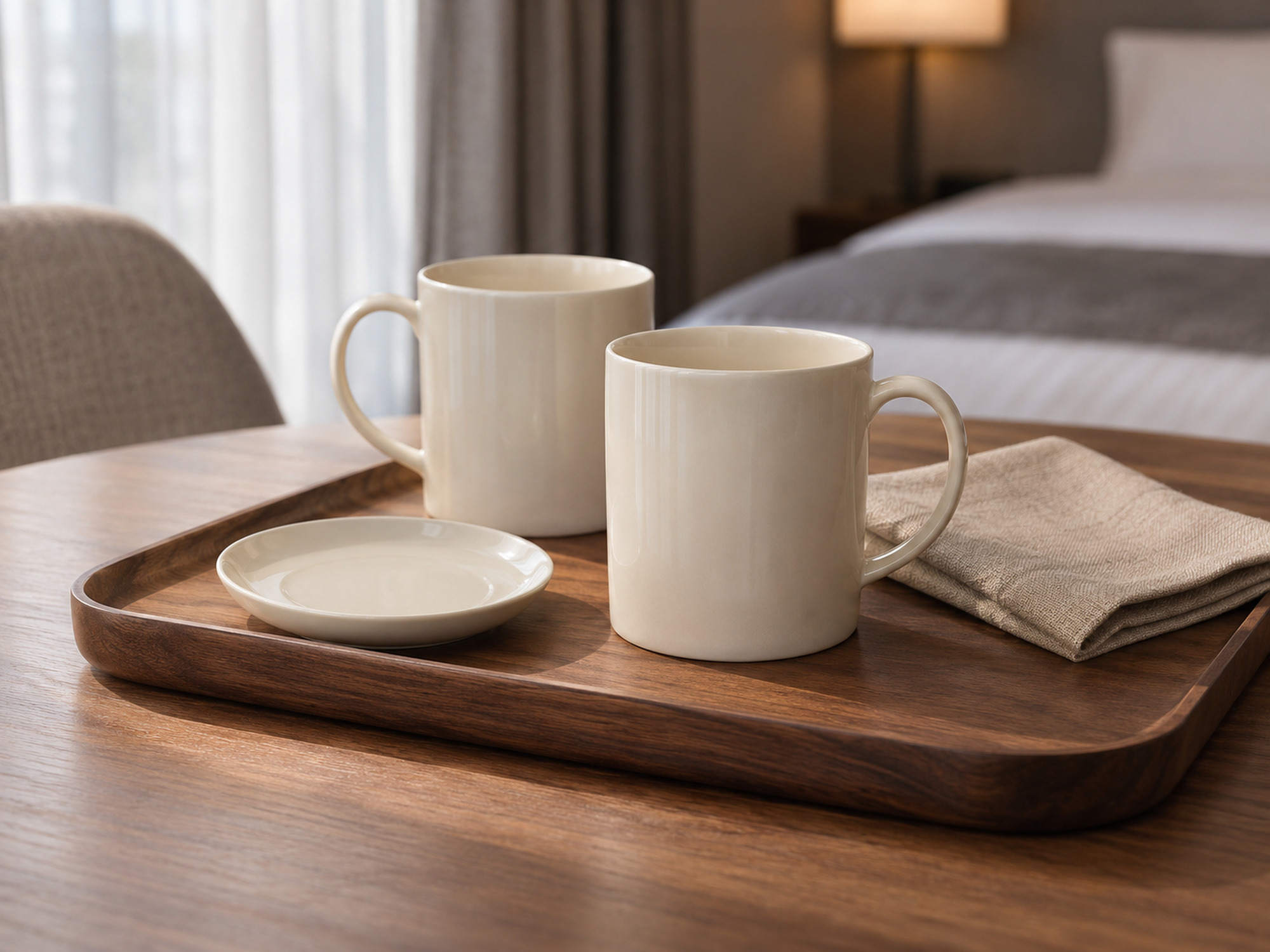
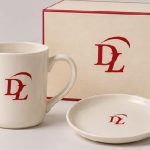
Atour hotel porcelain with logo

Ongoing since 2022 · Atour Hotels, Shanghai

Custom-logo porcelain for a hotel chain

The brief

Porcelain for Atour's guest rooms and public areas, carrying the hotel's own logo across 9 shapes.

What made it hard

  • One logo has to look the same on nine different shapes and on every reorder.
  • Hotels reorder through the year, so each delivery has to match the pieces already in use.

How we solved it

  • The logo artwork and its placement are fixed per shape and kept on file for every repeat order.
  • Production is tested and checked to the same standard as our hotel line.

Result

9 shapes and about 180,000 pieces a year.
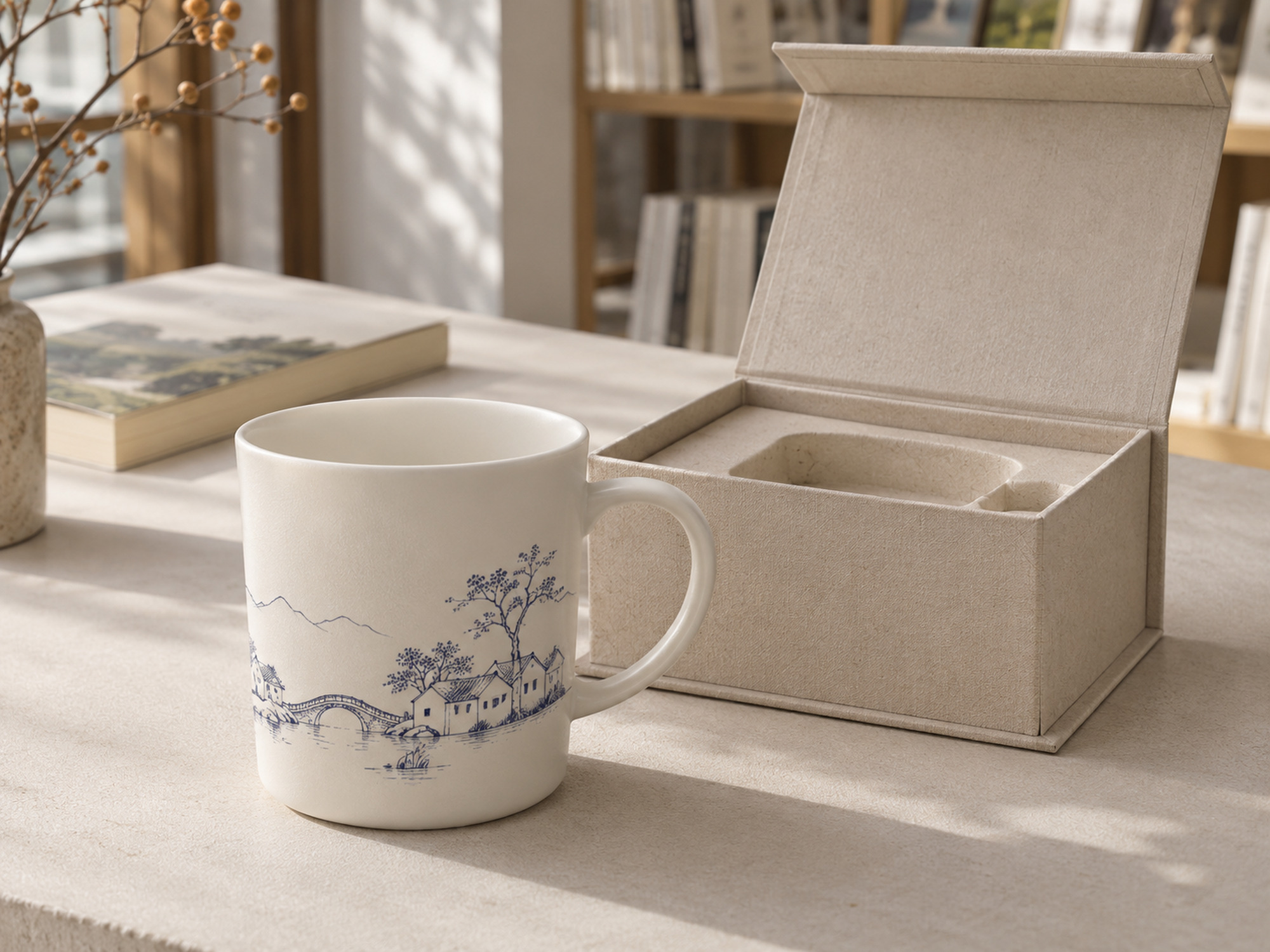
Sisyphe bookstore cup and gift box

Ongoing since 2021 · Sisyphe bookstores

Co-branded cups and gift boxes for 240 bookstores

The brief

Co-branded cups and bookstore gift boxes for Sisyphe, sold across 240 stores.

What made it hard

  • The cup and its gift box are one product, so both have to be designed, approved and delivered together.
  • Stock has to reach a chain of 240 stores.

How we solved it

  • We design the gift box as part of the project, with up to three rounds of changes.
  • Cups and boxes are packed together at our factory, ready for retail.

Result

About 240,000 pieces a year.

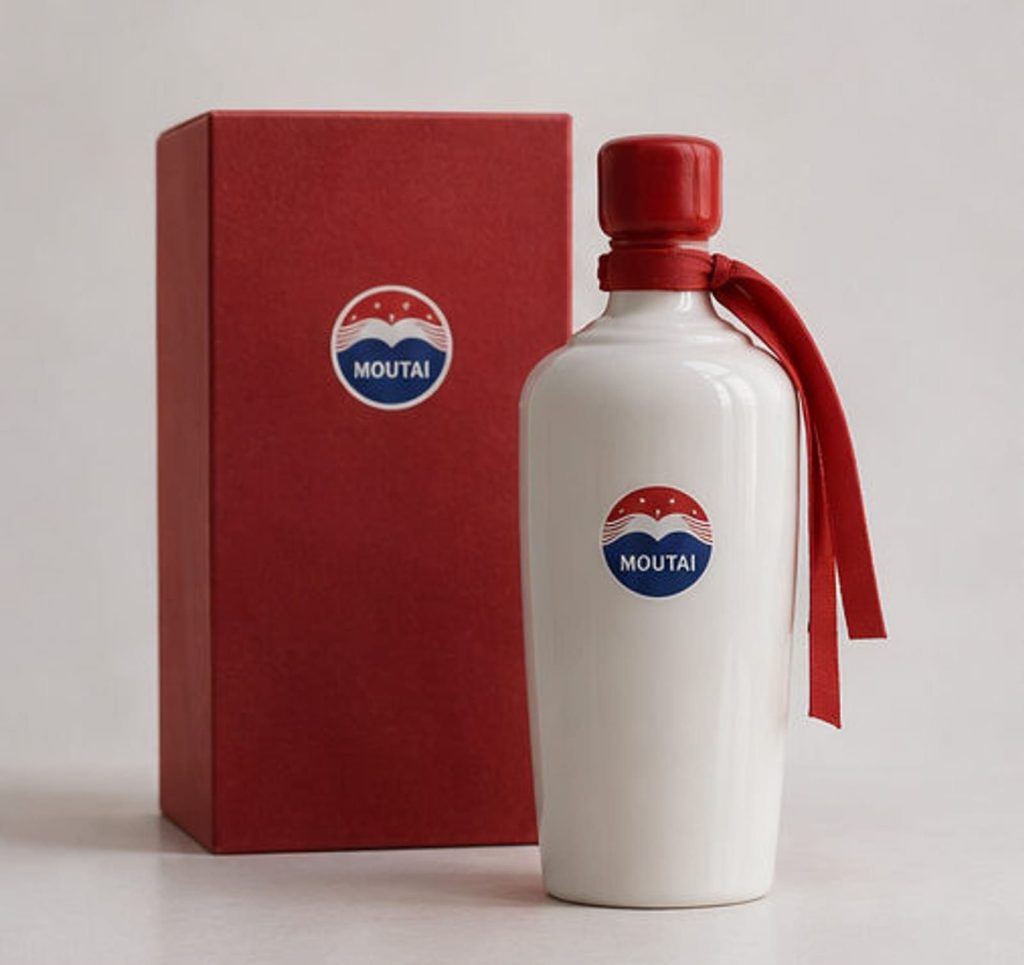
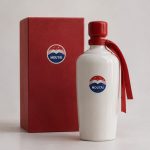
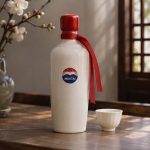
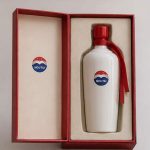
Moutai white porcelain liquor bottle beside its red box

Liquor bottles · high-pressure casting

Ceramic liquor bottles in special shapes

The brief

Spirits brands, Moutai among them, ask us for porcelain bottles in their own shapes, from 350 to 750 ml in our TB range and in custom forms.

What made it hard

  • A bottle is a closed, hollow form with a narrow neck, which roller lines cannot make.
  • Spirits gift bottles are often tall or irregular and carry gold, colour glazes and a brand mark.

How we solved it

  • Bottles are made by high-pressure casting on our 6 high-pressure casting machines and a dedicated mold line for special shapes.
  • Large and irregular pieces are fired in tunnel kiln 4, which we use for large, special-shape and second glaze firings.

Result

Capacity for 600,000 bottles and custom pieces a year. See ceramic liquor bottles.
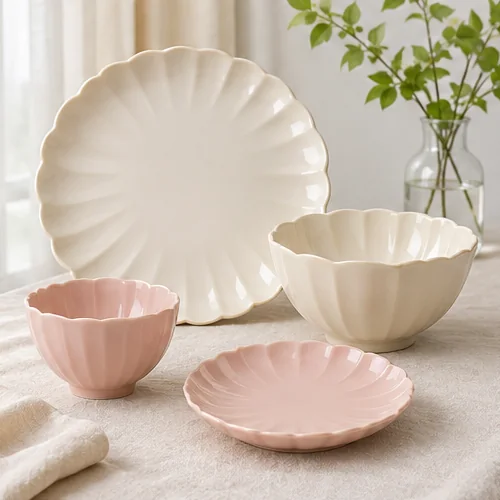
Cream and pink petal-rim plates and bowls on a table

Our own design · 2024

Fendai: a patented 16-piece set

The brief

Fendai is our own 16-piece dinnerware set with a petal rim, in cream and pink.

What made it hard

  • A scalloped petal rim has to come out of the mold and through the kiln without losing its edge.

How we solved it

  • The set was developed in our design studio, registered as a design patent (ZL 2024 3 0613902.1) and trademarked.

Result

Gold award at the 2024 Jiangxi Industrial Design Competition.
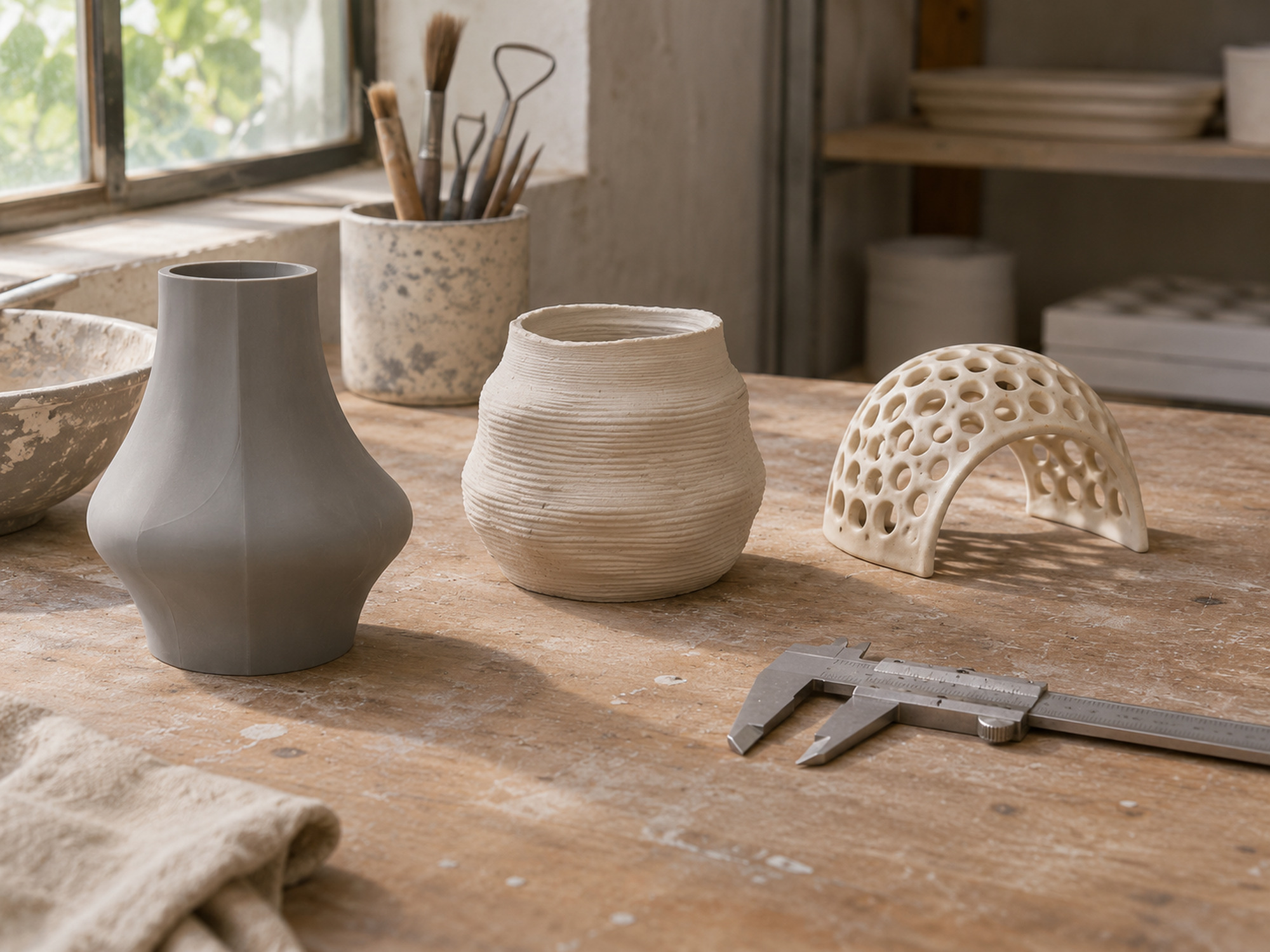
3D printed ceramic prototypes

Prototyping · 3D printing

Printed prototypes and printed ceramic parts

The brief

Many projects start before a mold exists: a brand wants to hold the shape, or the shape cannot be cast at all.

What made it hard

  • A new mold costs time and money, and a mistake in the shape is expensive to fix after it is cut.
  • Some forms, like thin pierced walls, will not survive slip casting.

How we solved it

  • We make a 3D-printed prototype in 3 days so you can check size and handling before tooling.
  • Where casting cannot work, we print the part directly in ceramic, as we did for the Moria lantern.

Result

See ceramic prototyping and our guide to 3D printing ceramics.

Featured case

Nordic home retail group (N-01), since 2018

Needed

8 SKUs reordered every quarter, colour within ΔE 1.5, IKEA IWAY 6.0 compliance.

We did

Locked an exclusive glaze recipe, measured each tunnel kiln at 9 points, and kept retained samples from every batch for three years.

Result

16.8 million pieces over eight years with no major quality incident, and a glaze recipe that has not changed since the first order.

Featured case

Featured: Middle East car brand, handover gifts (ME-01)

Needed

12,000 logo mug and tray gift boxes a year for new-car handovers, after a cheaper supplier’s 3,000-set trial arrived with nearly 17% breakage and no food-contact reports.

We did

LFGB and FDA heavy-metal tests before production, a sealed glaze sample from every kiln, drop-tested gift boxes with thicker inserts, video inspection and a pre-shipment checklist, and certificates sent ahead for a customs pre-check. The logo mold belongs to the customer, and we do not sell the design to their local competitors.

Result

0.8% breakage on the 2,000-set trial, customs and dishwasher tests passed first time, and the full annual order moved to us. The contract covers transit breakage above 3%.

“When I only looked at unit price, I thought I saved money. After calculating all hidden costs, the cheaper supplier turned out far more expensive.”

Gift buyer, ME-01

Named customers

CustomerSinceWorkVolume
Hainan Airport2026VIP lounge tableware 2026–2028, chosen for commercial dishwasher use and shipped with EN 12875 reportsFirst order 6 shapes, 32,000 pcs
Atour Hotels2022Guest room and public area porcelain with the Atour logo, 9 shapes180,000 pcs a year
Sisyphe Bookstores2021Co-branded cups and bookstore gift boxes across 240 stores240,000 pcs a year
China Ceramics Museum, Jingdezhen2023Replicas of collection pieces and IP products, 12 shapes90,000 pcs a year

Coded cases

CodeCustomerSinceVolumeWhat we do
D-01German discount retailer, private label20193.4M pcs a year16 and 20-piece sets, 12 deliveries a year, locked glaze recipe
US-01US warehouse club20211.8M pcs a year24-piece sets and mugs, an SGS report in every container
J-01Japanese lifestyle chain2020960,000 pcs a yearGaiwans, small dishes and teapots, each SKU tested to Japan's Food Sanitation Act
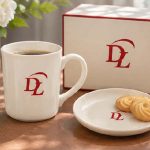
UK-01UK home e-commerce2022740,000 pcs a yearVases, figurines and trays, drop-ship packed for 3 fulfilment centres
CA-01Canadian importer2019880,000 pcs a yearDinner sets and mugs, forward stock in Toronto
AE-01Dubai hotel supply distributor2023420,000 pcs a yearGold-rim and hotel porcelain with EN 12875 reports
SA-01Saudi gift company2024280,000 pcs a yearGift boxes and figurines, three Ramadan seasons on time

Who our customers are

Our cases come from nine kinds of buyer. This is what each needs and how large a first order usually is.

BuyerWhat they needWhat they orderTypical first order
Supermarket private labelConsistency, traceability, audits, compliant packing16- and 24-piece sets, mugs, storage jars30,000–80,000 pcs
Importers and wholesalersFull range, mixed loads, fast reordersAny of our 1,260+ SKUs1–3 containers
Home chainsSeasonal themes, display appeal, colour boxesVases, figurines, candle holders, trays20,000–50,000 pcs
Hotels and projectsDurability, dishwasher-safe, reorderableStrengthened plates, wide-rim plates, cups and saucers2,000–20,000 pcs
Airlines and airportsCustom logo, lighter pieces, batch consistencyHigh-white cups, saucers and tableware10,000–50,000 pcs
Corporate giftsShort lead time, good packagingGift boxes, mugs, figurines1,000–10,000 sets
Museums and cultural brandsFaithful shapes, small runs, IP licensingReplica shapes, co-branded cups3,000–20,000 pcs
E-commerce brandsDrop-ship, breakage cover, light packingMugs, coffee cups and saucers500–5,000 pcs a month
Restaurant chainsChip resistance, stacking, one colourStrengthened bowls, plates, sauce dishes50,000–200,000 pcs

Questions about our customers

Why are some customers coded?
Retail and private-label customers often ask us not to name them. Codes like D-01 or US-01 stand for real customers; volumes and dates are from our records.
What is your largest order?
2.18 million pieces across 46 SKUs, in 11 containers over nine months.
How long do customers stay?
N-01 since 2018, D-01 and CA-01 since 2019, J-01 since 2020, US-01 since 2021.
Do you work with museums?
Yes. The Jingdezhen China Ceramics Museum since 2023; see case file C-07.
Can you handle very small, complex projects?
Yes. Our case files include runs of 8 trophies and 4 floor vases, alongside contracts of 20,000 and 30,000 pieces.
Do your case files include test data?
Yes. Each of the ten case files on this page ends with an inspection and test data table: the check, the method and the result.
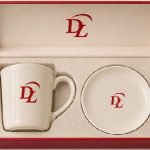
Brands we have produced for

Louis Vuitton logoCoach logoJaeger-LeCoultre logoBvlgari logoLongines logoMercedes-Benz logoBMW logoAudi logoGeely logoHuawei logoXiaomi logoMoutai logoPang Dong Lai logoSYoung Group logoChaCha Food logoRed Star Macalline logo
Brand names and logos belong to their owners and identify projects we produced.

Tell us what you need

A product, a quantity and a market are enough to start. We reply within 24 working hours.
Prefer to talk directly?

WhatsApp +852 5501 1456
MaraAnestiade@gmail.com

Scroll to Top