The plant in figures
| Item | Figure |
|---|
| Own land | 63,100 m², acquired October 2021 |
| Site area | 136,000 m² |
| Floor area | 168,000 m² |
| Main workshop | Workshop 6, 60,000 m² on three floors; forming and firing on the same floor |
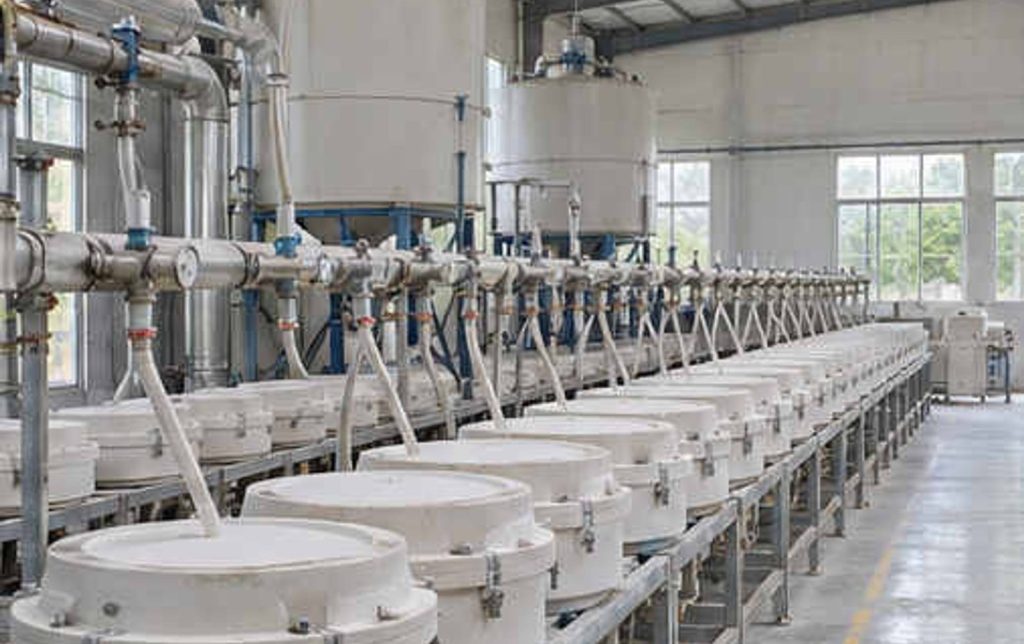
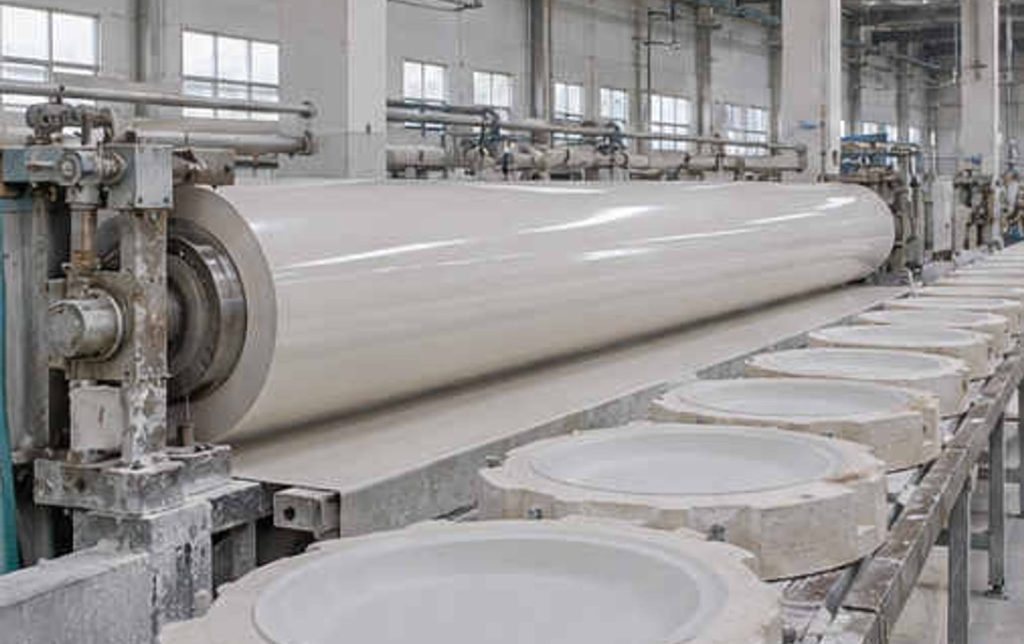
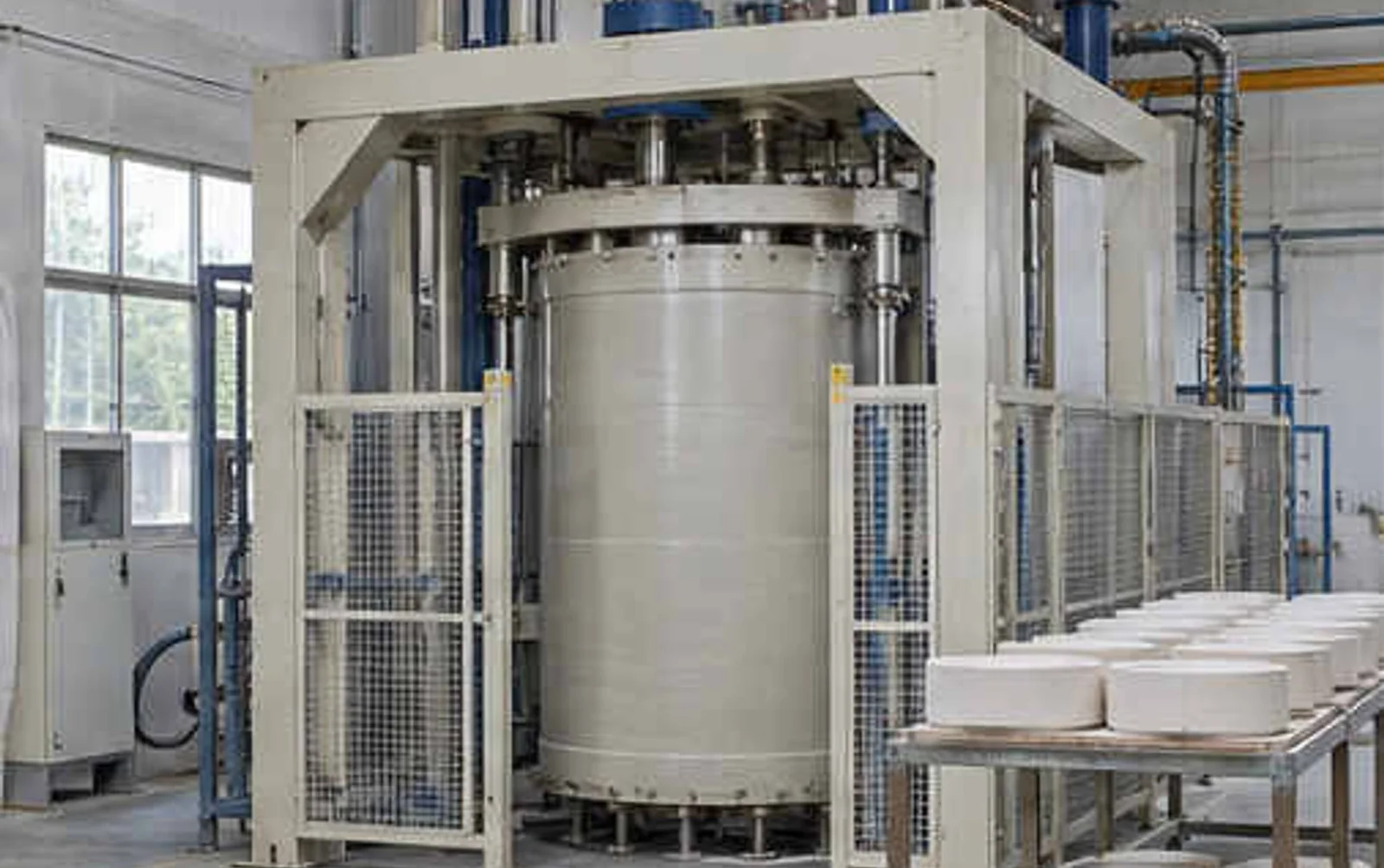
| Forming | 14 roller lines, 3 slip-casting lines, 6 high-pressure casting machines, 2 isostatic presses (280–320 bar) |
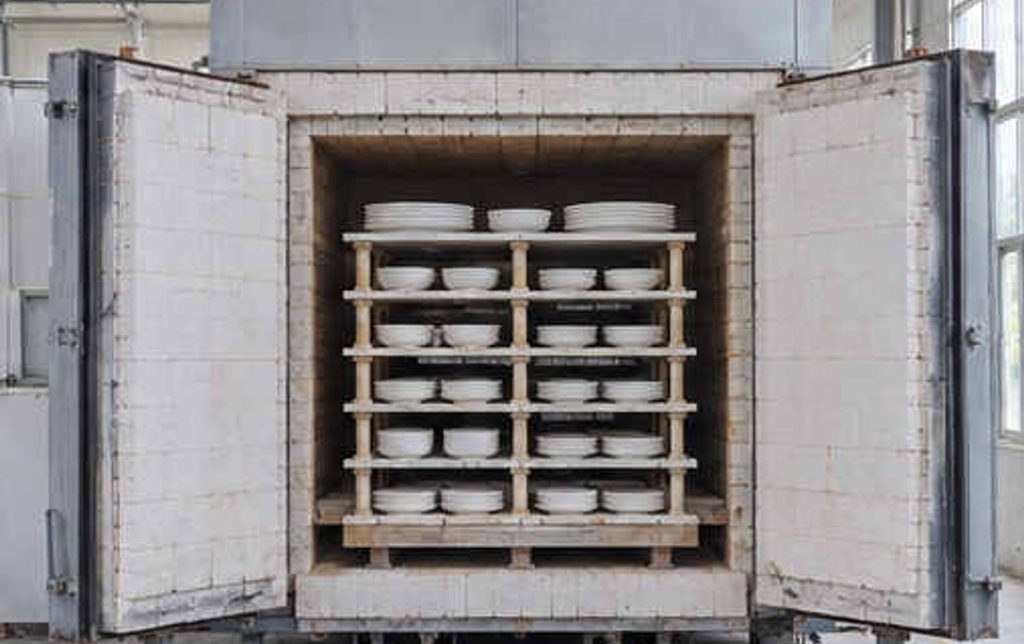
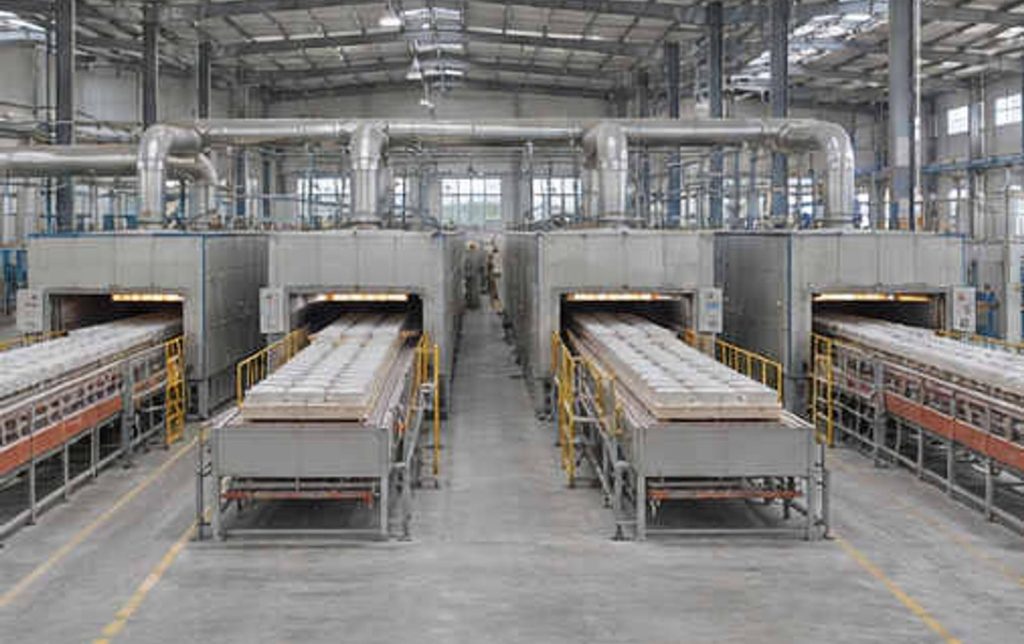
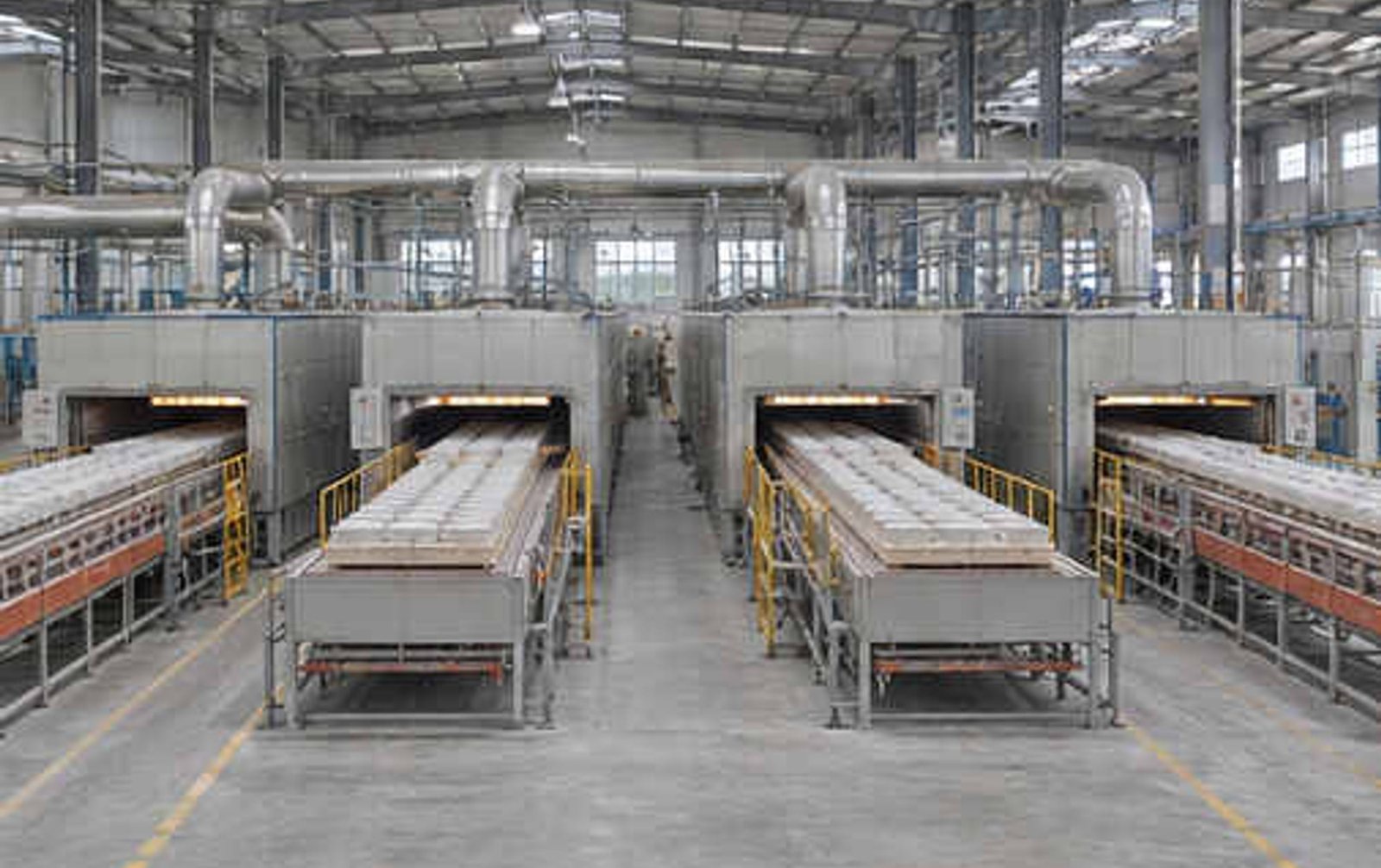
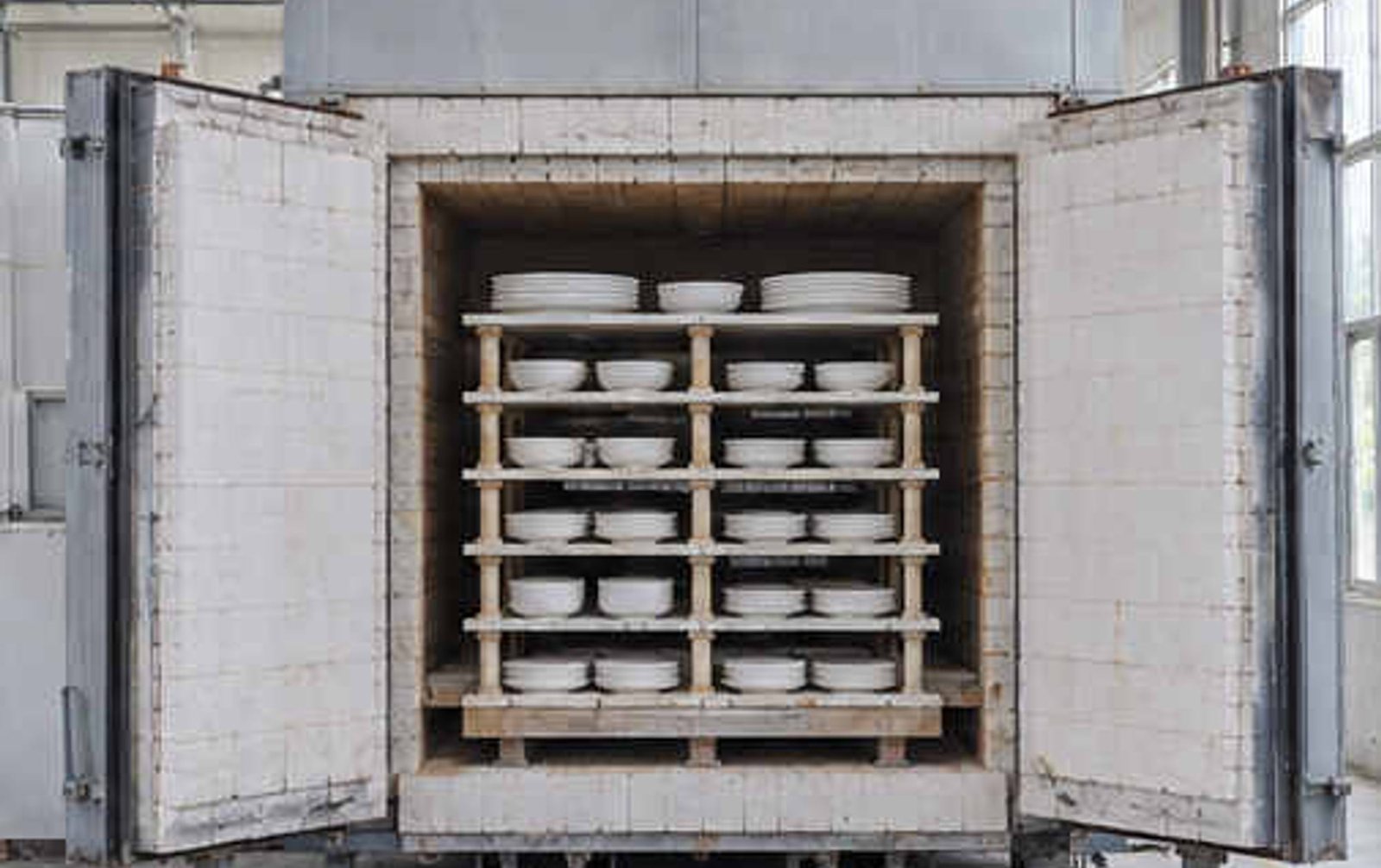
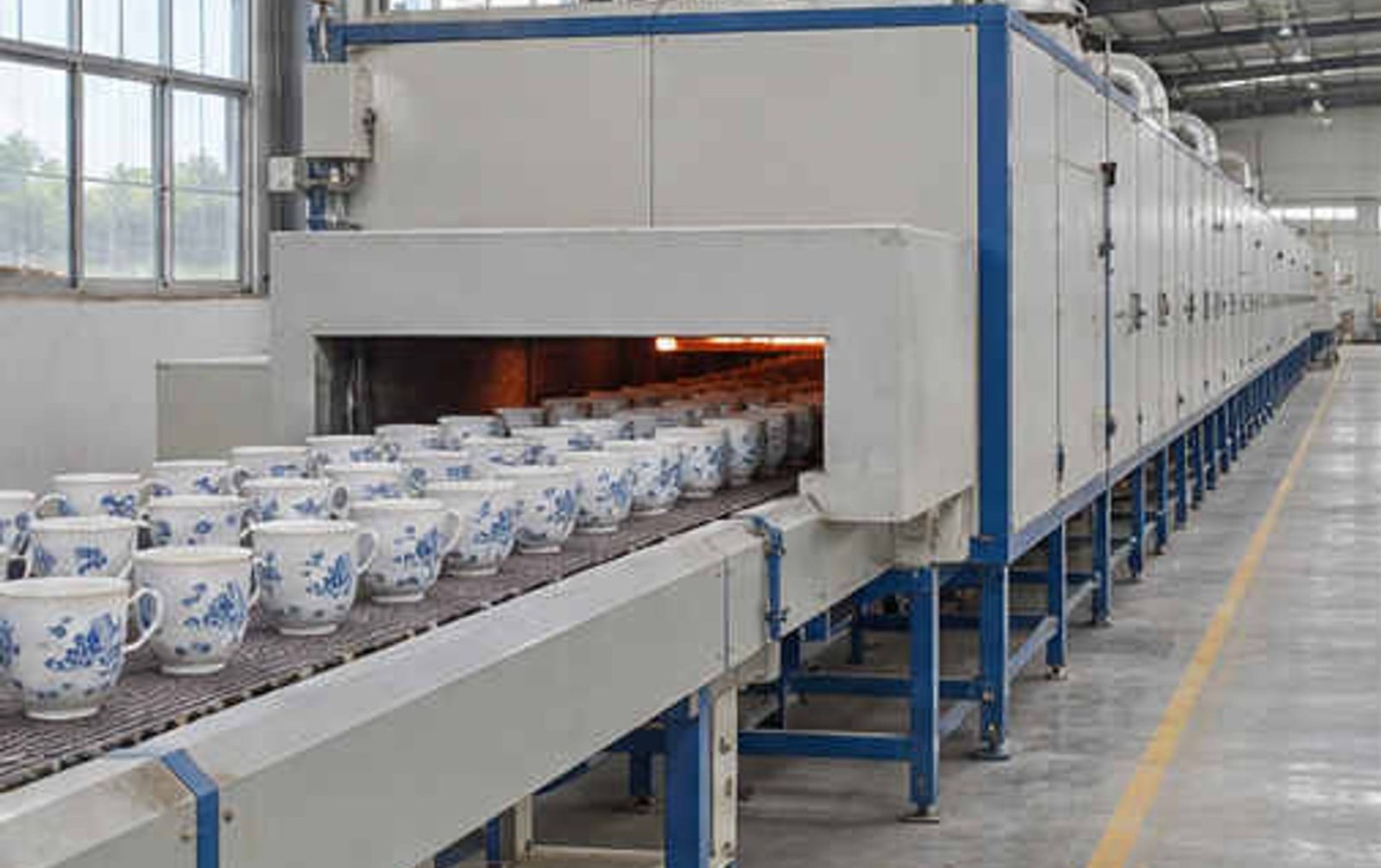
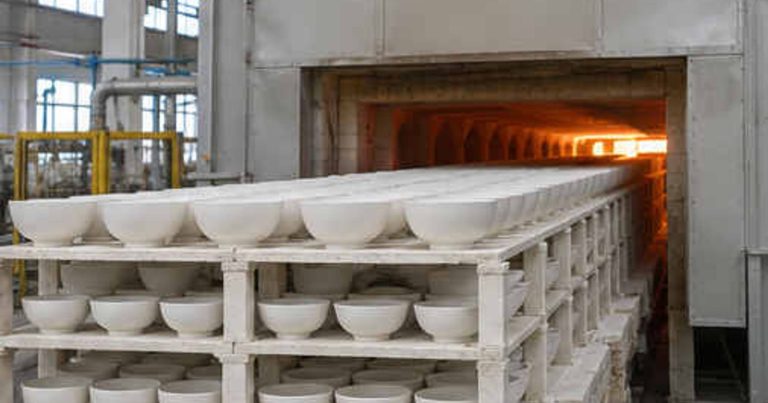
| Firing | 4 natural-gas tunnel kilns, 6 shuttle kilns, 3 roller decorating kilns, 4 electric kilns |
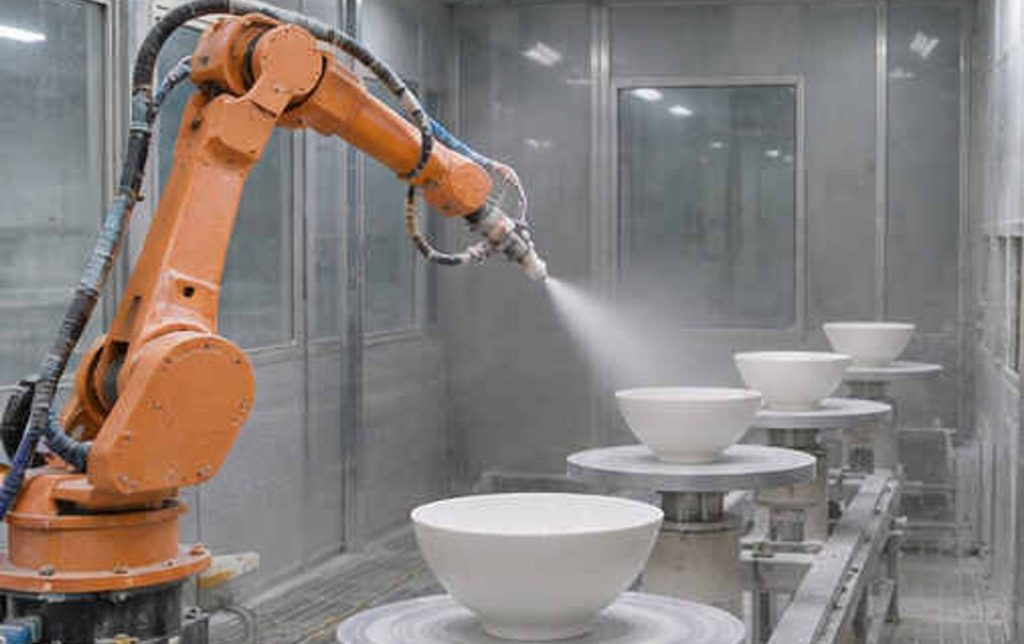
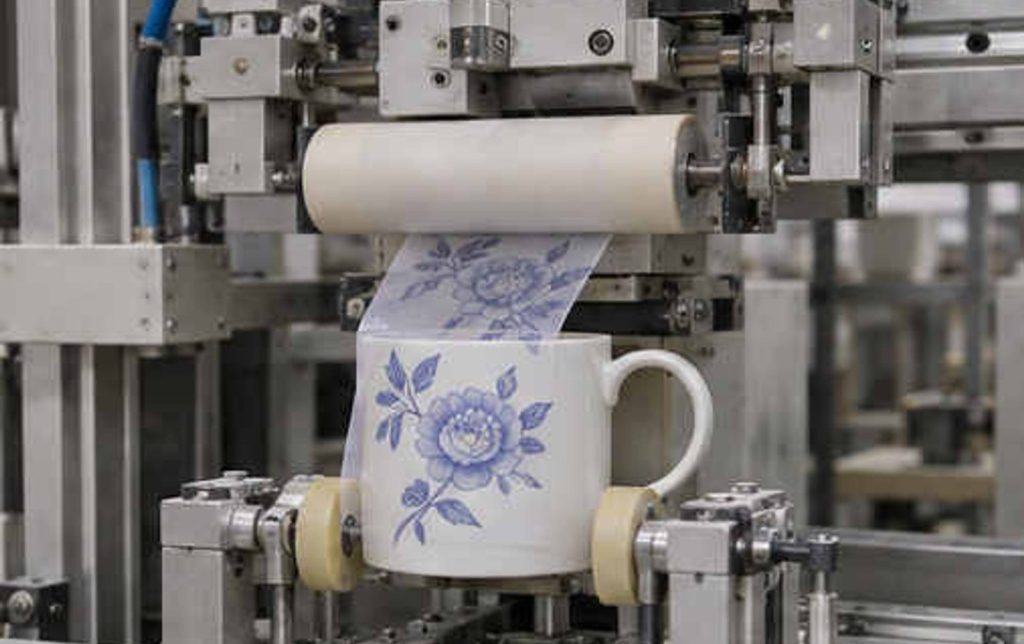
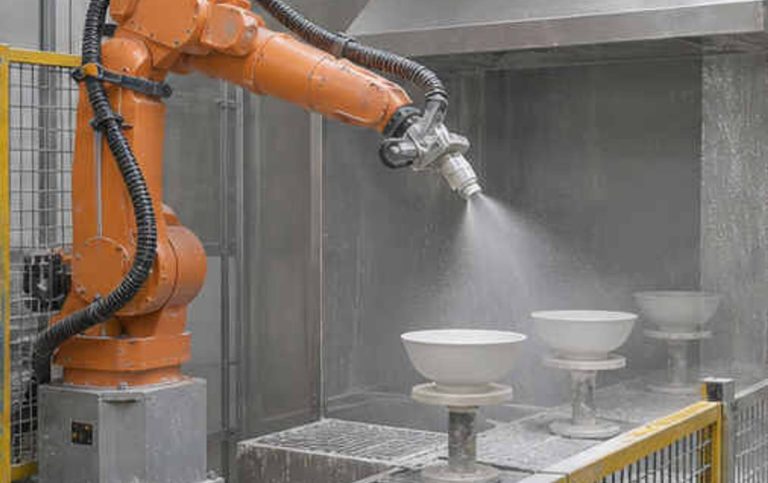
| Decoration | 12 glazing robots, 6 automatic decal machines, 4 laser markers, 2 gold-line lines |
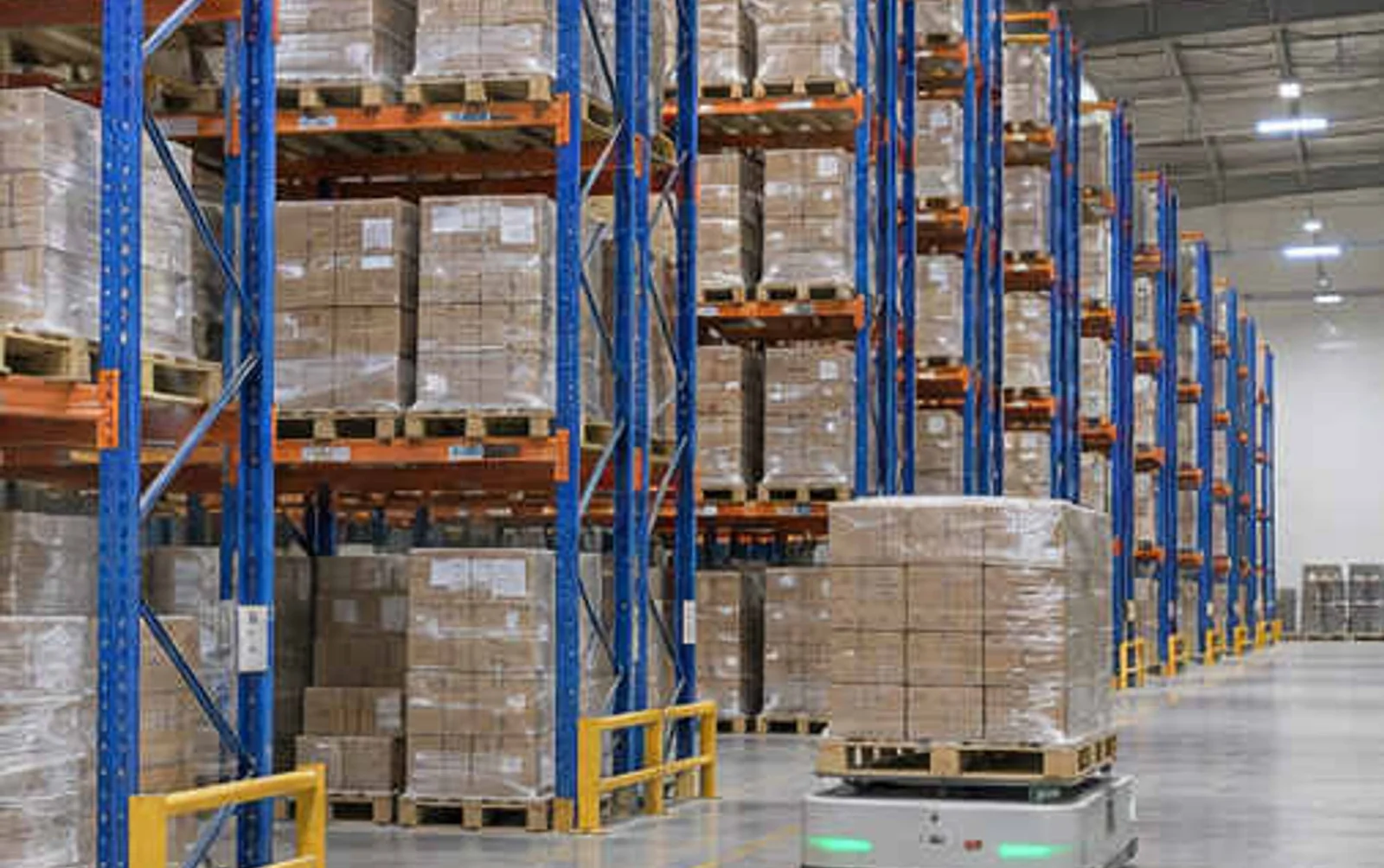
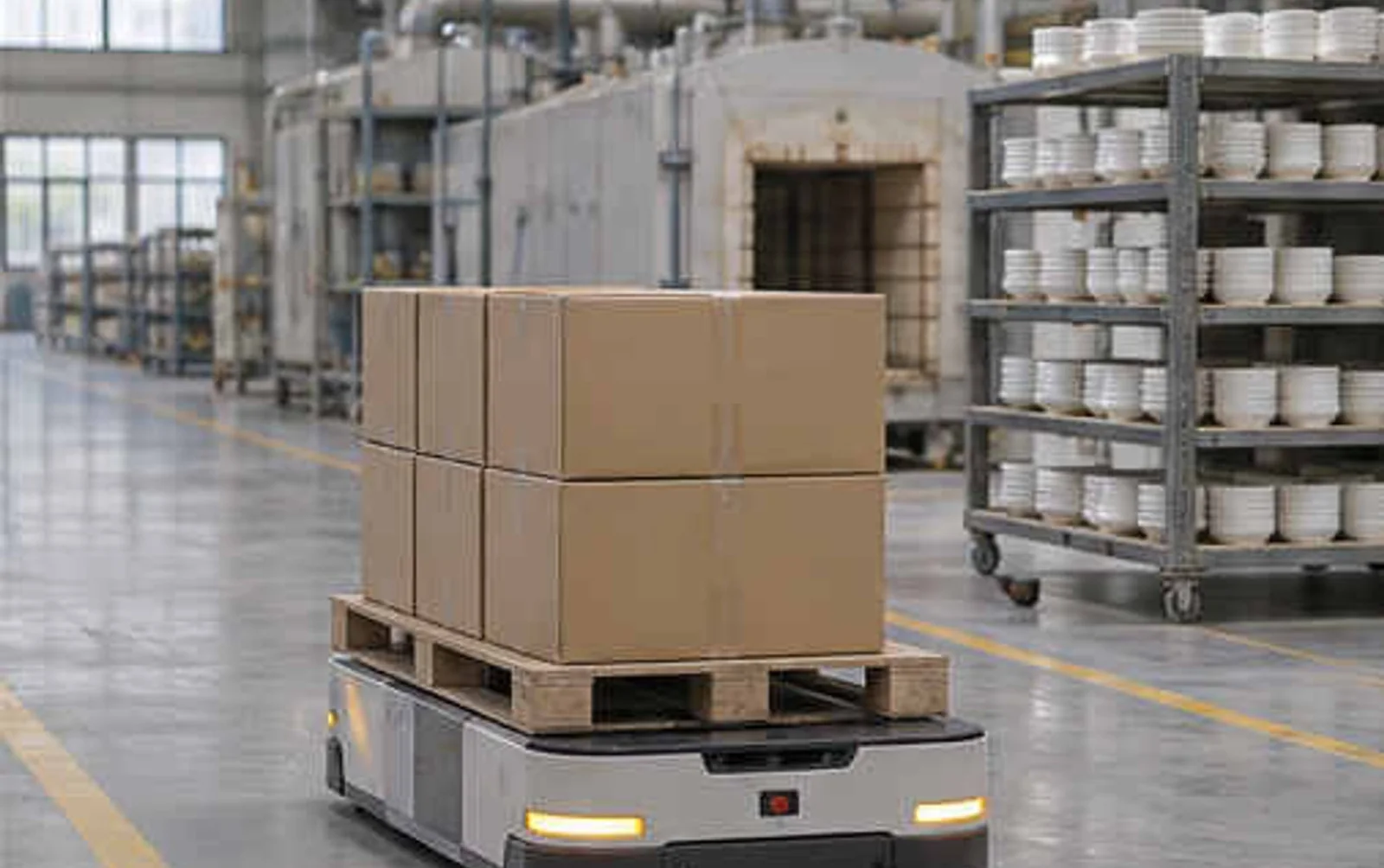
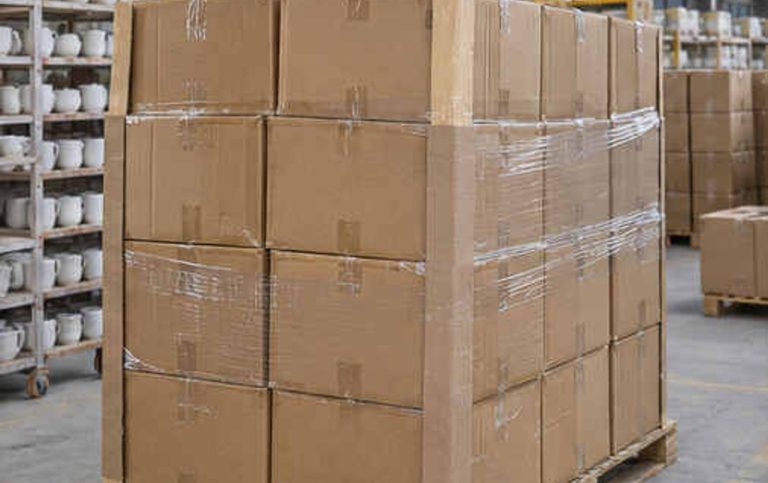
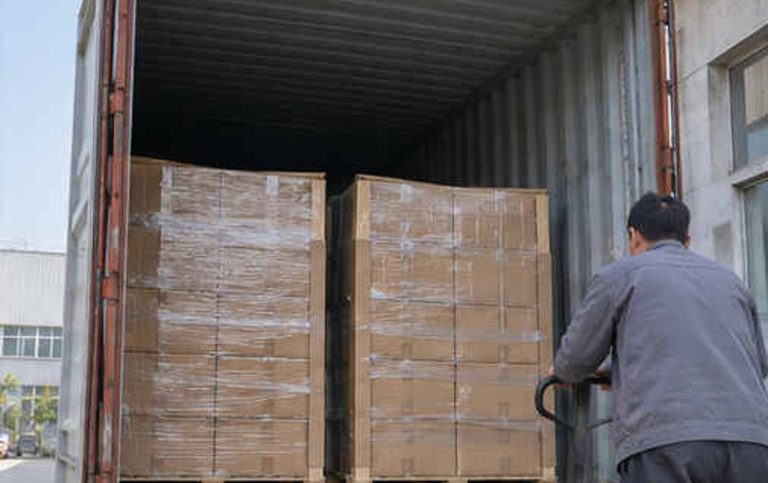
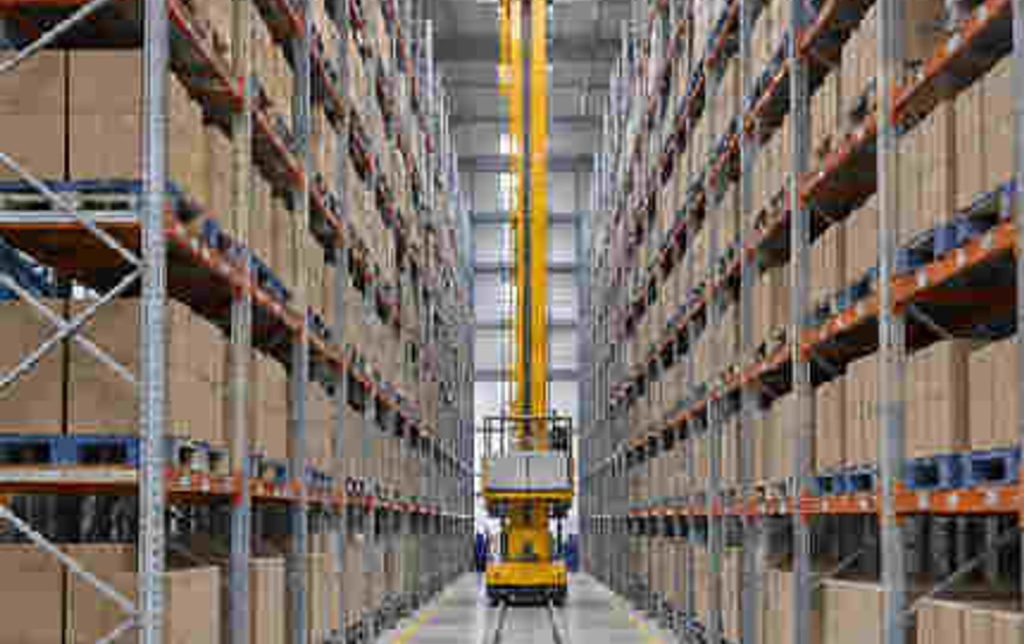
| Warehouse | 6,800-pallet automated warehouse, 32 AGVs, WMS linked to MES |
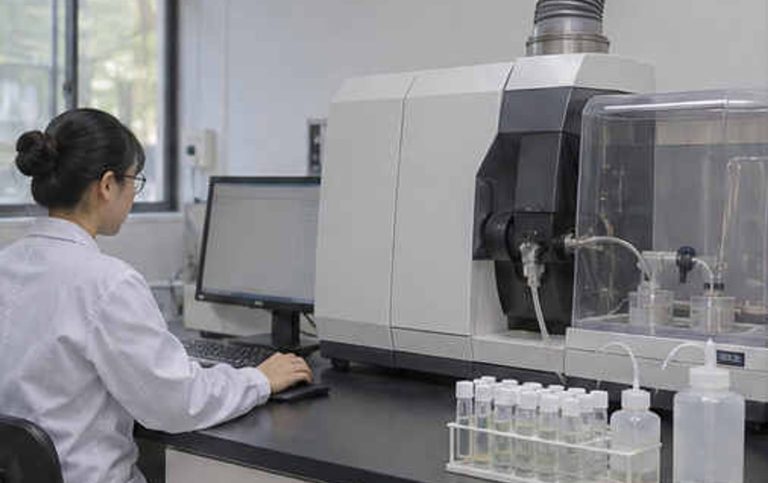
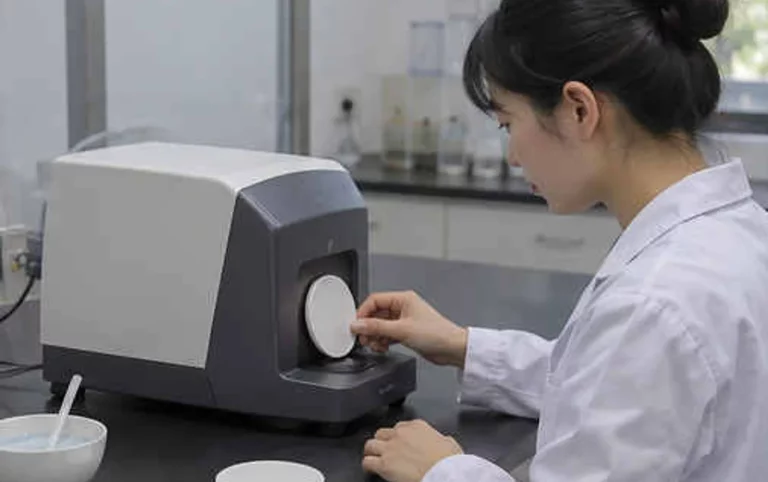
| Lab | 320 m²: ICP-MS, spectrophotometer, thermal shock and impact rigs |
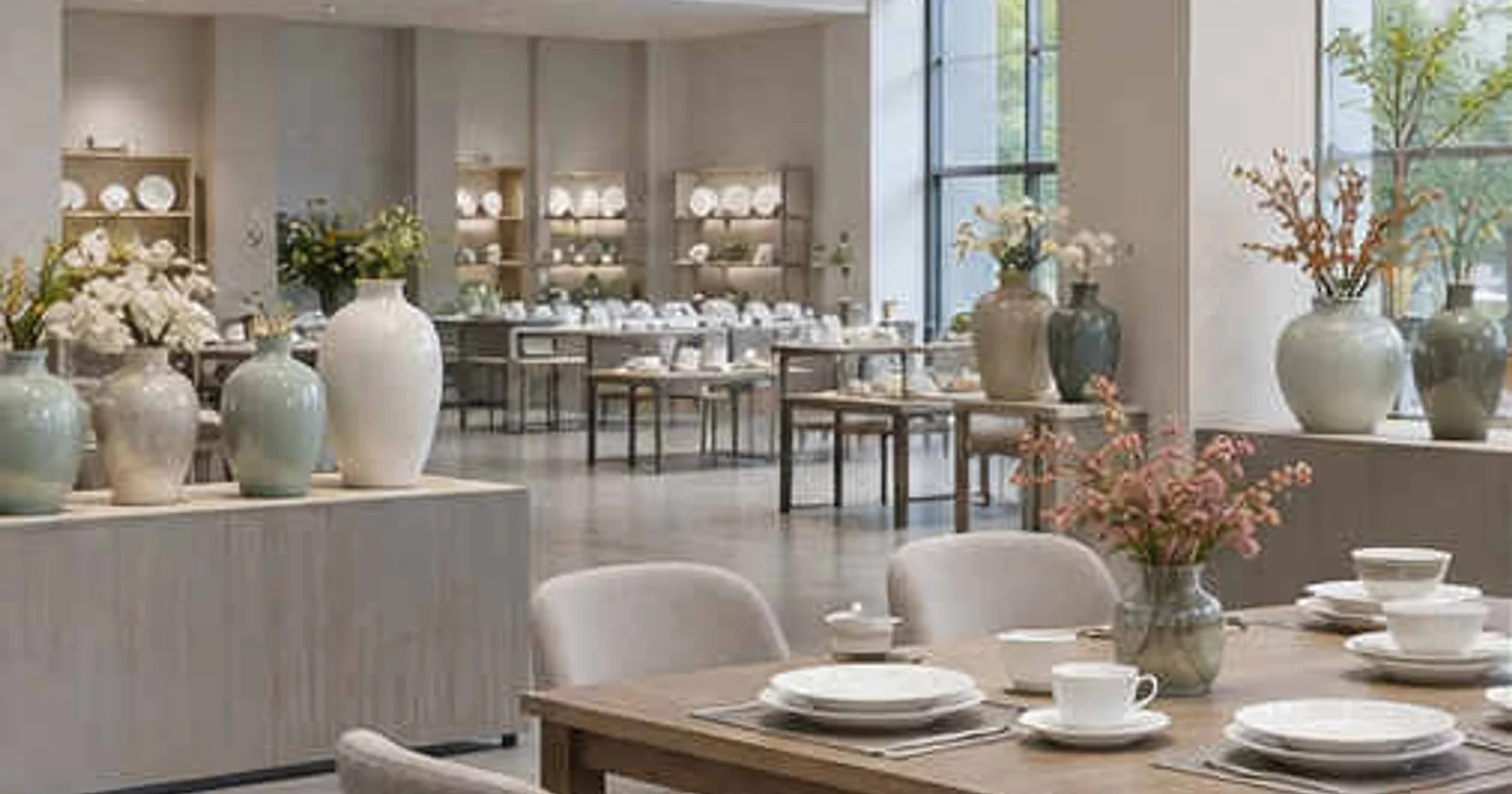
| Sample room | 300 m², colour matched to Pantone on site |
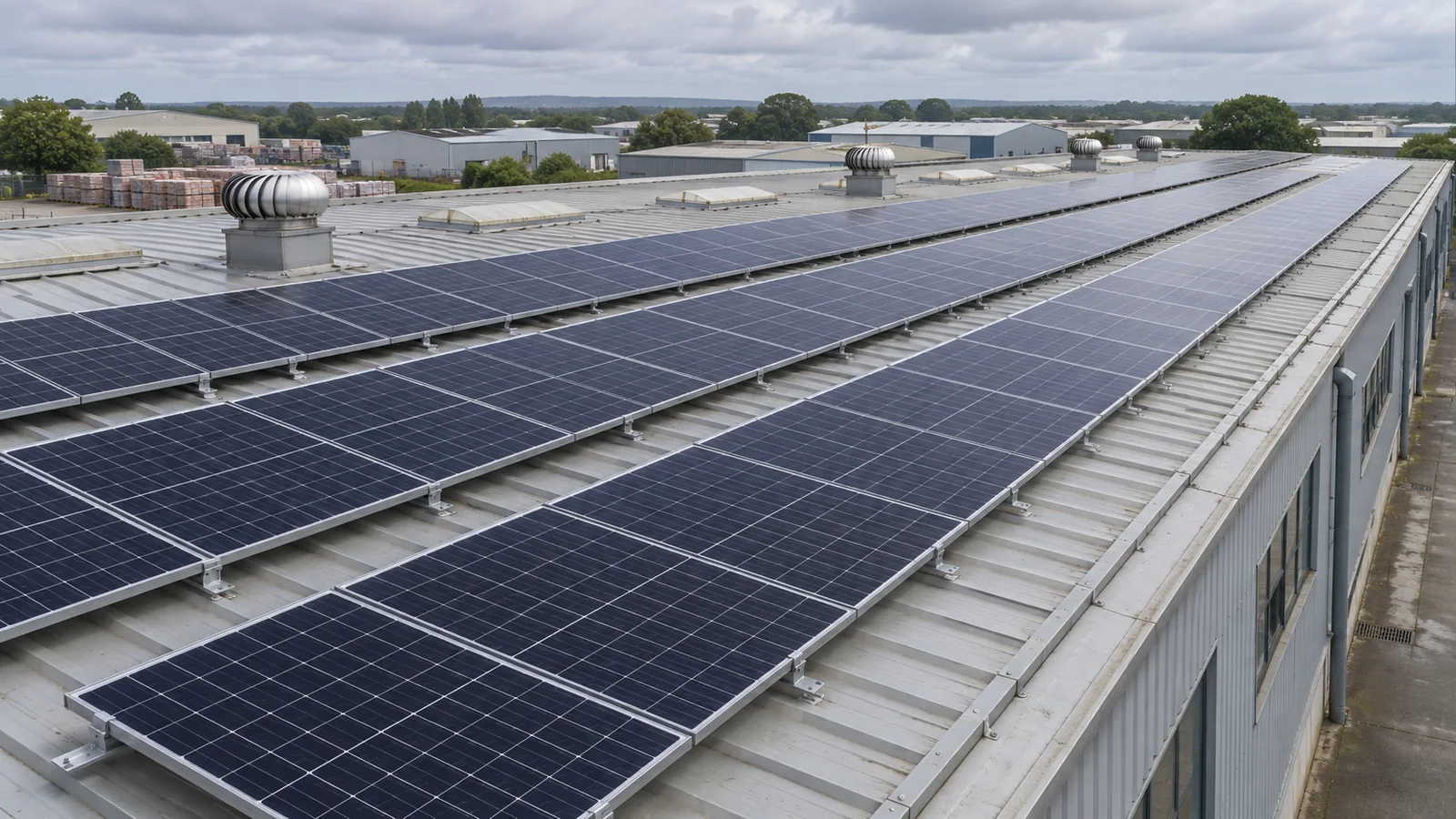
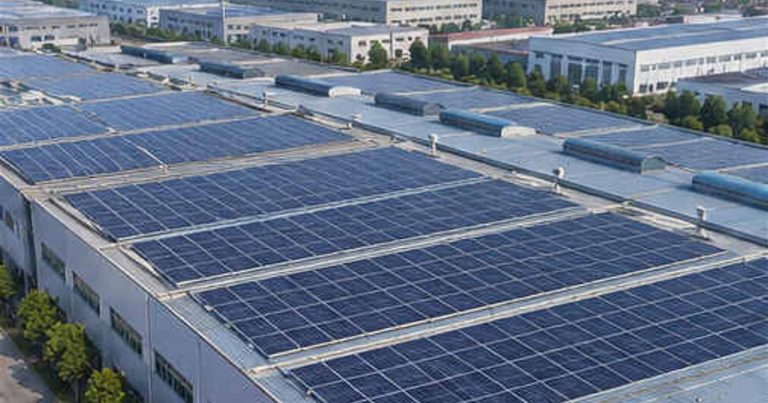
| Power | Dual 10 kV supply, 8,000 kVA; 6.2 MW rooftop solar |
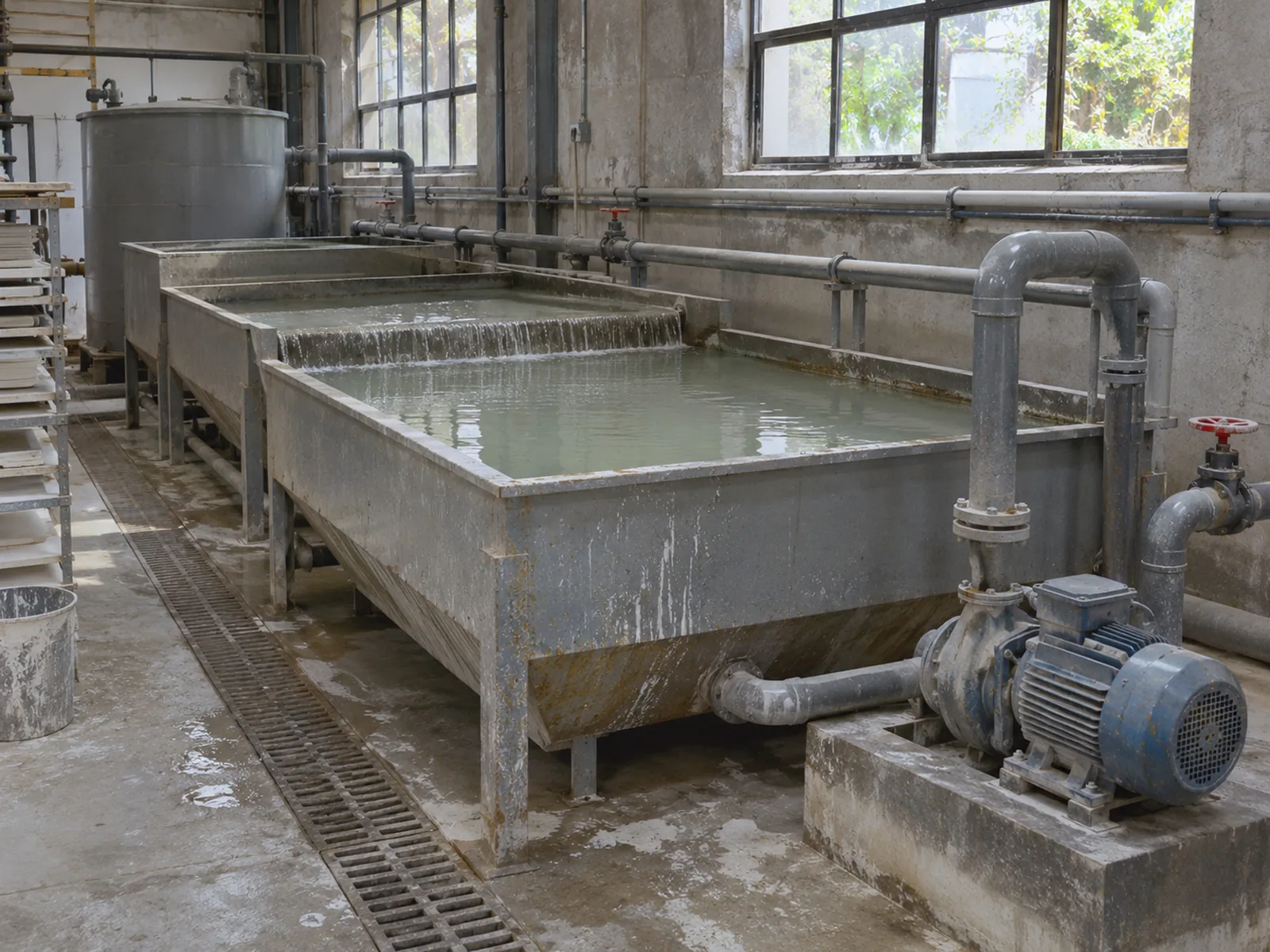
| Water | Own treatment plant, 62% of process water reused |
A piece moves from clay to finished goods inside one 60,000 m² building; the average distance between steps is 42 m.
Seven steps, what we control
| Step | What we control |
|---|
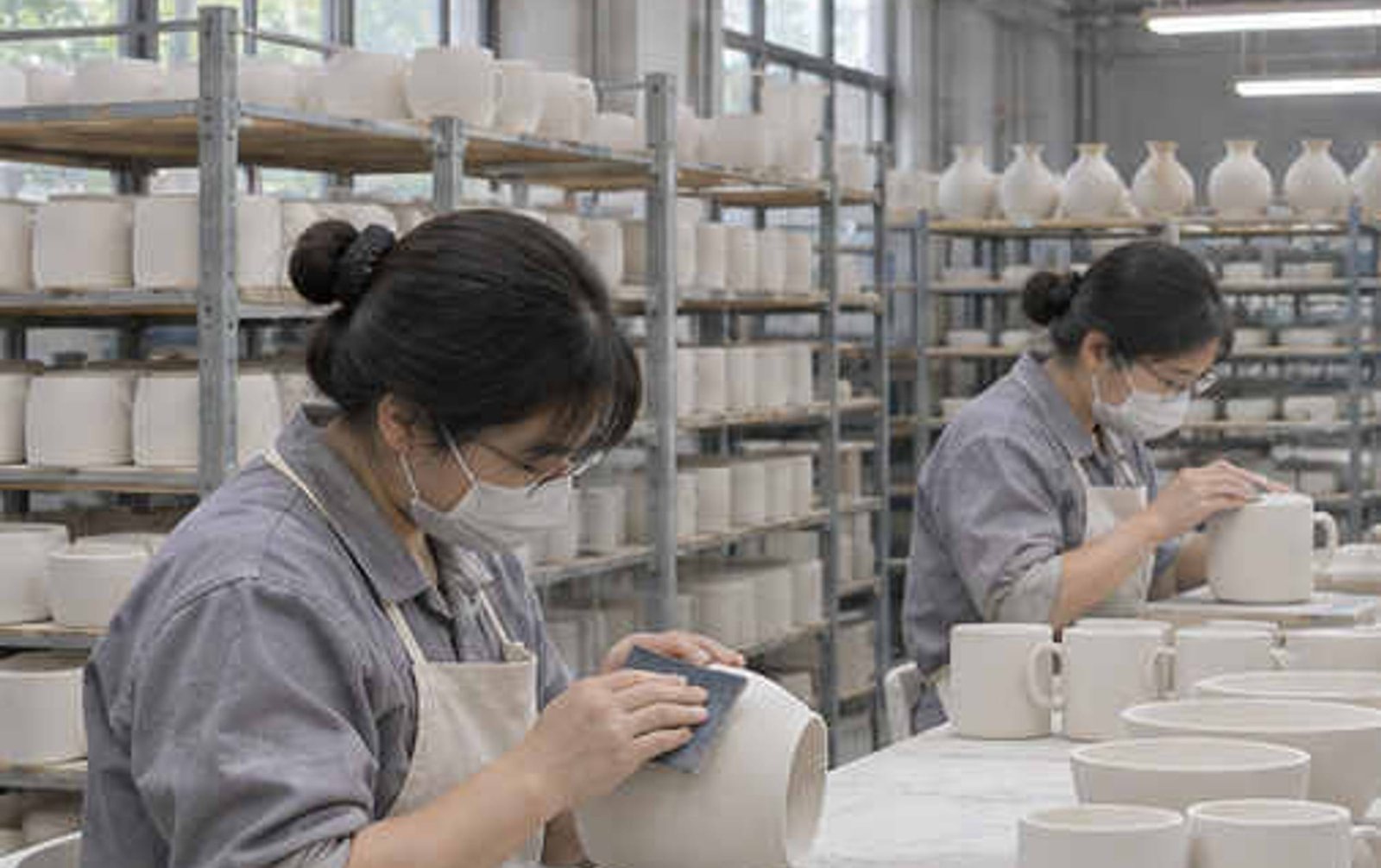
| 1 Clay | Kaolin, feldspar and quartz ball-milled for 18 hours, vacuum-pugged twice, moisture 18–20% |
| 2 Forming | Roller forming, slip casting or isostatic pressing; wall thickness ±0.4 mm |
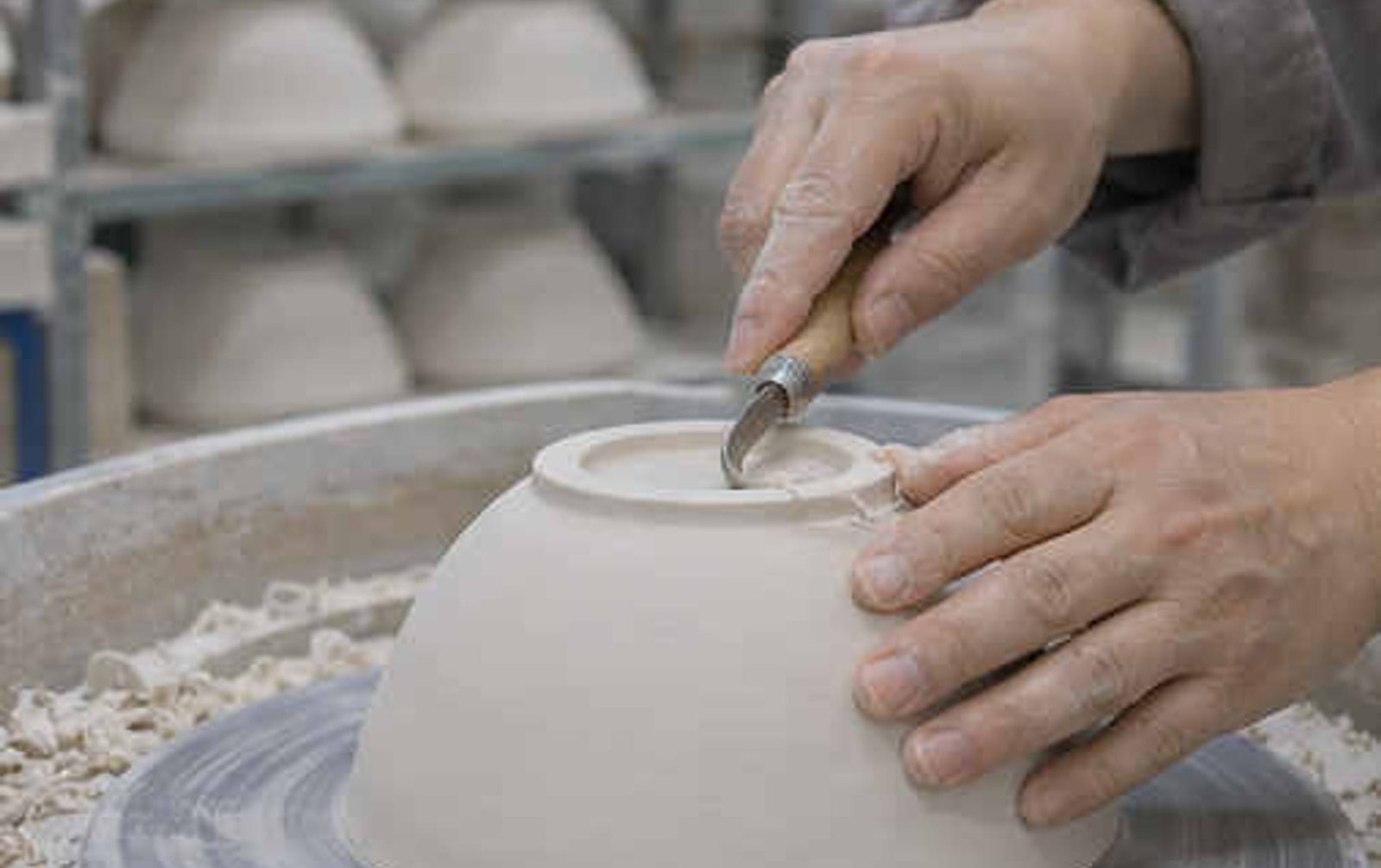
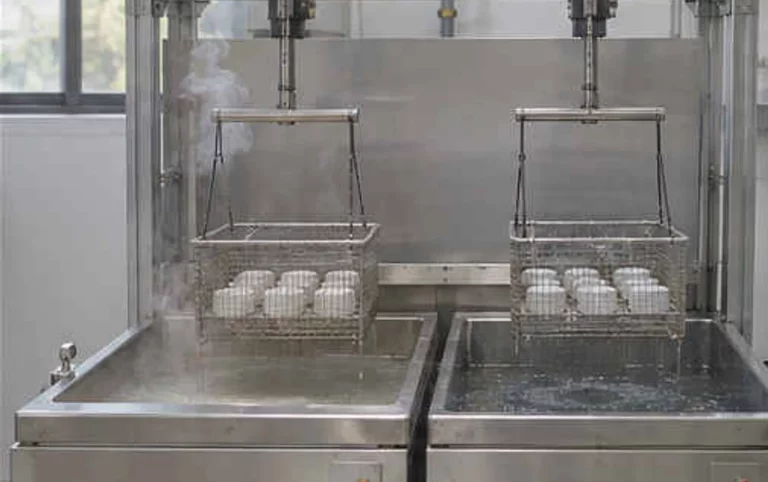
| 3 Trimming and bisque | Bisque fired at 800–900 °C to burn out water and organic matter |
| 4 Glazing | Dip, spray or pour; glaze 0.25–0.35 mm thick, robot repeatability ±0.02 mm |
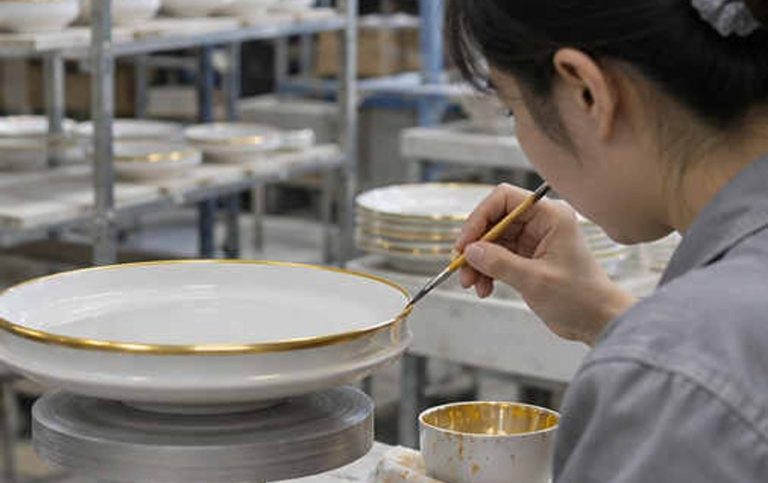
| 5 Decoration | Underglaze, in-glaze, decal, gold line, laser marking; food-contact surfaces use underglaze or in-glaze only |
| 6 Firing | 1,260–1,320 °C, ±8 °C across the kiln, 9 thermocouples logged |
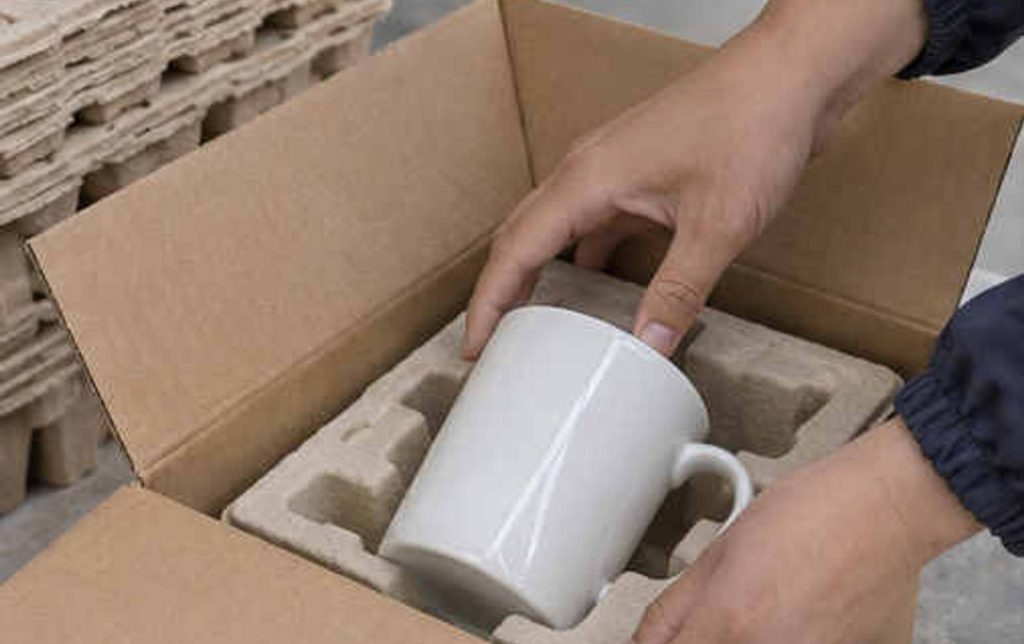
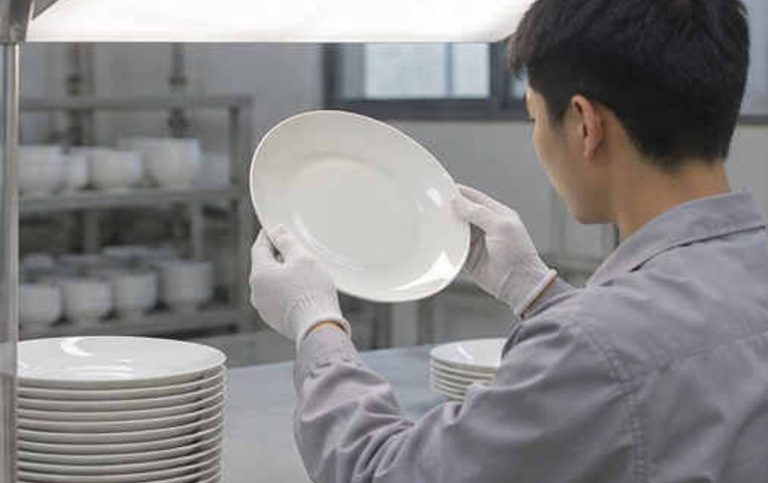
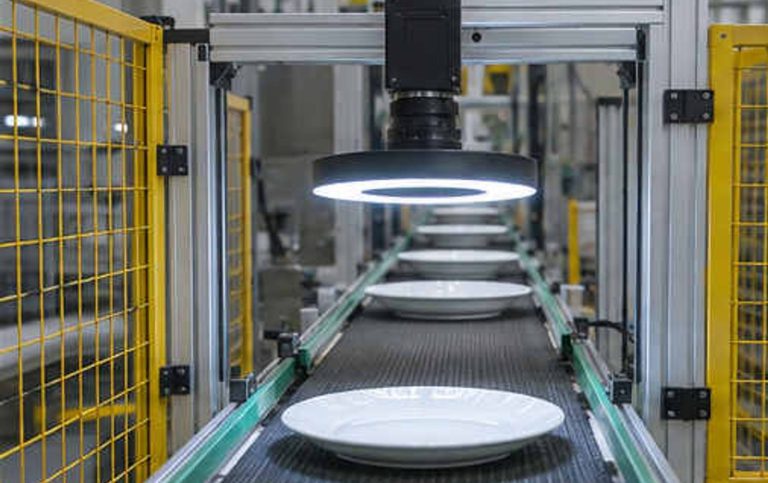
| 7 Sorting and packing | Machine vision plus a 100% manual check, AQL 2.5 audit, every carton coded |
Digital records
The whole site runs on a private 5G network. MES, WMS, energy monitoring and machines are linked, so each piece can be traced from its clay batch to kiln run, team and test data. The automated warehouse holds 6,800 pallets and its 32 AGVs move in step with production.
Visiting the factory
Before you visit, run through our ceramic supplier audit checklist so you know what to ask to see.
| Item | Details |
|---|
| Group size | Up to 30 people, booked 7 working days ahead |
| Route | Showroom 30 min, forming 15, kilns 15, QC and lab 15, warehouse 15: 90 minutes in all |
| Language | 2 English-speaking guides; our chief engineer answers technical questions on site |
| Getting here | Jingdezhen Luojia Airport 12 km, Jingdezhen North Station 9 km; we can arrange cars |
| Open | Monday to Friday, 09:00–16:00, on production days |
| Restricted areas | Recipe room and glaze workshop, entered with our chief engineer |
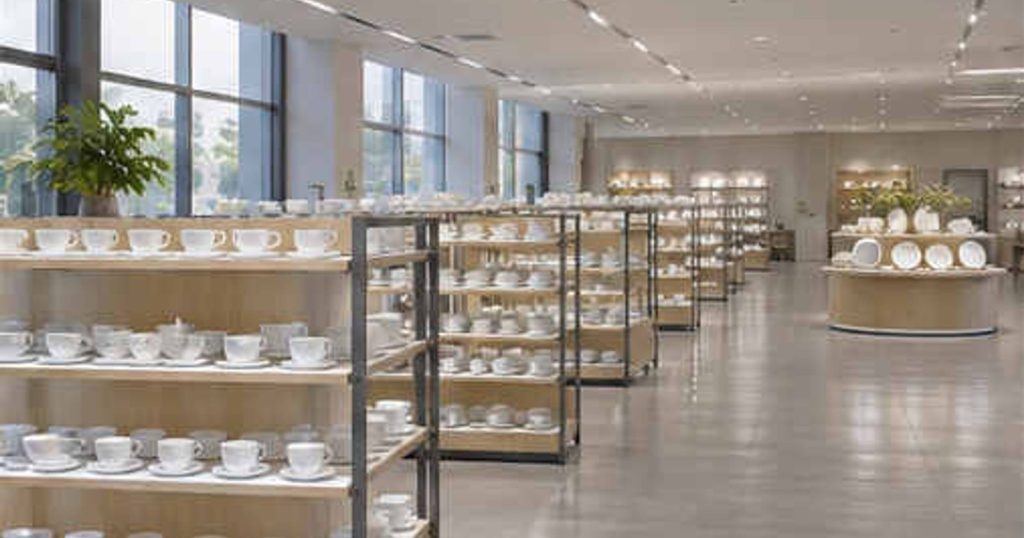
| Sample room | 300 m², choose samples and match colours on the spot |
Read next: Quality control · Certifications · Jingdezhen porcelain guide
Where our goods go
| Region | Share of 2025 exports | Main products | Channels |
|---|
| North America | 43.1% | Mugs, dinner sets, storage jars | Supermarket private label, importers |
| Europe | 29.1% | Dinner sets, vases, tea ware | Home chains, discount supermarkets, online |
| Middle East | 10.7% | Gold-rim dinnerware, hotel porcelain, gifts | Hotel suppliers, gift companies |
| Asia Pacific | 9.9% | Gaiwans, small dishes, coffee cups | Lifestyle chains, online |
| Latin America | 4.3% | 16-piece sets, mugs | Importers |
| Other | 2.9% | Figurines, custom pieces | Distributors |
In 2025 we exported 13.9 million pieces in 620 containers to 43 countries.
Inspection on the floor
Quality checks run at three points, not just before packing.
| Stage | What is checked | Limit | Record |
|---|
| Incoming (IQC) | Clay moisture and plasticity, iron and impurities, plaster mold size and surface | Moisture 18–20%; mold ±0.3 mm | Sample kept per batch |
| In process (IPQC) | Formed size, wall thickness, seams, glaze thickness, decal position | Wall ±0.4 mm; glaze 0.25–0.35 mm | Logged every 2 hours |
| Final (FQA) | Machine vision plus 100% manual check; size, colour, lead and cadmium release | Our defect standard below | Traced to kiln run and team |
Design and patents
Our 42-person design and R&D team has 18 people in materials and process, 14 in shape and structure and 10 in pattern and visual design.
Read next: Company facts
Three ways to form a piece
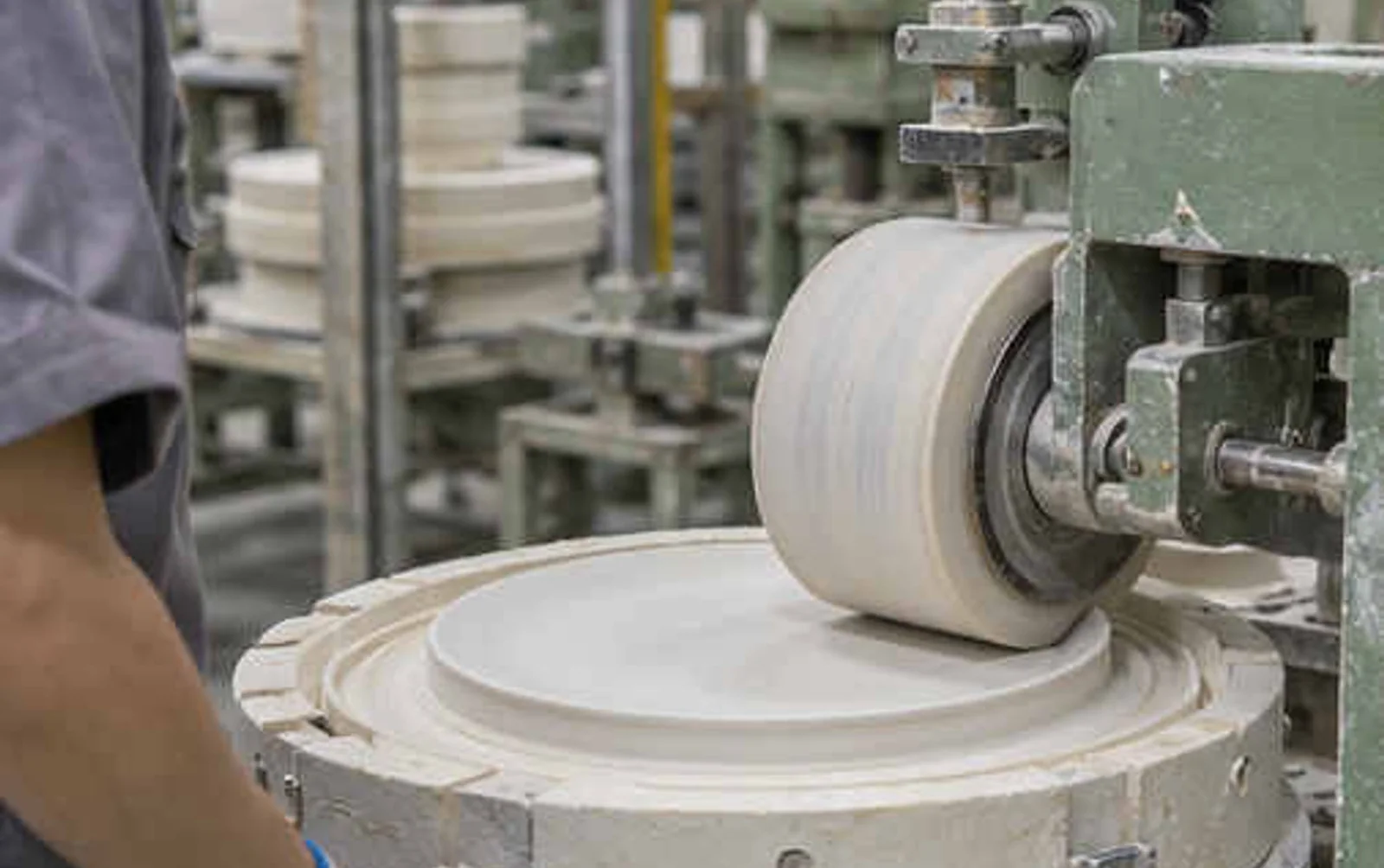
Roller forming presses clay onto a spinning plaster mold with a heated profile tool. It is fast and consistent, so it makes our mugs, cups, plates and bowls on 14 lines.
Slip casting pours liquid clay into plaster molds, which absorb water and leave a shell. It makes closed and irregular shapes: teapots, vases, figurines. We have 3 slip-casting lines and 6 high-pressure casting machines, which cut casting time and give denser walls.
Isostatic pressing compacts dry clay granules at 280–320 bar. The density is even across the piece, so flat plates warp less in firing. We run 2 presses.
Kilns for different jobs
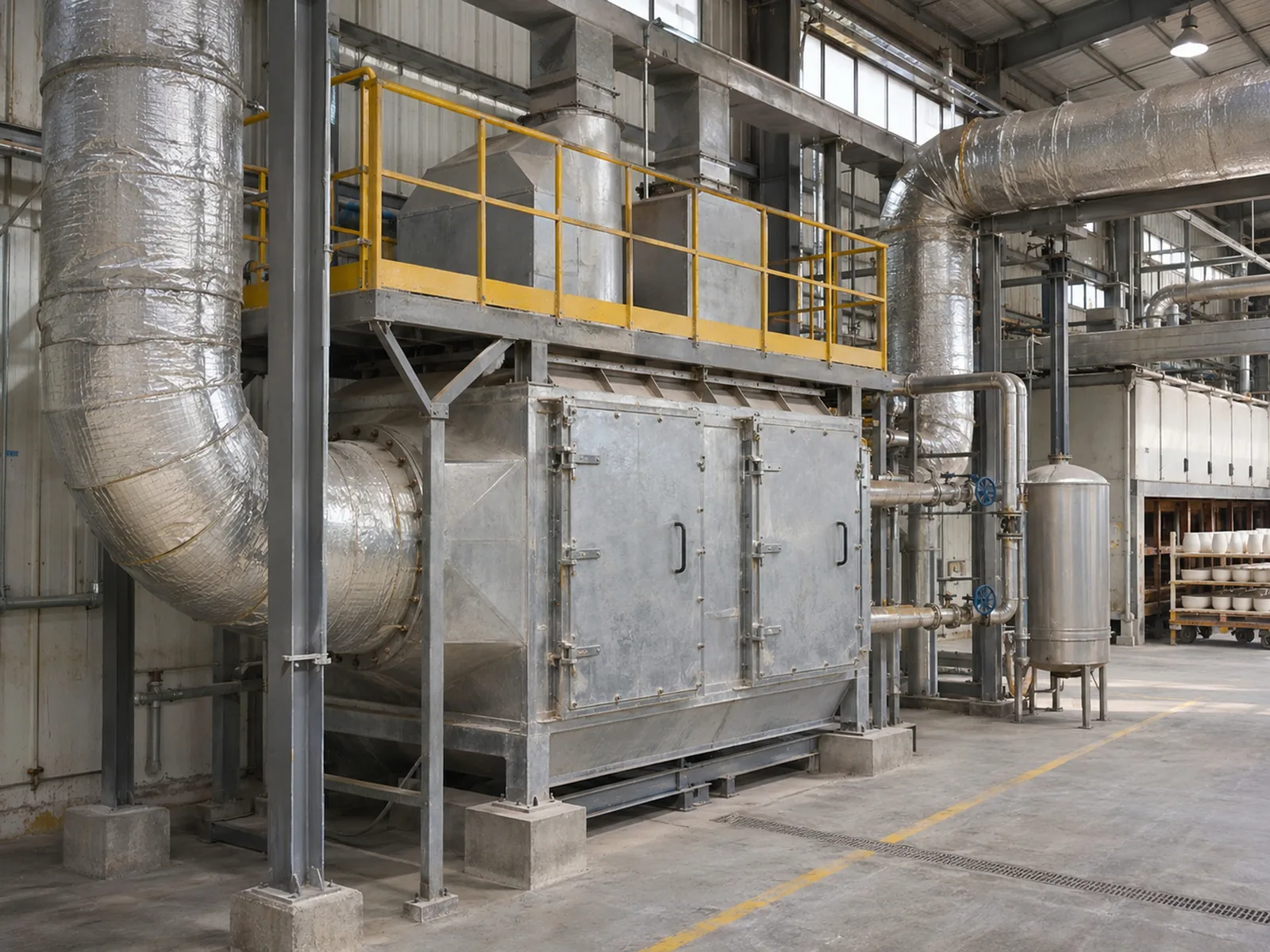
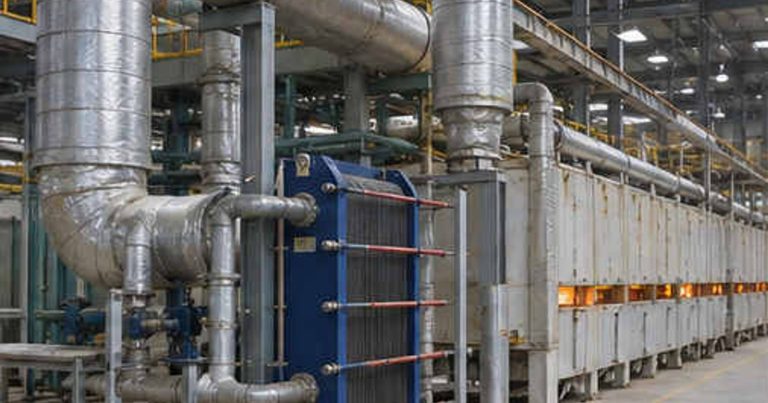
Tunnel kilns fire continuously: kiln cars move through heating, peak and cooling zones in one long tunnel. Ours run 320 days a year and suit volume orders. Shuttle kilns fire one load at a time, which suits vases, figurines, samples and short runs. Roller decorating kilns fire decals and gold lines at 780–850 °C, and electric kilns fire samples and colour tiles.
Glazing and decoration
12 glazing robots apply glaze 0.25–0.35 mm thick and repeat to ±0.02 mm, which keeps colour and gloss even from piece to piece. Decoration runs on 6 automatic decal machines, 4 laser markers and 2 gold-line lines.
Underglaze and in-glaze decoration are fired with or into the glaze, so they last through dishwashers; decals and gold lines are fired on top of the glaze at a lower temperature. Food-contact surfaces use underglaze or in-glaze only.
The visitor route
Visits start in the 300 m² showroom (30 minutes), then forming (15), the kilns (15), quality control and the lab (15) and the automated warehouse (15). Our recipe room and glaze workshop are entered only with our chief engineer.
Why one building matters
In Workshop 6 a piece moves from clay to packing on one site and mostly on one floor, with an average of 42 m between steps. Less handling means fewer knocks to unfired ware, which is fragile until it is bisque fired, and fewer places for a batch to be mixed up.
It also means one set of records. The MES follows a piece from its clay batch through forming, firing and sorting to the carton, and the warehouse system knows where every pallet is.
Energy, water and emissions at the plant
Waste heat from the four tunnel kilns is piped back to dry ware before firing, under our utility patent ZL 2023 2 1590813.2. 6.2 MW of solar panels cover the roofs. Gas use per piece is 18% lower than in 2019, 62% of process water is reused, and kiln exhaust is desulphurised, denitrified and filtered, with online monitoring.
We passed ISO 14064-1 greenhouse gas and ISO 14067 product carbon footprint verification in 2025, and were named a National Green Factory the same year. A closed-loop glaze recovery device, patent ZL 2024 2 0338217.5, returns glaze for reuse.
Capacity in practice
Our 22 million pieces of capacity ran at 80.9% in 2025, which leaves room for new programmes without displacing existing ones. Monthly output runs between 1.65 and 1.95 million pieces, and our largest single order, 2.18 million pieces across 46 SKUs, shipped in 11 containers over nine months.
From clay to carton
Kaolin, feldspar and quartz are ball-milled for 18 hours and vacuum-pugged twice, which removes air that would otherwise cause bubbles and cracks. Our high-white body recipe is covered by invention patent ZL 2022 1 1044719.3.
Formed pieces are trimmed, dried and bisque fired at 800–900 °C, which burns out water and organic matter and makes the ware strong enough to glaze. An automatic trimming device, patent ZL 2023 2 1180426.7, finishes rims and feet.
After glazing and decoration, pieces are fired at 1,260–1,320 °C, then sorted by machine vision and by hand, audited at AQL 2.5 and packed into coded cartons.
Shows where you can see our range
| Show | Years | Stand |
|---|
| Canton Fair | 133rd to 138th sessions, spring 2023 to autumn 2026 | Hall 12.2, aisle A, stands 13–15 |
| Ambiente, Frankfurt | 2025, 2026 | Hall 4.1 |
| Maison&Objet, Paris | January 2026 | Hall 5A |
| Inspired Home Show, Chicago | 2026 | |
| INDEX, Dubai | 2025 | |
| Jingdezhen International Ceramic Fair | 2019 to 2026 | Main hall, 8 years running |
Order quantities and lead times
What the factory set-up means for your order: stock in 7–10 days, standard models in 25–30, new molds in 45–55.
Read next: Shipping and trade terms
Getting here
Our plant is at No. 1 Changcheng Chuangyu Road in the Jingdezhen High-tech Zone, 12 km from Jingdezhen Luojia Airport and 9 km from Jingdezhen North Station. We can collect visitors from either. Visits run Monday to Friday, 09:00–16:00, for groups of up to 30, booked 7 working days ahead, with two English-speaking guides and our chief engineer on hand for technical questions.
Factory records you can ask for
Firing curves for every tunnel kiln run, batch colour readings, lab results for lead and cadmium, inspection records and carton codes are all kept in our MES and warehouse system. If a question arises about a shipment, we can trace it from the carton back to the clay batch.
Who works on the floor
186 of our 268 people work in production, and team leaders on the floor have been with us 9 years on average. Our general manager, who came from a Jingdezhen state porcelain factory, led the build of all four tunnel kilns, and our chief engineer has 25 years in body recipes, glazes and firing curves.
Figures from the rest of the site
Markets, lab equipment and order terms, in short. The full tables are on the pages linked.
| Topic | What applies here | Full details |
|---|
| Lab tests | ICP-MS (Agilent 7900): Lead and cadmium release to FDA and LFGB methods; Spectrophotometer (X-Rite Ci7800): Colour difference ΔE at D65/10°; Thermal shock rig: 180 °C to 20 °C quench, ASTM C554. | Quality control |
| Minimums and lead times | Standard model on an existing mold: 500 pcs, 25–30 days; New mold: 3,000 pcs, 45–55 days. | Shipping and trade terms |
| Test reports | FDA CPG 7117.06/07, ASTM C738, ASTM C927, covering 14 series, 62 SKUs; LFGB §30/31, (EC) No 1935/2004, covering All food-contact shapes. | Certifications |