
Factory direct from Jingdezhen · Wholesale, OEM and retail

Ceramic Prototyping and 3D Printing in 3 Days

A drawing tells you little about how a cup feels in the hand. We 3D-print your shape in 3 days so you can hold it, change it and approve it before any mold is cut.

Our ceramic 3D printing service: three ways we use it

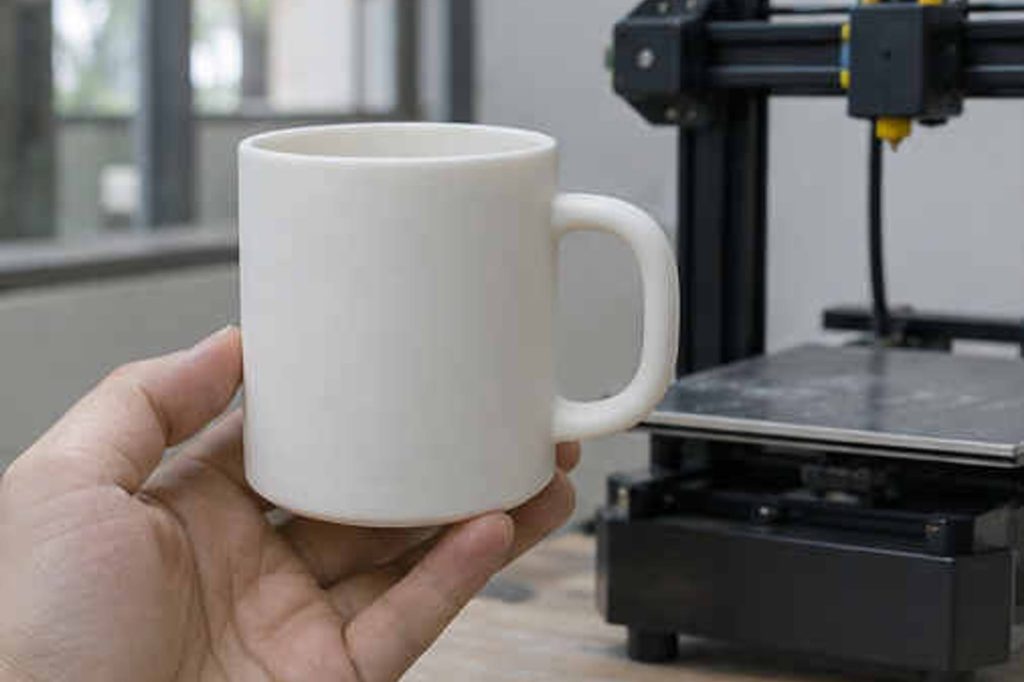
Hand holding a 3D-printed prototype of a mug in front of the printer

Prototypes

A printed model of your shape in 3 days, charged at cost, to check size, proportion and handle.

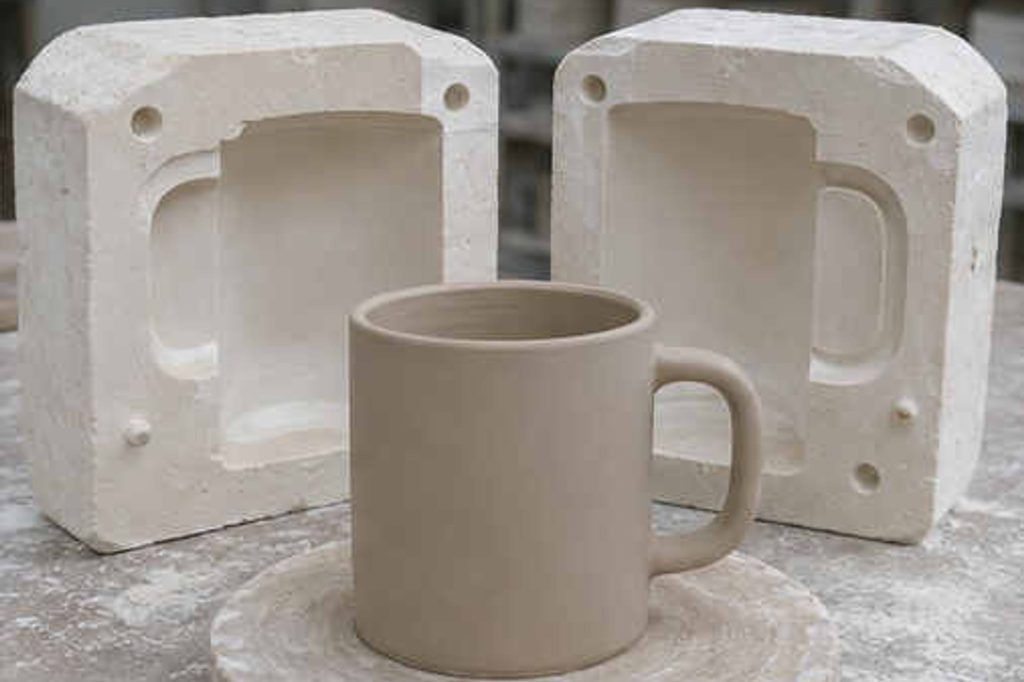
Plaster production mold opened beside an unfired clay mug

Molds from printed models

Once you approve the prototype, we make the production mold from it in 15–20 days.

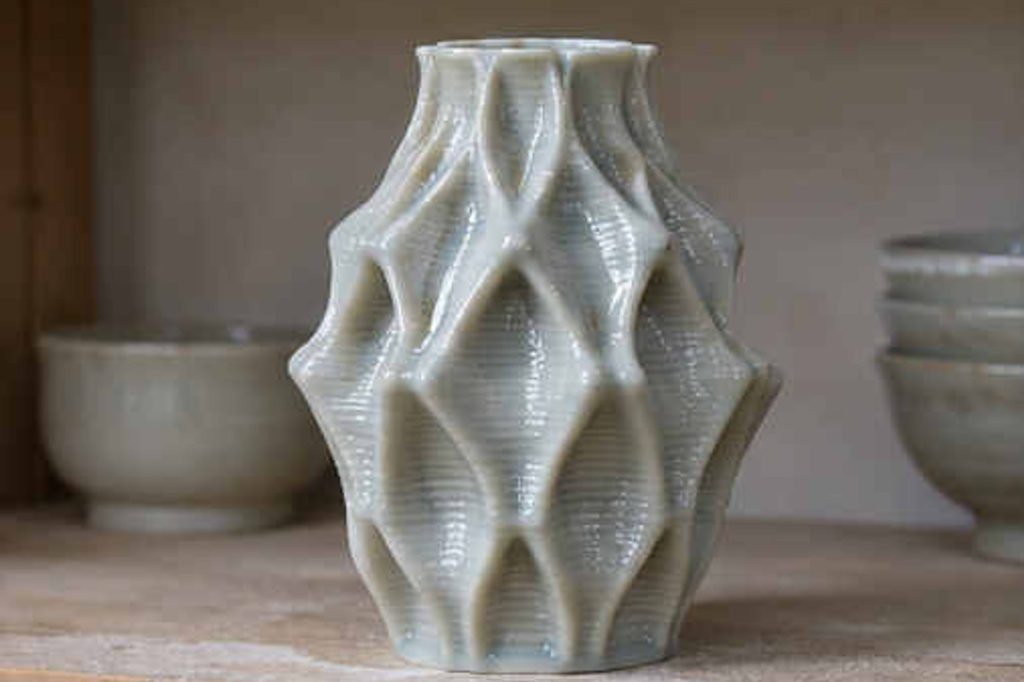
Glazed 3D-printed porcelain vase with a lattice pattern no mold could make

Direct ceramic printing

For forms a mold cannot make, we 3D-print ceramic pieces directly and fire them in our own kilns.

A recent project: Moria Lumière

Direct ceramic printing in practice: a pierced lantern shell that slip casting could not make, combined with metal, glass and a live flame. More projects like this are in bespoke & complex projects.

Completed · Moria, luxury home fragrance, Israel · 2026

Moria Lumière: a ceramic lantern, diffuser and candle set

The brief

Moria, a luxury home fragrance brand from Israel, came to us with the Lumière set: a candle vessel, a reed diffuser bottle and a 26 cm ceramic lantern with an arched, pierced body, gold-tone fittings, four ball feet and a candle that changes from underneath. Ceramic, metal, glass and an open flame in one object, plus Moria's own pattern and monogram on every piece.

What made it hard

  • The lantern's ceramic walls are pierced and thin. A slip-cast shell of that shape will not stay upright through firing.
  • A candle inside a closed ceramic body needs a hidden air intake at the base and an exit at the top, so the glass, shell and metal stay within safe temperatures and soot does not build up.
  • The candle changes from the bottom, so the base has to lock and stay on when the lantern is lifted.
  • Moria wanted the arches, the gold detailing and the ball feet kept, at a lower cost than the first proposal.

How we solved it

  • We 3D printed the lantern shell in ceramic, so the thin pierced walls keep their shape. The candle vessel and diffuser bottle are slip cast.
  • Borosilicate 3.3 glass from standard tube sizes replaced custom quartz glass.
  • A hidden mechanical connection replaced ceramic-to-metal brazing, and a locking base holds the candle platform in place.
  • We led the whole development, working with metal and glass partners and assembling in our factory, and Moria's product engineer worked directly with our team. Every stage was signed off in writing before the next began.
  • Before shipping, prototypes were lit and tested in our factory for heat and ventilation, soot, heat resistance, stability and the candle-change lock.

Why it matters to you

If your product mixes ceramic with metal, glass or heat, we can take the whole development, not only the ceramic part, and tell you early where the shape or the material needs to change. See ceramic prototyping.
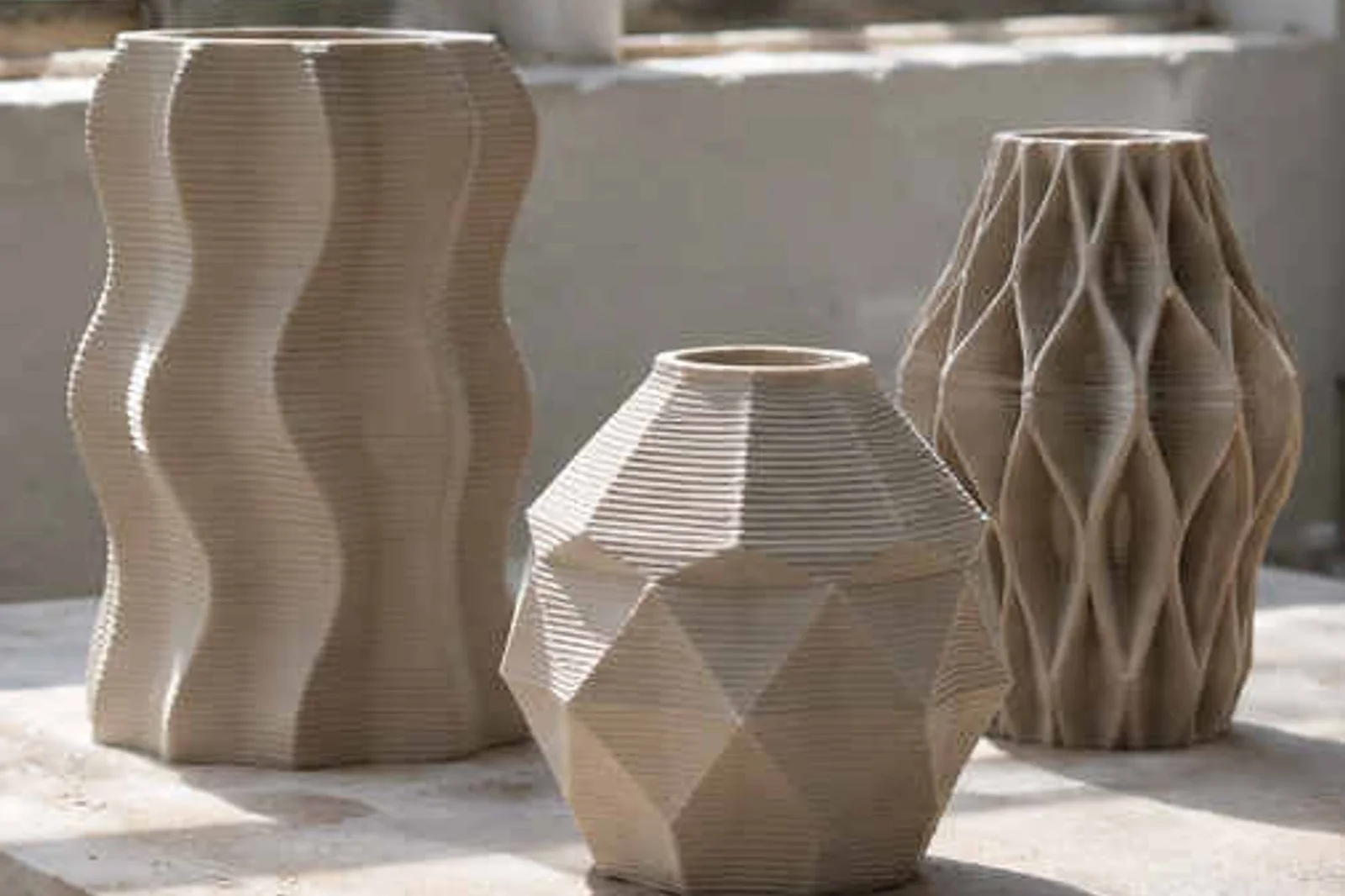
Printed in clay

Three clay 3D-printed vase prototypes with layered, faceted walls
Clay 3D-printed vase prototypes

Case files: ceramic with metal, glass and electronics

Projects where the ceramic part had to fit, move or seal against another material, with the test data for each.

From file to sample

1

Send a drawing, photo or 3D file.

2

Get a printed prototype in 3 days.

3

Revise it until the form is right.

4

We make the production mold in 15–20 days.

5

Glazed samples are fired in our electric sample kilns for your sign-off.

How the three printing routes compare, and which one fits your product, is in our guide to 3D printing ceramics.

What to send us

For our ceramic 3D printing service, send drawings or 3D files, what the piece is for, and the quantity you plan to order. New-mold orders start at 3,000 pcs; luxury small-batch projects have no minimum.

What each development step takes

Times below run from your approval of the previous step.

ItemTimeWho owns it
New decoration on an existing mold7–10 days
New mold12–15 days for the model, 15–20 days for the moldsThe mold is yours
Decal plates5–7 daysThe plates are yours
Underglaze or laser logo plate5 days
3D-printed prototype3 daysCharged at cost
Exclusive glaze colour20 days
Gift box design5 days, up to 3 rounds of changesThe artwork is yours
Stock samples2 pcs free, sent in 3 daysFreight collect

Where samples are fired

Prototypes and colour tiles go through our electric and shuttle kilns, not the production tunnels, so they are not queued behind container orders.

KilnType and sizeFiringOutputUsed for
1#Tunnel kiln, 108 m, natural gas1,290–1,320 °C22,000 pcs a dayHigh-white porcelain: cups, bowls, flat plates
2#Tunnel kiln, 108 m, natural gas1,290–1,320 °C22,000 pcs a dayHigh-white porcelain: dinnerware sets
3#Tunnel kiln, 96 m, natural gas1,280–1,310 °C15,000 pcs a dayStrengthened porcelain and stoneware
4#Tunnel kiln, 78 m, natural gas1,260–1,300 °C9,000 pcs a dayLarge and irregular pieces, second glaze firings
S1–S66 shuttle kilns, 18 / 24 / 36 m³, natural gas1,250–1,300 °C1,800–4,500 pcs a firingVases, figurines, samples, small runs
R1–R33 roller decorating kilns, 36 m, electric780–850 °CDecals, gold lines, on-glaze decoration
E1–E44 electric kilns, 1.2 m³1,280 °C60–120 pcs a firingSamples and colour tiles

Each tunnel kiln carries 9 thermocouples and writes its firing curve to our MES, which keeps colour within one batch to ΔE 1.5.

Why we print before we tool

A production mold costs 15 to 20 days and is tied to one shape; a 3D-printed prototype costs 3 days and can be changed the same afternoon. So for any new shape we print first, put the model in your hands, and only cut molds once the handle, the stack height, the capacity and the proportions are signed off. The printed model also becomes the master for the mold, which keeps the finished piece close to what you approved.

How a prototype becomes a product

StepWhat we control
1 ClayKaolin, feldspar and quartz ball-milled for 18 hours, vacuum-pugged twice, moisture 18–20%
2 FormingRoller forming, slip casting or isostatic pressing; wall thickness ±0.4 mm
3 Trimming and bisqueBisque fired at 800–900 °C to burn out water and organic matter
4 GlazingDip, spray or pour; glaze 0.25–0.35 mm thick, robot repeatability ±0.02 mm
5 DecorationUnderglaze, in-glaze, decal, gold line, laser marking; food-contact surfaces use underglaze or in-glaze only
6 Firing1,260–1,320 °C, ±8 °C across the kiln, 9 thermocouples logged
7 Sorting and packingMachine vision plus a 100% manual check, AQL 2.5 audit, every carton coded

Tests we can run on a prototype

Our lab sits inside the factory, so a prototype can be tested the day it comes out of the kiln.

EquipmentUsed for
ICP-MS (Agilent 7900)Lead and cadmium release to FDA and LFGB methods
Spectrophotometer (X-Rite Ci7800)Colour difference ΔE at D65/10°
Thermal shock rig180 °C to 20 °C quench, ASTM C554
Ball impact tester100 g steel ball dropped from 1 m
Bending testerThree-point bend, 0–5 kN
Whiteness and absorptionWhiteness meter, vacuum water-absorption rig
Microwave and dishwasher700 W microwave; EN 12875 dishwasher, 1,000 cycles
Climate chamberAgeing at 40 °C / 90% RH

Our lab is 320 m² and sits inside the factory, so a batch can be tested before it is packed.

Who uses prototypes

Brands developing a new shape, designers checking proportions before tooling, and buyers who want to test a product with their customers before committing to a mold. Prototypes are charged at cost, and custom samples are credited back when you order.

Prototype or sample: which do you need?

A 3D-printed prototype shows shape, size and proportion in 3 days. It is not fired porcelain, so it cannot show weight, glaze or how the piece behaves in a dishwasher.

A ceramic sample is made from the real body and glaze in 7–15 days and comes with test data. Use a prototype to approve the shape, then a sample to approve everything else.

After the prototype: the figures in brief

What follows an approved prototype: the steps, the mold and the order minimum.

TopicWhat applies hereFull details
How an order runsSamples: Samples and test data; Approval: Order confirmation and production schedule.Shipping and trade terms
Minimums and lead timesNew mold: 3,000 pcs, 45–55 days; New colour or glaze: 1,000 pcs, 30–35 days.Shipping and trade terms
Test reportsFDA CPG 7117.06/07, ASTM C738, ASTM C927, covering 14 series, 62 SKUs; ASTM C554 thermal shock; microwave 700 W × 5 min × 20, covering 41 microwave-safe SKUs.Certifications

Questions about prototypes and samples

How fast can I get a prototype?
A 3D-printed prototype takes 3 days. Custom ceramic samples take 7–15 days and come with test data.
Is the prototype ceramic?
A printed prototype shows shape and size. For forms a mold cannot make, we print directly in ceramic, as we did for the Moria lantern.
Do I pay for prototypes?
Printed prototypes are charged at cost; custom samples are credited back when you order.
What file do you need?
A drawing, a photo or a 3D file. We can model from a sketch.
What happens after I approve the prototype?
We make the production molds: 12–15 days for the model and 15–20 days for the molds, which belong to you.
Can you test a prototype before production?
Yes. Our lab runs thermal shock, impact, bending, microwave and dishwasher tests, and we lit and ventilation-tested the Moria lanterns before shipping.
Can you match a colour on the prototype?
Colour tiles are fired in our electric kilns at 1,280 °C and measured to ΔE against your reference.
What minimum follows a new mold?
3,000 pcs per model.

Tell us what you need

A product, a quantity and a market are enough to start. We reply within 24 working hours.

Prefer to talk directly?

WhatsApp +852 5501 1456
MaraAnestiade@gmail.com

Scroll to Top