A microwave-safe dish is one that comes out of the oven cool enough to pick up, with no crack, no craze and no spark, and does the same thing the hundredth time. Plain, fully vitrified porcelain usually meets that. Porcelain with a gold rim never does, and a stoneware mug with a porous body may pass once and fail later.
So the honest answer to “is porcelain microwave safe?” is: the body usually is, the decoration decides, and the only way to put it on a label is a test on that exact SKU. Here are the questions buyers ask us, answered from our own line.
Why is plain porcelain usually microwave safe?
Because there is almost nothing in it for the microwave to heat. Microwaves heat water. A porous body holds water in its pores, which heats, expands and makes the piece hot to the touch; in time it can craze the glaze. Porcelain is fired until the body turns to a dense, glass-like mass that holds almost no water.
Ours absorbs 0.5% water or less, and 0.3% or less for high-white porcelain. That figure is the first thing to ask any supplier for, because “porcelain” on a label is not a measurement. Our guide to porcelain vs ceramic explains how water absorption separates porcelain from stoneware and earthenware.
Why some ceramics get hot in the microwave
A plate that comes out hotter than the food in it is usually holding water in its body. Microwaves heat water, so a porous body that has soaked up moisture in the dishwasher or the sink heats from the inside. Earthenware and some stoneware absorb several times more water than porcelain, which is why a stoneware mug can come out too hot to hold while a porcelain mug of the same size stays comfortable.
The other cause is a glaze fault. A pinhole or a crack in the glaze lets water into the body over time, even on porcelain. Our defect standard allows pinholes of 0.5 mm or less, no more than two per piece, and only on surfaces that do not touch food. A piece with a larger or a food-side pinhole is sorted out before packing.
Even walls heat evenly
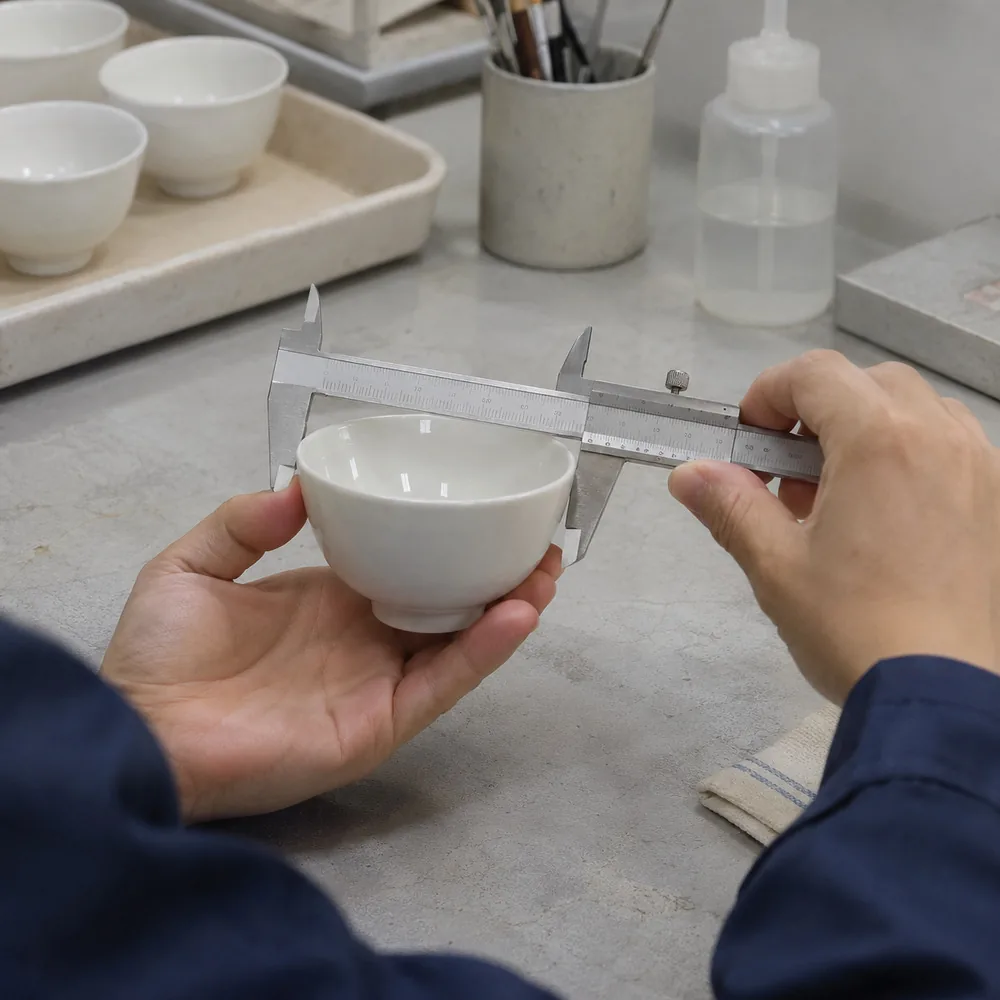
Thick and thin areas in the same piece heat and cool at different speeds, and that difference is a stress. A mug with a heavy base and a thin wall, or a plate with a thick centre and a thin rim, is more likely to crack after repeated heating than an evenly formed piece. We hold wall thickness to ±0.4 mm during forming for that reason, as much for the microwave as for the dishwasher.
What does a microwave test actually check?
Our test runs each piece at 700 W for 5 minutes, 20 times, and checks three things after the cycles: whether the piece heats up, whether it cracks, and whether it sparks. Twenty cycles matters. A single run catches the obvious failures; a repeated run catches the slow ones, such as a body that takes on moisture and gets hotter each time.
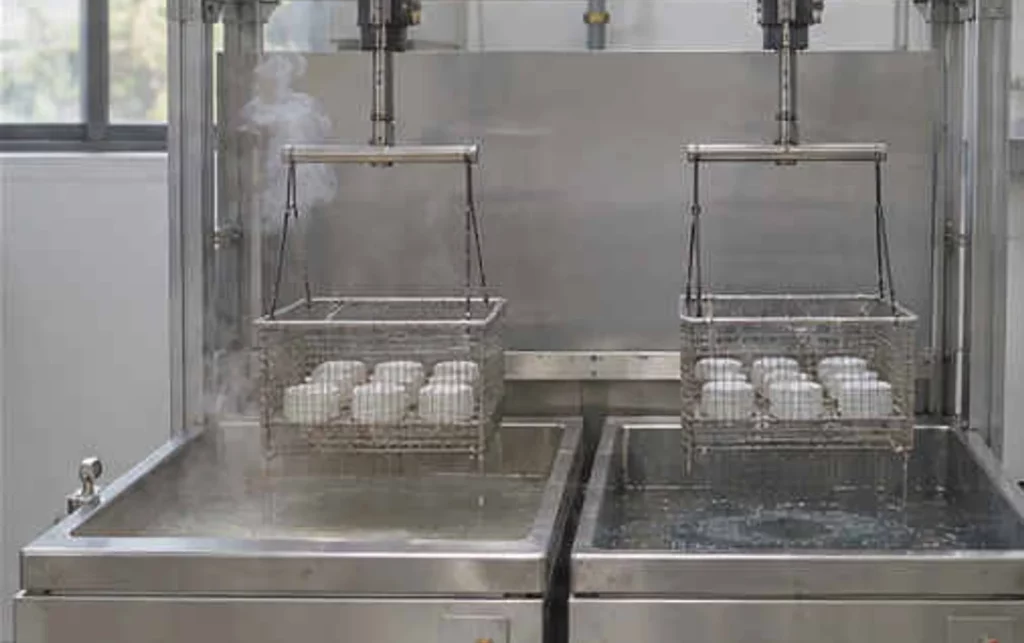
The test sits next to a thermal shock test, because real use moves a dish between temperatures. Ours is a water quench from 180 °C to 20 °C with no cracks allowed, tested to ASTM C554.
Why the test repeats 20 times
A single run in a microwave proves very little. A piece that is going to fail usually does so after repeated heating, when small stresses have built up into a crack, or when a decoration has started to lift. Twenty runs at 700 W for 5 minutes is a test of the piece’s tenth and twentieth use, not its first.
What our microwave testing covers
Our current microwave testing covers 41 SKUs, each tested with its decoration. That is the point of the test. A plain white BM-350 mug that passed does not cover the same mug with a gold rim, and a decal mug needs its own result. When a product page carries a microwave care line, it is because that version was tested.
Reading the care line on our product pages
A product page that says “microwave safe” refers to the version shown, with its decoration. If you order the same model with a different decoration, the care line is checked again for that version before it goes on your box.
What to ask when a SKU is not covered
Ask whether the body, glaze and decoration match a tested SKU exactly. If they do, the result can be referenced; if any of the three differs, plan a new test into the sample stage.
Which decorations are never microwave safe?
Anything with metal in it. Gold lines, platinum or silver rims, lustres and metallic decals can spark in a microwave and the metal itself can burn or blacken. That is true on the finest porcelain body. Anything we make with gold or metal decoration fails our test by design and is never sold as microwave safe.
Gold is a popular choice for hotels, gifts and luxury tableware, so plan for it: if a range has a gold-rim version and a plain version, they need different labels and different care instructions. Our guide to underglaze vs overglaze compares the five decoration methods, including how gold holds up to washing.
Metal you cannot see
Not all metal is gold-coloured. Some lustre finishes, pearl effects and certain decal colours contain metal compounds, and they can spark or darken in a microwave even though they do not look metallic. Ask the supplier for the composition of any decoration that shimmers, and test it before you print “microwave safe” on the box.
Two versions of one shape
The practical answer for hotel, gift and luxury ranges is to plan two versions: one with gold for display and hand washing, and a plain or coloured-glaze version for everyday use. Both can come from the same mold. The care lines then follow the version, and a buyer who wants microwave-safe pieces can pick the right one.
Are decals and coloured glazes safe in the microwave?
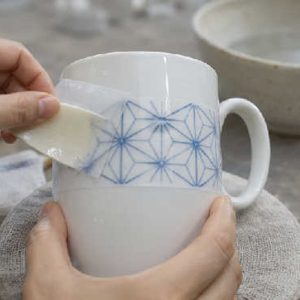
Non-metallic decals and coloured glazes can be, but only the test on that decoration can say so. A plain white mug and the same mug with a full-colour decal are two different products for this purpose.
On surfaces that touch food or a mouth, we use only underglaze or in-glaze decoration, so the colour sits under or inside the glaze rather than on top of it. Decals go on outer walls. That rule exists for food contact, not for microwaves, but it also keeps decoration off the hottest surface of the piece. Lead and cadmium testing is a separate question; our guide to food-contact testing by country covers which standard applies where.
Can a ceramic mug go from the fridge into the microwave?
A well-made porcelain mug will take it, but the bigger risk is the step after: boiling water poured into a mug straight from the freezer, or a hot dish set on a cold, wet surface. Sudden temperature change cracks ceramics more often than the microwave itself does.
On our product pages, the care line for mugs says to avoid pouring boiling water into a mug straight from the freezer, because our test is 180 °C into 20 °C water. If you sell to consumers, put that on the box too.
What thermal shock testing adds
The microwave test checks heating. The thermal shock test checks sudden temperature changes, which is what happens when a cold mug is filled with boiling water or a hot plate is rinsed under a cold tap. Our porcelain is tested to ASTM C554, from 180 °C into 20 °C water, with no cracks. Ask for both results on any piece that will go from the fridge to the microwave, or from the microwave to the sink.
How can I check a sample myself?
Run the common water check. Put the empty piece in the microwave next to a cup of water and heat it for one minute on full power. If the water is hot and the piece is cool or barely warm, the body is behaving well. If the piece is hot, it is holding moisture or contains something that absorbs microwave energy, and it should not carry a microwave-safe label.
A home check is useful for screening samples. It does not replace a lab test for the SKU you will sell, and it tells you nothing about gold, which you should never put in a microwave to see what happens.
What should a “microwave safe” label be based on?
On a test report that names your SKU and its decoration. Our microwave report covers 41 SKUs. If your version is not on it, because you added a decal, a new glaze or a new shape, it needs testing before the label goes on the box.
Ask a supplier three things: which report covers the SKU, which test conditions it used, and whether the decorated version was tested or only the plain one. A supplier that answers “porcelain is always microwave safe” has told you it has not tested.
Can porcelain go in an oven?
That is a separate question, and a separate test. Microwave and thermal shock testing do not show how a piece behaves when it sits in a hot oven for an hour, or under a grill. We don’t label any product as oven safe unless that version has been tested for it.
If your range is meant for baking or for keeping food warm in an oven, tell us at the start. The shape, the body and the decoration all have to be chosen for it, and the test has to be planned before the order.
Should a chipped or cracked piece go in the microwave?
No. A chip or a crack lets water into the body and creates a weak point. In the microwave, water in a crack heats, expands and can widen it. A cracked piece can split during heating or when it is lifted out. Retire chipped and cracked pieces from microwave use, at home and in a commercial kitchen.
How should a café or hotel use porcelain in the microwave?
Commercial microwaves are often more powerful than home ones and run many times a day. Three habits keep porcelain in service longer:
- Heat food, not empty plates. An empty piece has nothing to absorb the energy except itself.
- Avoid sudden cold after heating. A plate taken from the microwave and rinsed under cold water goes through the same stress as a thermal shock test, every time.
- Keep gold-rimmed pieces out of the kitchen line. Mark them for front-of-house service only, so they are never microwaved by mistake.
If you are writing care lines for a commercial range, our guide to hotel and restaurant dinnerware covers the rest of the specification.
Is microwave safe the same as dishwasher safe?
No. They are different tests for different kinds of wear. Microwave testing looks for heating, cracking and sparking; dishwasher testing looks for what hundreds of hot, alkaline wash cycles do to the glaze and decoration. Our hotel shapes are tested to EN 12875-1 and -5 for 1,000 commercial dishwasher cycles, and gold lines last longer washed by hand whatever the test says.
If you are writing care instructions for a range, write both lines separately, version by version. Our dishwasher labelling guide covers the dishwasher line, and our guide to hotel and restaurant dinnerware shows how commercial buyers specify both.
Getting microwave-safe porcelain for your range
Tell us the products, the decorations and the market, and we will tell you which SKUs our current report already covers and which need testing. You can start from our ceramic mugs and plates, or send us your list and we will mark each version as microwave safe, not microwave safe, or to be tested.