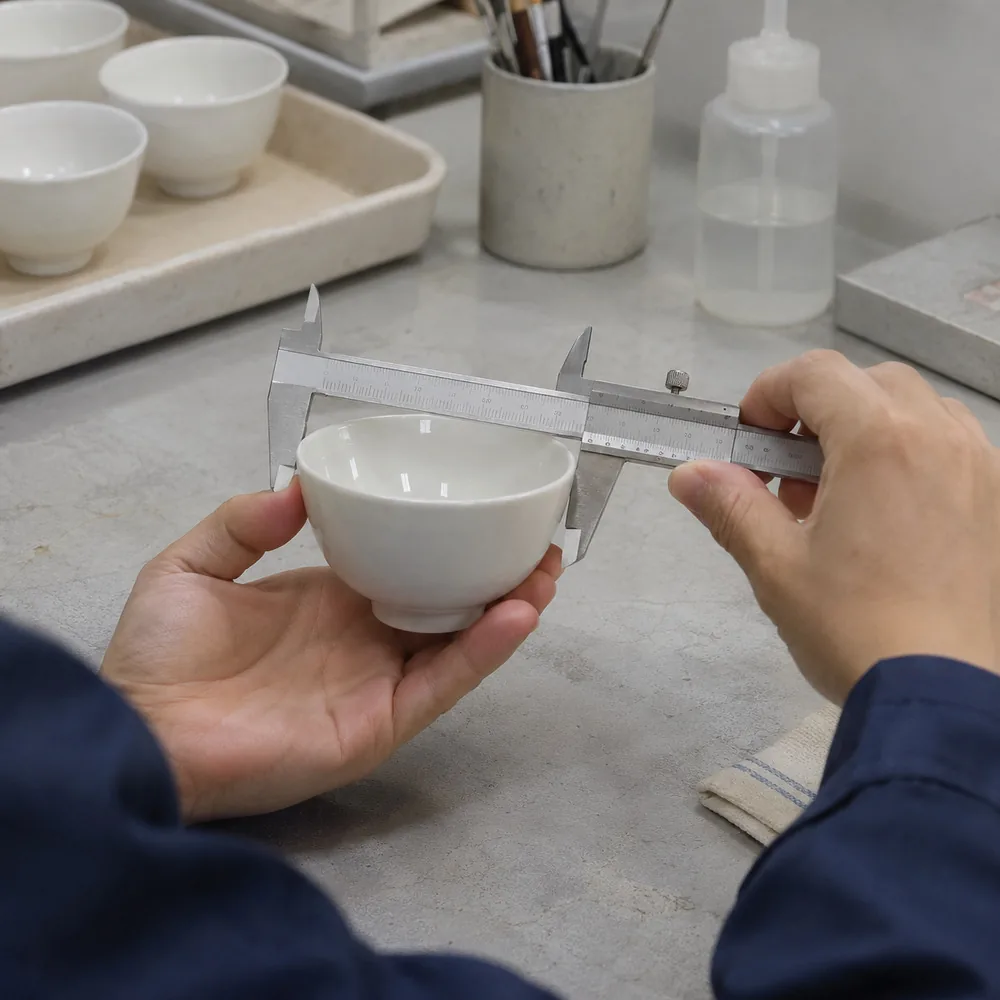
A supplier audit is a check that the company quoting your order can make it, legally and repeatedly, at the place it says it will. If any of those three fails, you find out late: when the reorder doesn’t match, when a retailer’s auditor turns up at an address that turns out to be an office, or when your peak-season order waits behind someone else’s.
The checklist below is the one we would want a buyer to run on us. It is grouped into five areas, and each line says what to ask for and what a good answer looks like. Where it helps, we give our own answer so you have something concrete to compare against.
1. Is it the factory?
Trading companies are not a problem in themselves. Hiding that they are one is. These checks take an afternoon.
| Check | What to ask for | What a good answer looks like |
|---|---|---|
| Customs registration | The exporter’s customs code, checked against the business licence | The company on the export record is the one licensed to manufacture at the factory address. Traders have customs codes too. Ours: 3302960091, Jingdezhen Customs |
| Customs status | AEO certification | AEO Advanced is the highest grade of China Customs’ trusted-trader programme. Ours: AEOCN3602960071, valid to 2029 |
| Business licence | Registered address and scope | Address matches the factory you are shown; scope includes manufacturing |
| Audit address | The site address on any audit report | Same address as the licence and the factory you visited |
| Live video | A call walking from forming to the kiln | Done the same day, without a script |
| Headcount | Total staff and how many in quality | Numbers that fit the claimed capacity. We have 268 people, 32 of them in quality |
If the customs code belongs to another company, ask who that company is. A clear answer (“our export agent,” “our sister factory”) is fine. Silence is not.
Three documents that answer the question
A factory can prove what it is with three documents, and each one can be checked outside the factory.
| Document | What to check | Ours, for comparison |
|---|---|---|
| Business licence | The unified social credit code, the registered address and the business scope, which should include manufacturing | 91360206MA3AD2868G; scope includes manufacture of daily-use ceramics |
| Customs registration | The importer and exporter code, and that it is in the same company name | Jingdezhen Customs, 3302960091 |
| Production address | Whether it matches the address on the licence or a registered branch | No. 1 Changcheng Chuangyu Road, Jingdezhen High-tech Zone |
When the names do not match
A different company name on the customs code, a production address in another city or a business scope that only covers trading are not proof of anything wrong. They are questions to ask. A group with several companies can explain the structure in one email. A trading company that presents itself as a factory usually cannot.
A video call that shows the line
Before a visit, a 20-minute video call answers most questions. Ask to see four things live, in this order: the kilns firing, a forming line running, the quality check at the end of the line and the finished goods warehouse. Ask the person holding the camera to walk between them without cutting. A real factory can do this on a working day; a showroom cannot.
2. Social and ethical audits: which one, and what to read
Retailers usually tell you which audit they accept. If they don’t, these are the common ones and what each looks at:
| Audit | What it covers | What to read on the report |
|---|---|---|
| amfori BSCI | Labour standards and working conditions | The grade (A to E), the date and the follow-up actions |
| Sedex SMETA 4-Pillar | Labour, health and safety, environment, business ethics | Non-conformances and whether they are closed |
| Walmart FCCA | Factory capability and capacity: quality systems, production planning, equipment | The overall rating and the capacity section |
| IKEA IWAY | IKEA’s supplier code: environment, social and working conditions | The IWAY version and audit date |
| Retailer audits (Target, Costco, Disney ILS) | Each retailer’s own code | Validity for your retailer, not just “audited” |
Ask for the report or its reference number, never a logo on a brochure. Check three things on it: the site address, the audit date, and the open corrective actions. A good grade with five open actions is weaker than an average grade with none.
Ours, for comparison: amfori BSCI grade B (SGS-CSTC, to May 2027), Sedex SMETA 4-Pillar (Intertek, to June 2028), Walmart FCCA green (to February 2027), IKEA IWAY 6.0 (to January 2028) and a Target supplier code audit (to September 2027). The numbers are on our certifications page.
What each audit actually covers
Buyers often treat these audits as interchangeable. They are not.
- amfori BSCI grades a site on labour and social conditions from A to E. A is the top grade; B is a good result with minor findings.
- Sedex SMETA 4-Pillar covers labour standards, health and safety, the environment and business ethics. The report is shared through Sedex, so your auditor can see it directly.
- Walmart FCCA is a factory capability and capacity audit, not a social audit. It asks whether the factory can make what it promises.
- IKEA IWAY is IKEA’s own supplier code, covering working conditions and environmental practice.
- Disney ILS and Target audits are run against each retailer’s own code for its own suppliers.
If your retailer asks for “an ethical audit”, ask which one. A factory that holds BSCI but not SMETA may be fine for one retailer and not for another.
Read the findings, not the cover page
The useful part of an audit report is the list of findings and how each was closed. A grade B with three closed findings tells you more about a factory than a certificate without a report. Ask for the corrective action plan from the last audit and the dates each item was closed.
3. Can it make your volume, on time?
Capacity claims are easy to inflate. Ask for numbers that can be checked against each other.
- Annual capacity and actual output. We have 22 million pieces of capacity and delivered 17.8 million in 2025, about 81% utilisation. A factory claiming 100% of capacity has no room for your peak-season order.
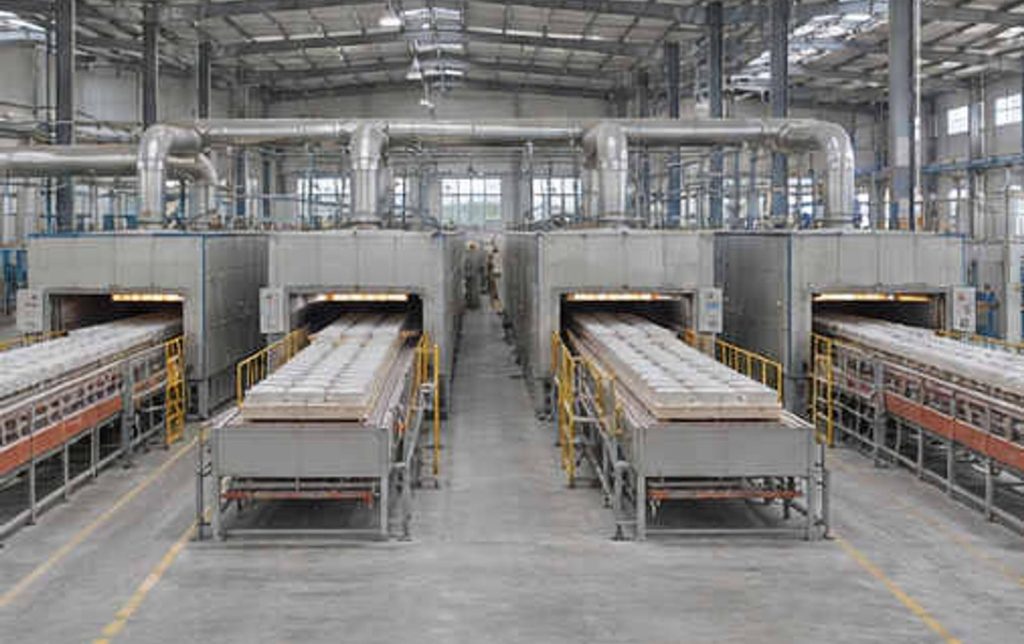
- Kilns. Ask how many, what type and how long. Tunnel kilns run continuously; shuttle kilns fire batches. We run four natural-gas tunnel kilns, 390 m in total, plus six shuttle kilns.
- The largest order they have shipped. Ours was 2.18 million pieces across 46 SKUs, in 11 containers over nine months. Ask how theirs was split and scheduled.
- On-time rate. Ask for the figure and how it is measured. Ours was 96.8% of orders in 2025.
- Peak season. Ask what happens to lead times between July and October. If the answer is “nothing changes,” be careful. Ours add 7–10 days.
Check the capacity claim against the kilns
A factory’s annual capacity should add up from its kilns. Ours does, and the arithmetic is a useful test for any supplier.
| Kiln | Length | Pieces per day |
|---|---|---|
| Tunnel kiln 1 | 108 m | 22,000 |
| Tunnel kiln 2 | 108 m | 22,000 |
| Tunnel kiln 3 | 96 m | 15,000 |
| Tunnel kiln 4 | 78 m | 9,000 |
Together the four tunnel kilns fire about 68,000 pieces a day. Over 320 firing days a year, that is roughly 21.8 million pieces, in line with our stated capacity of 22 million. In 2025 we delivered 17.8 million, a utilisation of 80.9%. If a supplier’s capacity figure cannot be rebuilt from its kilns, ask where the rest is fired. The same check works product by product: every product page lists its carton and container figures, for example our BM-350 mug, our DS-16 dinner set and our porcelain gaiwans.
Spare capacity is what protects your date
A factory running at 100% has nowhere to put a reorder, a remake or a delayed order. Ask for the current utilisation and for the peak-season plan. Between July and October our lead times rise by 7–10 days, and we say so in every quote for that period.
On-time delivery as a number
Ask for the on-time rate for the last year, defined as orders shipped by the confirmed date. Ours was 96.8% in 2025. A supplier that does not track it cannot improve it.
4. Can it prove quality, not just describe it?
A quality manual is easy to write. Look for equipment, records and people.
| Check | Good sign | Ours |
|---|---|---|
| In-house lab | Instruments that measure what your market tests | 320 m² lab with an Agilent 7900 ICP-MS for lead and cadmium, an X-Rite Ci7800 spectrophotometer, thermal shock and impact rigs |
| Food-contact reports | Per SKU, per market, with numbers | Eight current reports; see our guide to food-contact testing by country |
| Defect standards | Written limits for pinholes, specks, warp, colour | ΔE ≤ 1.5 in a batch; pinholes ≤ 0.5 mm, at most 2, never on the food surface |
| Traceability | Each piece linked to a kiln run | Each piece traced to its kiln run and shift |
| Kiln records | Logged firing temperatures | 9 thermocouples per tunnel kiln logged to MES, ±8 °C |
| Final inspection | AQL level and who does it | 100% machine vision and manual check; AQL 2.5 final sampling, 1.5 on request |
| Delivery record | Breakage and complaint rates | 0.21% transit breakage, 0.07% complaints in 2025 |
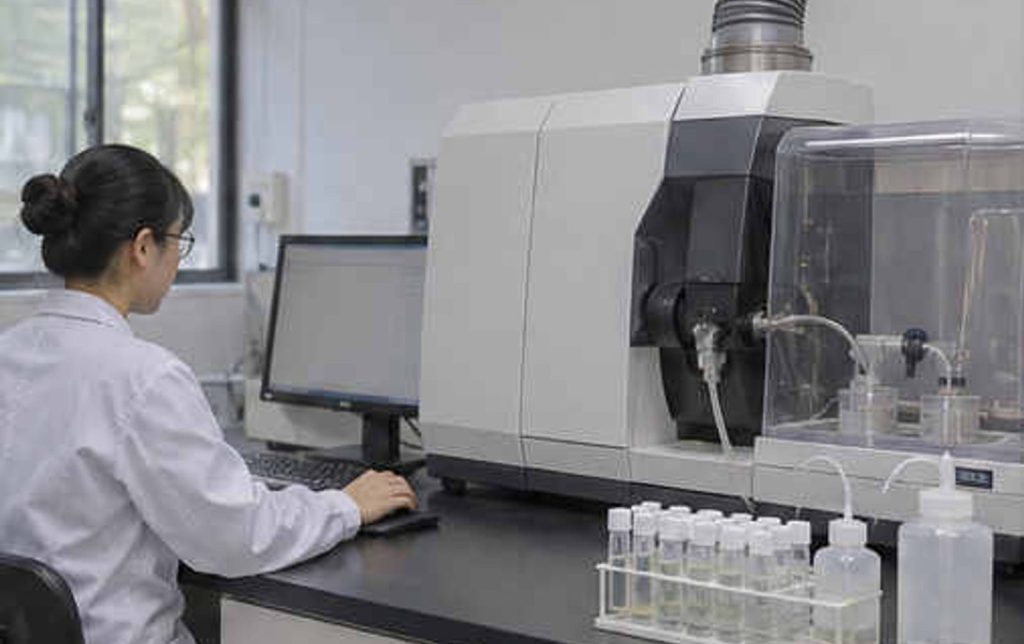
Ask to see a week of kiln temperature logs and the last three internal inspection reports. A factory that runs these records can print them in minutes. Our quality control page shows where each check happens.

The equipment that turns claims into numbers
| Equipment | What it measures |
|---|---|
| ICP-MS (Agilent 7900) | Lead and cadmium release, to FDA and LFGB methods |
| Spectrophotometer (X-Rite Ci7800) | Colour difference ΔE under D65/10° |
| Thermal shock bench | 180 °C into 20 °C water, ASTM C554 |
| Falling-ball impact tester | 100 g steel ball dropped from 1 m |
| Bending strength tester | Three-point bending, 0–5 kN |
| Whiteness and absorption | Whiteness meter and vacuum absorption rig |
| Microwave and dishwasher | 700 W microwave; EN 12875 dishwasher, 1,000 cycles |
| Climate chamber | Ageing at 40 °C and 90% RH |
A factory without its own lab can still make good products, but it relies on outside labs for every decision, and outside labs take days. Ask how the factory checks a batch before the outside report arrives.
The records that show it is used
Equipment proves nothing if it is not used. Ask for three records from a recent order:
- Kiln logs. Our tunnel kilns have 9 thermocouples each, and the temperature curve is written to the production database for every run.
- In-process checks. Dimensions, wall thickness, seams, glaze thickness and decal position, recorded every two hours.
- Final inspection. Every piece is checked by machine vision and by hand, and the result is traced back to the kiln run and the shift team.
5. Will the terms protect you?
The audit ends with the paperwork you sign. Check:
- Claims window and response. How long after arrival you can claim, and how quickly they respond. Ours: 30 days, with an 8D report draft in 48 hours.
- Liability. Whether compensation is capped below the order value, and whether they carry product liability insurance. We carry USD 2 million.
- Tool ownership. Who owns molds and decal plates after you pay for them. With us, you do.
- Your inspector. Whether you can send your own inspector or third party. You should be able to.
Terms worth comparing side by side
| Term | What to ask | Ours |
|---|---|---|
| Payment | Deposit and balance trigger | 30% deposit, 70% against a copy of the bill of lading |
| Inspection | Default AQL and whether a tighter one is possible | AQL 2.5 by default, 1.5 on request |
| Claims window | Days after arrival to report a defect | 30 days |
| Response | Time to a first root-cause report | 8D draft within 48 hours |
| Compensation | Upper limit | Up to the full order value |
| Insurance | Cover on CIF shipments | 110% of invoice value |
| Product liability | Cover held by the supplier | USD 2 million |
Terms that are not written down are a conversation, not a protection. Put each line in the purchase contract.
Score what you found
An audit ends with a decision, and a decision is easier with a score. Here is a simple way to record the result for each area, so that two suppliers can be compared on the same sheet.
| Area | Strong evidence | Weak evidence | Red flag |
|---|---|---|---|
| Identity | Licence, customs code and address all match | Group structure, explained | Names that do not match and no explanation |
| Social audits | Current report with closed findings | Certificate only | Logo on a brochure, no report |
| Capacity | Kiln arithmetic adds up; utilisation stated | A round number with no breakdown | Capacity higher than the kilns can fire |
| Quality | Own lab and records from a recent order | Outside reports only | “We have no problems” |
| Terms | Every line written in the contract | Some lines agreed by email | Claims “handled case by case” |
Score each area strong, weak or red, and treat one red in identity or terms as a stop until it is explained.
Visit if the order justifies it
Desk checks catch most problems, but a visit catches the rest: whether the workshop is busy, whether the lab is used, whether the people match the org chart. Plan for a half day. Ours is a 90-minute route through the showroom, forming, kilns, lab and warehouse, Monday to Friday, booked seven working days ahead, with pick-up from Jingdezhen Luojia Airport (12 km) or Jingdezhen North Station (9 km).
This checklist is one step in a larger process; our guide to sourcing ceramic dinnerware from China covers the rest. If you want to run it on us, ask for our audit reports and we will send the numbers and book a video walk-through.
What a visit to our plant covers
We host groups of up to 30 people, Monday to Friday from 09:00 to 16:00, with seven working days’ notice. The route takes 90 minutes:
- Showroom, 30 minutes
- Forming workshop, 15 minutes
- Kilns, 15 minutes
- Quality inspection and laboratory, 15 minutes
- Automated warehouse, 15 minutes
Two English-speaking guides from our export team lead the tour, and our chief engineer can answer technical questions on site. The glaze and body formulation rooms are our core process area and are visited with the chief engineer. Jingdezhen Luojia Airport is 12 km away and Jingdezhen North railway station 9 km; we can arrange a car from either.