You have a design, a budget and a launch date, and three suppliers have quoted three different minimums for what looks like the same plate. One says 500, one says 3,000, one says “no MOQ.” None of them is lying. They are each pricing a different version of your order, and usually nobody has said which.
Here is how minimums work at a ceramics factory, using our own numbers, and how to get yours down without paying for it later.
Why one factory quotes 48 pieces and 5,000 pieces
A minimum order quantity covers the setup work your order adds to the line. If you take a plate we already make, in a glaze we already fire, there is almost no setup, so the minimum is low. Every change you add, from a new colour to a new shape, adds work that has to be spread across enough pieces to make sense.
That is why we don’t have one MOQ. Our range runs from 48 pieces to 5,000 per SKU, and the gap between them is entirely about what you change.
The ten MOQ tiers at our factory
| What you order | MOQ | Lead time |
|---|---|---|
| Mixed stock from our ready models | 48 pcs | 7–10 days |
| An existing model in our glaze | 500 pcs | 25–30 days |
| A colour or glaze change | 1,000 pcs | 30–35 days |
| Your decal, one colour | 1,000 pcs | 35–40 days |
| Your decal, multi-colour or gold line | 1,500 pcs | 35–40 days |
| Gift box sets | 1,000 sets | quoted per project |
| A new shape (new mold) | 3,000 pcs | 45–55 days |
| Full private label programme | 5,000 pcs per SKU | 50–65 days, first order |
| Hotel and restaurant projects | 200 pcs per shape | 30–40 days |
| Luxury brand small batches | No minimum | per project |
Lead times count from the deposit and signed artwork. Between July and October, add 7–10 days.
Each tier applies to the change, not to the whole order
The tier is set by the biggest change you make. An order of 3,000 mugs in our standard glaze with a one-colour logo sits in the decal tier at 1,000 pieces, not the new-mold tier, because nothing about the shape has changed. Add a new handle and the same order moves to the new-mold tier at 3,000 pieces, because a new handle means a new mold.
That is why two buyers can ask for “custom mugs” and get minimums that are three times apart. They are asking for different amounts of change.
What each change adds on the line
Knowing what sits behind each tier tells you which changes are worth paying for.
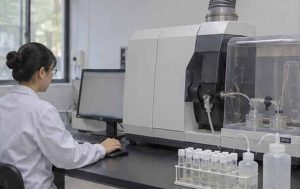
A glaze or colour change means mixing and test-firing a new glaze, matched to your Pantone reference in our sample room and checked on a spectrophotometer to ΔE 1.5 or less. A dedicated glaze batch takes about 20 days to develop. Below 1,000 pieces, most of what you pay for is that development, not the porcelain.
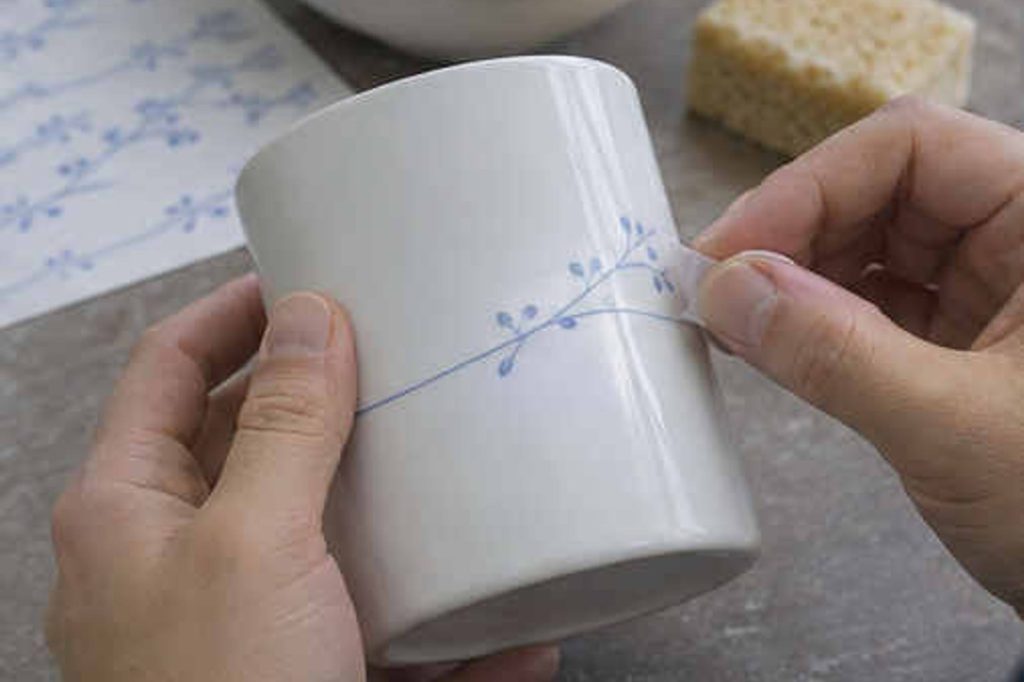
A decal needs a printing plate for every colour in it. A one-colour logo is one plate; a four-colour pattern is four, and gold goes on in a separate pass on our gold-line equipment. That is why the minimum moves from 1,000 to 1,500. The plates are yours once they are made, so a reorder of the same design skips this cost.
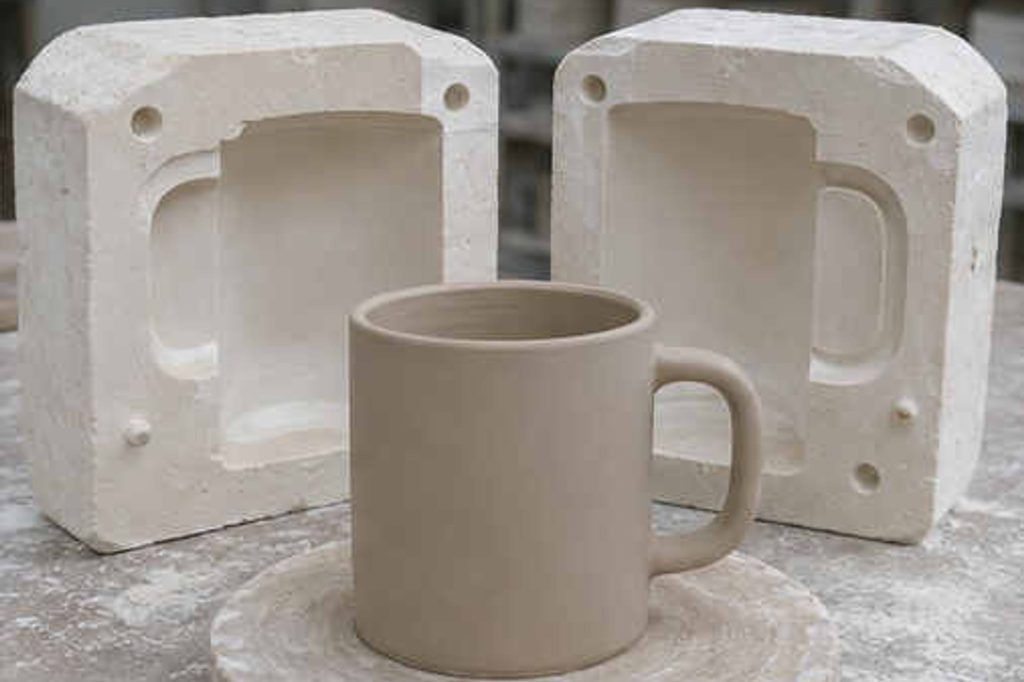
A new shape needs a master model, then production molds, which take 15–20 days. A mold is a fixed cost that only makes sense over enough pieces, and 3,000 is where it starts to. Before cutting one, we 3D-print a prototype in three days so you can hold the shape, stack it and pour from it first.
A private label programme adds your packaging, barcodes and carton marks for every SKU, with only your brand on the outer carton. That is a lot of artwork and approval for each line, hence 5,000 per SKU on the first order.
The tooling fees behind each tier
Setup work has a cost, and at our factory most of it comes back to you once the order reaches a set quantity. These are our current fees.
| Setup | Time | Refund or ownership |
|---|---|---|
| New pattern on an existing mold | 7–10 days | Fee refunded in full from 1,000 pcs |
| New mold | Model 12–15 days, molds 15–20 days | Fee refunded from 3,000 pcs; the mold is yours |
| Decal printing plate, one per colour | 5–7 days | The plate is yours |
| 3D printed prototype | 3 days | Charged at cost |
| Underglaze or laser logo plate | 5 days | Fee refunded from 2,000 pcs |
| Exclusive glaze colour | 20 days | Fee refunded from 5,000 pcs |
Why fees are refunded at a quantity
The fee covers work that is the same whether you order 500 pieces or 50,000: a mold, a plate, a glaze trial. Spread over a large order, it is a few cents per piece; on a small one, it is a large share of the price. Refunding it above a quantity is our way of saying the setup has been paid for by the volume. When you compare suppliers, ask the same question of each: is the fee refundable, and at what quantity?
Six ways to order below the tier you think you need
Many buyers who ask us for a lower MOQ don’t need a lower number. They need fewer changes.
- Start from a ready model. We have 46 public models in 1,260 SKUs. If one of them is within a few millimetres of your sketch, ordering it with your decal drops you from 3,000 pieces to 1,000.
- Cut colours from the decal. A one-colour version of your logo keeps you at 1,000. Add gold or a second colour later, once the line sells.
- Test the market with mixed stock. At 48 pieces across our ready models, you can put product in front of customers in 7–10 days before you commit to anything custom.
- Buy as a hotel or restaurant project if that’s what you are. Hospitality orders start at 200 pieces per shape; see our restaurant dinnerware page.
- Ask about a small-batch project if you are a luxury brand. For art plates, event gifts and co-branded pieces, we work without a minimum and price per project. Our luxury brand ceramics page shows the kind of work.
- Split one minimum across several items. The 1,000-piece minimum for your decal or glaze applies to the order, not to each model or colour. You can put the same decal on 500 mugs and 500 plates, or split a glaze change across colours, and we confirm the split in the quote.
A worked example: dropping a tier by changing less
A retailer asked us for a 16-piece set in its own green glaze, with a new 26 cm dinner plate shape, 1,200 sets in the first order. As briefed, that is a new-mold order: 3,000 pieces of the new plate, 45–55 days.
We suggested our existing 27 cm PL-27 plate instead of the new shape. The look on the shelf was almost the same; the order dropped to the glaze-change tier at 1,000 pieces and to a lead time of 30–35 days. The 1,200 sets went ahead, and the retailer kept the option of a new plate shape for the second order, once the range had sold.
Not every brief can lose its new shape. But many new shapes are asked for by habit, and a 1 cm difference in a plate is rarely what a shopper notices.
Low MOQs that cost you later
“No MOQ” on a custom order usually means the supplier has moved the cost somewhere you can’t see. Ask where.
The common places are a higher unit price on the first order, a stock blank with a low-fired or unfired decoration in place of one fired into the glaze, or a trading company buying your 300 pieces from someone else’s overrun. None is wrong in itself. What goes wrong is the reorder. If your first 300 pieces came from an overrun, the second 300 won’t match, because that batch no longer exists.
Ask any supplier that offers a low custom MOQ three questions. Is the decoration fired, and at what temperature? Will the reorder come from the same mold and glaze batch? Who owns the plates and molds? A factory can answer all three in one email. Our decal plates and molds belong to the buyer.
What a minimum order looks like in a container
A minimum order is often too small to fill a container, and that changes its freight cost. 1,000 BM-350 mugs pack 48 to a carton, so they fill 21 cartons, about 1.3 m³. A 40HQ holds 41,616 of the same mug. A 1,000-piece order therefore ships as a less-than-container load, which costs more per cubic metre than a full container and passes through more handling.
That is not a reason to order more than you can sell. It is a reason to compare a minimum order on its landed cost per piece, not its unit price. Our guide to the true cost of importing dinnerware sets out each line.
Typical first orders by buyer type
Minimums are the floor, not the norm. These are the first orders we typically see from each kind of buyer, from our own order book.
| Buyer | What matters most | Typical first order |
|---|---|---|
| Retail private label | Stable quality, traceability, audits, compliant packaging | 30,000–80,000 pcs |
| Import wholesaler | A full price range, mixed loads, fast reorders | 1–3 containers |
| Home décor chain | Seasonal themes, display, colour boxes | 20,000–50,000 pcs |
| Hotel and project | Durability, dishwasher use, reorders | 2,000–20,000 pcs |
| Airline and airport | Logo, light weight, batch consistency | 10,000–50,000 pcs |
| Corporate gifts | Short lead time, presentation | 1,000–10,000 sets |
| Museum and cultural products | Faithful shapes, small runs, licensing | 3,000–20,000 pcs |
| E-commerce brand | Drop shipping, breakage cover, light packaging | 500–5,000 pcs a month |
| Restaurant chain | Chip resistance, stacking, one colour | 50,000–200,000 pcs |
Small buyers are not turned away
The table shows where orders usually start, not where they have to. Mixed stock orders begin at 48 pieces, and a stock model at 500. Many of our larger customers started with a sample order, then a trial run, then a programme. What we ask of a small first order is the same as a large one: a clear list of what changes.
How the season changes your minimum
Between July and October our kilns run at their fullest, with Christmas and holiday orders for North America and Europe. The minimums do not change in peak season, but the lead time does: add 7–10 days to every tier. An order at the new-mold tier, placed in August, needs 52–65 working days rather than 45–55.
If your order is close to a tier, peak season is also the time when splitting it is most expensive. Two runs of 600 pieces in September cost more setup time than one run of 1,200 in May.
How to ask for an MOQ and get a usable answer
Send the changes, not the category. A message like this gets you a quote with a real minimum in 48 hours:
BM-350 mug, Pantone 2955 C glaze, one-colour logo on the side, 2,000 pcs, shipping to Canada.
Compare it with “What’s your MOQ for custom mugs?”, which gets you a question back and costs you a day.
If you are not sure which tier you fall into, list what you want and we will tell you which changes are driving the minimum and which can wait. Our OEM page shows what each tier includes, and our guide to sourcing ceramic dinnerware from China covers the steps around the order. When you are ready, send us the list.